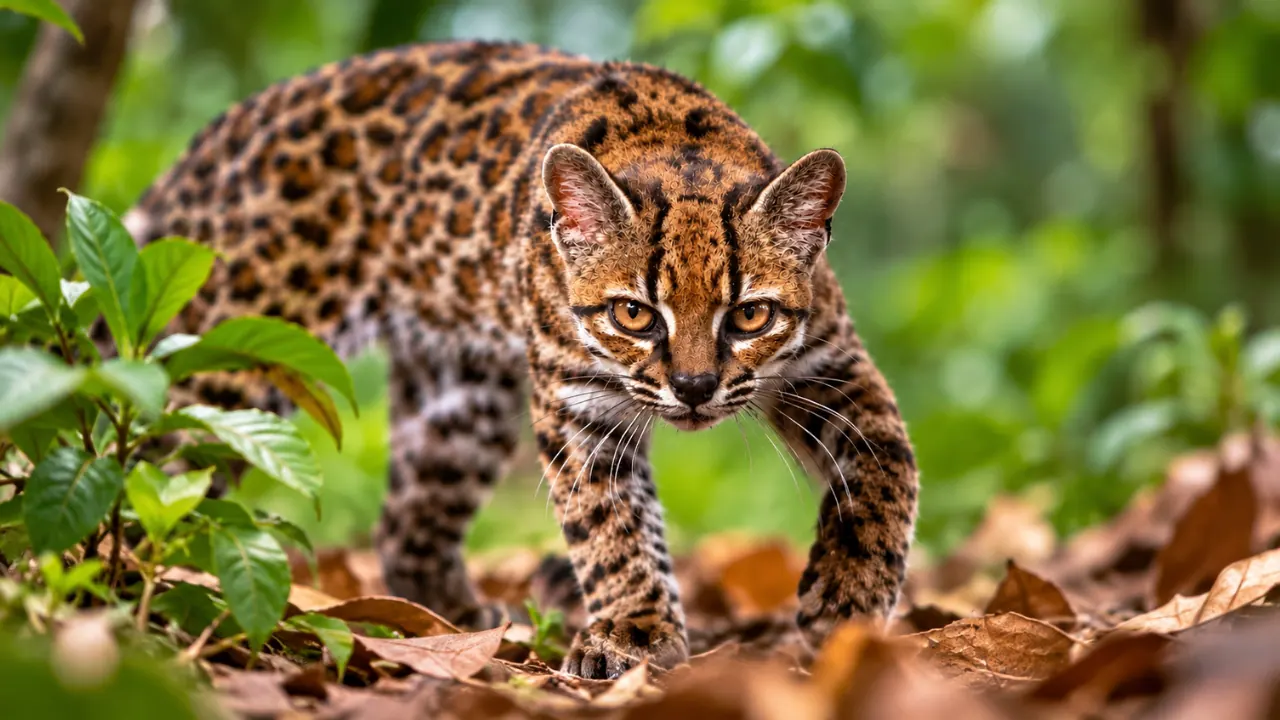
In a groundbreaking discovery, a team of international researchers has identified a new species of wild cat, Leopardus tilcayo, in the cloud forests of Bolivia. This marks the first formal discovery of a new feline species in over a century. The tilcayo, which measures approximately 46 cm in length and weighs only 1.4 kg, is significantly smaller than an average domestic cat. Its distinctive brown coat features irregular rosettes, setting it apart from other known feline species.
The tilcayo is native to the Yungas region of Bolivia, a mountainous area on the eastern slope of the Andes characterized by humid forests often shrouded in clouds. The species was previously unknown to science, although local communities were aware of its existence. The specimen that led to the discovery was initially mistaken for another small wild cat species. Found as a juvenile, it was taken in by a family and later transferred to an animal sanctuary in the Yungas, where biologist Paola Nogales-Ascarrunz became interested in its unique characteristics.
Nogales-Ascarrunz's curiosity was piqued by the animal's exceptionally small size and distinctive coat patterns. However, it was genetic analysis that ultimately confirmed the tilcayo's status as a distinct species. The research team analyzed DNA samples from 38 cats of the Leopardus genus, sourced from various regions in South America, including eight specimens from museum collections. The results revealed that the "tiger cats," a group whose classification had long been debated, comprise five genetically distinct species.
The study, published in the journal Current Biology on September 17, 2026, provides significant insights into the evolutionary history of the tilcayo. According to the research, the tilcayo's lineage diverged from that of other "tiger cats" approximately 1.4 million years ago. The genetic analysis also identified a new subspecies in the Peruvian Yungas, Leopardus tigrinus antisuyo. Despite this breakthrough, much remains to be learned about the tilcayo, including its behavior, population dynamics, and geographic range.
Preliminary data suggest that the tilcayo's diet consists of small rodents, based on findings of rodent remains in its feces. Camera trap images also indicate that the species may be nocturnal. Conservation efforts are a pressing concern, as the Yungas forests face threats from deforestation, agricultural expansion, human-induced fires, and mining activities. The research team has shared their findings with the International Union for Conservation of Nature (IUCN), which will conduct a separate evaluation to assess the species' level of threat.
The tilcayo belongs to the Felidae family, which encompasses all feline species. More specifically, it is a member of the Leopardus genus, which comprises several small wild cat species found in the Americas. This genus is distinct from Felis, which includes the domestic cat. The tilcayo is part of the "tiger cats" group, a common designation for small, spotted wild cats in South America. While they resemble tigers, they are not closely related to them.
The discovery of the tilcayo highlights the importance of continued exploration and research into the world's biodiversity. As scientists continue to study this enigmatic species, they emphasize the need for conservation efforts to protect its habitat and ensure the long-term survival of the tilcayo. The study's findings have significant implications for the field of biology and conservation, underscoring the importance of genetic analysis in understanding the complex relationships between species.
Key points
- The tilcayo, a new species of wild cat, has been identified in Bolivia's cloud forests, marking the first formal discovery of a new feline species in over 100 years.
- The species, Leopardus tilcayo, is characterized by its small size, distinctive coat patterns, and genetic distinctness from other known feline species.
- Conservation efforts are necessary to protect the tilcayo's habitat and ensure the long-term survival of the species, which faces threats from deforestation, agricultural expansion, and other human activities.