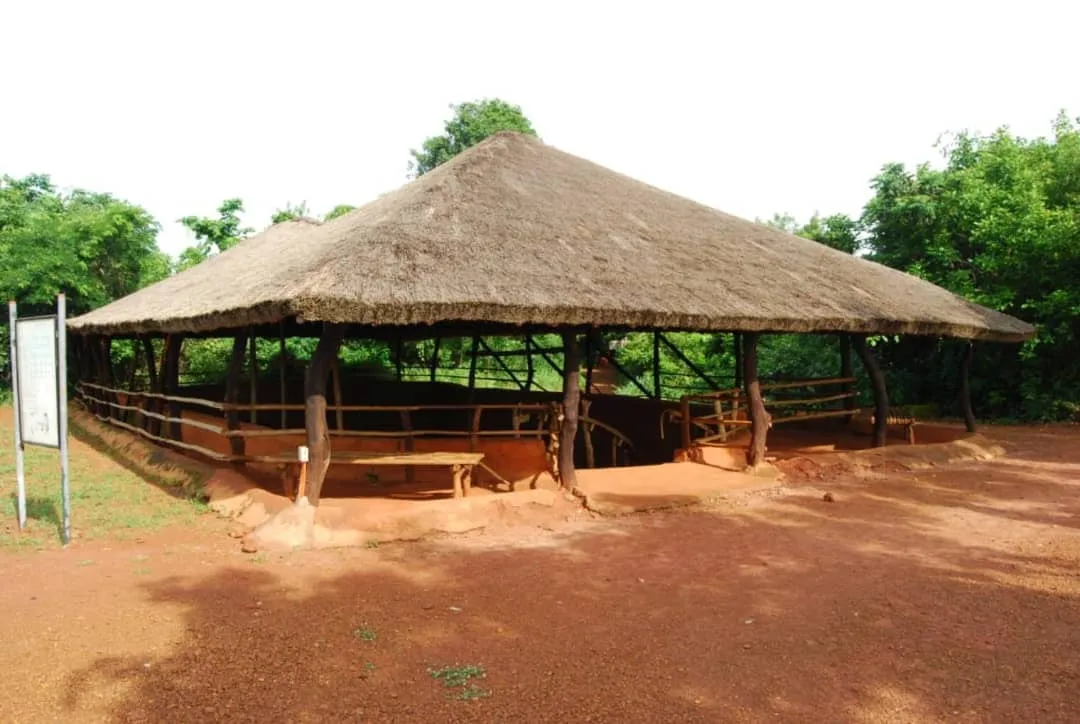
Located in the heart of Benin's Zou department, the Agongointo-Zoungoudo site is an archaeological gem that showcases the ingenuity of the ancient Danxomè kingdom's inhabitants. Discovered in 1998 during road construction, this underground village features 56 subterranean houses, known as "Ahwando," spread across approximately seven hectares. The site provides a unique experience for visitors, allowing them to explore the remnants of a bygone era.
The village's underground structures were allegedly used as dwellings and refuges for warriors. According to historical accounts, these installations enabled fighters to hide, protect themselves, and surprise their adversaries. Visitors to the site are accompanied by guides who provide insight into the various parts of the site and their functions. Guide Kossi ATROKPO explains the significance of the different areas, including what the ancient inhabitants called the "trou de guerre" or war hole.
As visitors descend into the galleries, they are struck by the ancient techniques used to create these subterranean spaces. The guide highlights the organizational skills and functionality of the underground areas, providing a deeper understanding of the site's history. This unique experience allows tourists to appreciate the cultural heritage of Benin, moving beyond traditional monuments.
The Agongointo-Zoungoudo site holds significant importance due to its proximity to Abomey, the former capital of the Danxomè kingdom. This proximity strengthens its position within the Zou tourist circuit, offering visitors a chance to explore Benin's rich cultural diversity. By visiting the site, tourists can gain a better understanding of the country's history and the resourcefulness of its ancient inhabitants.
The role of guides at Agongointo-Zoungoudo is crucial in providing context and meaning to the site's ruins. Their explanations breathe life into the underground structures, allowing visitors to appreciate the history and memory that the site embodies. As a result, Agongointo-Zoungoudo has become a place where tourism, history, and memory converge.
Efforts to preserve and promote the site are essential to ensure its continued relevance, particularly for young generations and tourists interested in exploring Benin's cultural riches. By sharing the story of Agongointo-Zoungoudo, the site can be protected and preserved for future generations. This will enable visitors to continue discovering and appreciating the unique cultural heritage of Benin.
The Agongointo-Zoungoudo site has been on UNESCO's indicative list since 1998, recognizing its exceptional cultural and historical significance. As a testament to the ingenuity and craftsmanship of the ancient Danxomè kingdom's inhabitants, the site offers a fascinating glimpse into Benin's rich history. By visiting Agongointo-Zoungoudo, tourists can experience the country's vibrant cultural heritage firsthand.
Key points
- The Agongointo-Zoungoudo site features 56 underground houses, known as "Ahwando," spread across approximately seven hectares.
- The site was discovered in 1998 during road construction and has been on UNESCO's indicative list since then.
- The underground structures were allegedly used as dwellings and refuges for warriors from the ancient Danxomè kingdom.