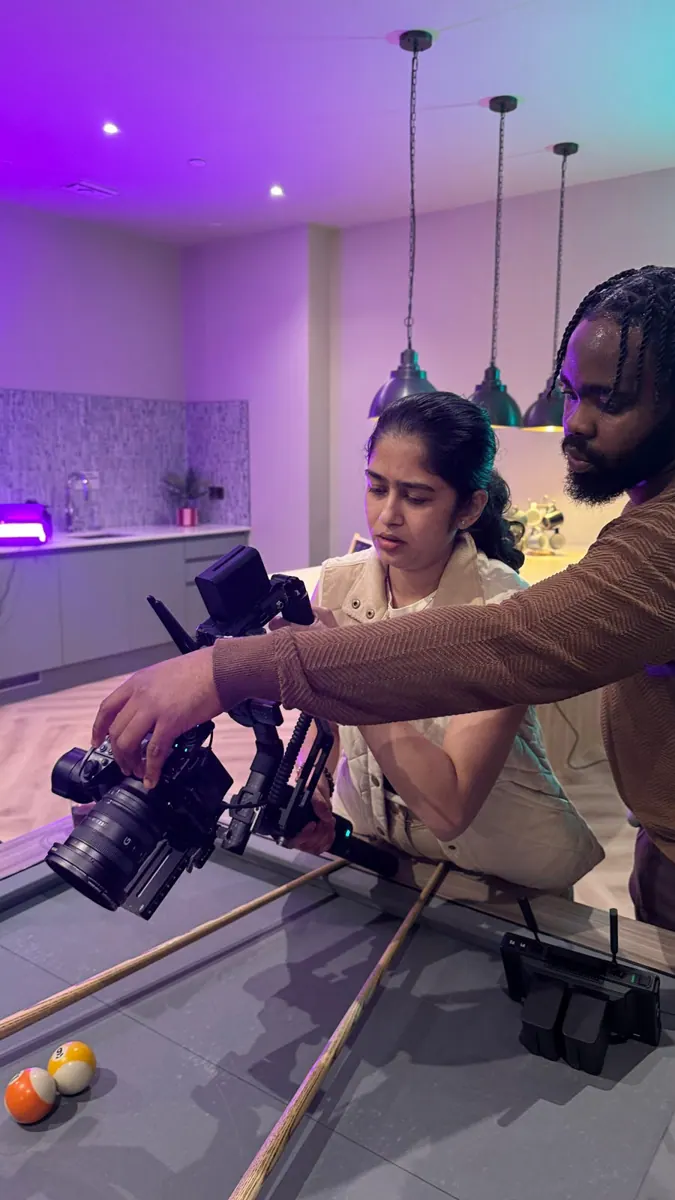
The making of Letter Across Channels has been a turning point in Snehal Runwal's filmmaking journey, exposing her to the possibilities of cinema that crosses borders, cultures, and creative traditions. The 2024 short film brought together filmmakers and creatives from Nigeria, Germany, and the United Kingdom. Runwal's experience working on the film changed her approach to filmmaking and her understanding of herself as a filmmaker.
With about five years of experience in the media industry, Runwal works across directing, writing, producing, and production management. Her credits include Letter Across Channels, Runway Bride, and The Jengaburu Curse series. According to her, working with Nigerian, German, and UK creatives changed the way she viewed cinema. She began to see cultural differences as creative strengths that could bring fresh ideas and perspectives to filmmaking.
For Runwal, transnational cinema goes beyond making a film in different countries. It involves allowing different cultural perspectives to influence the story and creative process. She directed the UK aspect of Letter Across Channels, while the wider project involved partners from Bournemouth University, Film University Babelsberg KONRAD WOLF, and LP House of Creatives in Nigeria.
The experience also taught her to give other creatives room to contribute to a project. Runwal discovered that emotions such as love, loneliness, fear, hope, and kindness can connect people across cultures. She learned to create a clear vision and then allow different artists to contribute their own perspectives to it.
Runwal's filmmaking journey began in India, where she was first exposed to Indian filmmaking traditions and stories. Her perspective later expanded after she studied at Bournemouth University and met Dr. Samantha Iwowo. Through their conversations and her teaching, Runwal was introduced to concepts such as Ubuntu, transnational cinema, and cross-cultural filmmaking.
Runwal sees her different roles in filmmaking as connected. Writing helps her understand the story and characters, while directing allows her to translate that story into images and performances. Producing and production management help her understand the realities of budgets, schedules, and resources. However, she identified funding and distribution as major challenges for independent filmmakers.
Runwal is now developing a documentary on the carbon footprint of filmmaking and the environmental impact of film production. The project will also involve filmmakers from different countries, continuing her interest in cross-border collaboration. She plans to continue exploring documentaries, fiction, and hybrid forms while working with filmmakers and artists from different cultural backgrounds.
Key points
- Collaborative storytelling can bring fresh ideas and perspectives to filmmaking.
- Transnational cinema involves allowing different cultural perspectives to influence the story and creative process.
- Filmmaking is an international industry, but the environmental consequences of production are also shared across borders.