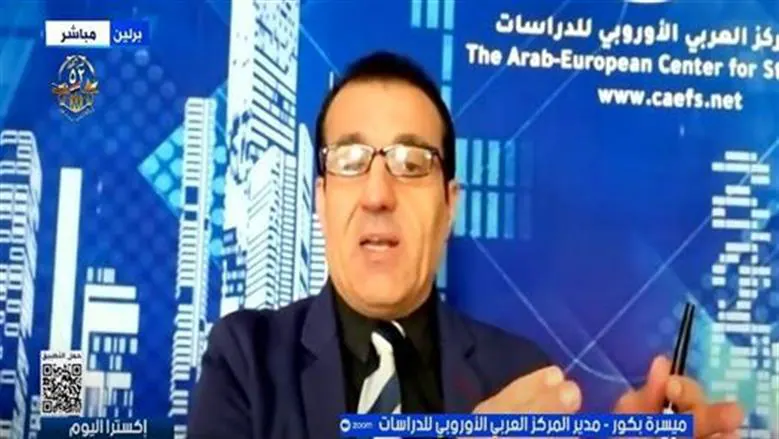
Dr. Maysara Bakour, director of the Arab-European Center for Studies, stated that the current confrontation between Russia and NATO or the European Union does not represent a direct war in the precise sense. Instead, it is taking place within the framework of hybrid confrontations. He made these comments during an intervention via the "Extra News" channel.
According to Bakour, discussing the erosion of European or Russian deterrence does not mean, from his perspective, that deterrence has ended. He pointed out that the fifth article of NATO remains in effect, which is difficult for Russia to determine under what conditions it can be activated. This increases the costs of risks and calculations for Moscow.
Bakour highlighted that NATO possesses significant military and economic capabilities. The military spending of NATO countries in 2025 reached nearly $1.058 trillion or 56 billion euros, compared to about $1.4 billion for Russia. This represents a difference of approximately eight times. He also noted that NATO countries, numbering 32, represent about 45% of the world's economy.
If NATO countries decide to impose a blockade on Russia, the size of their economy can provide a significant pressure capability. Bakour also pointed out that NATO has around 21,000 aircraft, compared to about 4,000 to 4,500 aircraft for Russia. Additionally, NATO has around 3.3 million fighters, compared to about 1.5 million for Russia.
The Russian forces have been depleted after four years of war, which is part of the military capabilities calculations for both sides. Bakour explained that the European Union has started extensive procedures to support and strengthen the so-called European Common Defense, under the title "SAFE". EU countries intend to spend around $1.8 trillion on armaments by 2030.
Bakour emphasized that the European Union has the capability to engage in a military confrontation with Russia, but the question is how long it can sustain this confrontation. The hybrid nature of the conflict requires careful consideration of the economic and military strategies of both sides.
The statements by Dr. Maysara Bakour come amid ongoing tensions between Russia and NATO. The conflict has significant implications for global security and economies. Understanding the nature of this confrontation and the strategies of the involved parties is crucial for assessing its potential outcomes.
Key points
- The confrontation between Russia and NATO is hybrid, not a direct war.
- NATO possesses significant military and economic capabilities, with 45% of the world's economy and 21,000 aircraft.
- The European Union intends to spend $1.8 trillion on armaments by 2030 to strengthen its defense.