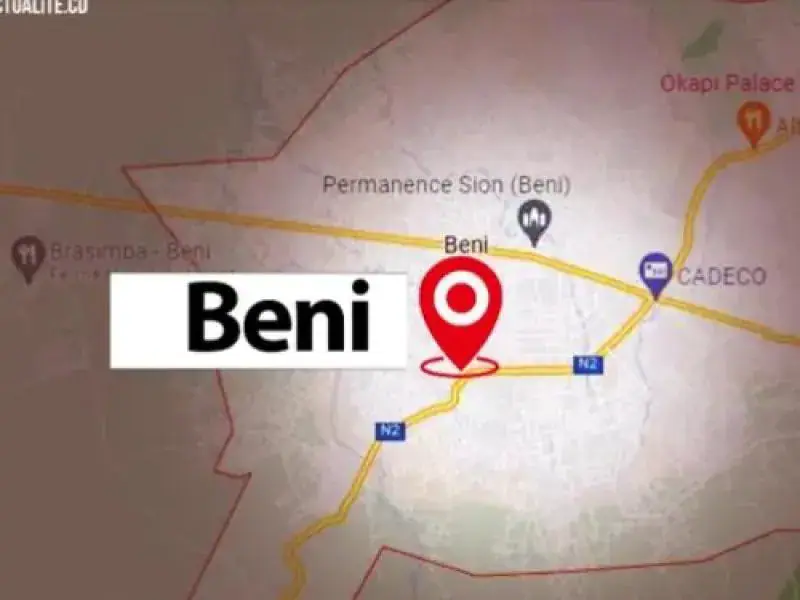
A digital census of the population has resumed in Beni, North Kivu province, in the eastern part of the Democratic Republic of Congo. The operation, led by the Provincial Cell for Digital Development and Archives (CPDA), aims to update demographic data and create a dynamic file to track population movements, births, deaths, and address changes. According to Augustin Ndimubanzi Bazirake, CPDA coordinator, the census was initiated in Beni before being extended to other entities in the province.
The census involves documenting the entire population and activities carried out by residents. It is a routine census conducted by basic-level cadres in decentralized territorial entities (ETD), not an exceptional general census operation. The uniqueness lies in the digitization of information usually collected on paper in communes, quartiers, and avenues. The goal is to support local authorities in Beni and Butembo in sustainable population management with reliable and regularly updated data.
The information collected on births, deaths, arrivals, departures, and address changes will be recorded in a database hosted on a provincial server managed by CPDA. The coordinator stated that activities had been interrupted due to the Ebola situation and were relaunched in the fourth quarter of 2026 to complete the data for the last months of the year and enable the establishment of annual demographic statistics.
The census teams are currently deployed in several quartiers of Beni, including Matonge, after passing through Tamende. The census is being conducted household by household, following a door-to-door system. All thirty quartiers in the city are concerned by this operation. A database of demographic information that can be updated has been created.
The CPDA has been using digital tools to improve data collection, processing, and conservation since 2016. The structure has introduced a digital recording system using tablets and smartphones, aiming to create a secure database hosted on a provincial server. The CPDA has also trained basic-level cadres in using these digital tools to facilitate information collection on the ground.
The operation takes place as the Congolese government prepares for the second General Population and Housing Census (RGPH-2). The national awareness campaign was announced for July 15 by the Minister of State for Planning and Development, Guylain Nyembo. However, the process faces difficulties in accessing several areas in North Kivu and South Kivu provinces due to armed conflict and the presence of the FRN.
Despite these constraints, Kinshasa intends to conduct the census across the entire national territory. For hard-to-reach areas, the government is considering hybrid census methods and satellite imagery to produce data as close as possible to the demographic reality. These approaches were discussed by sector officials and the National Institute of Statistics (INS) as part of reflections on alternative data collection mechanisms in conflict-affected areas.
Key points
- The digital census aims to create a dynamic file to track population movements, births, deaths, and address changes in Beni.
- The census was interrupted due to the Ebola situation and relaunched in the fourth quarter of 2026.
- The Congolese government is preparing for the second General Population and Housing Census (RGPH-2) despite difficulties in accessing conflict-affected areas.