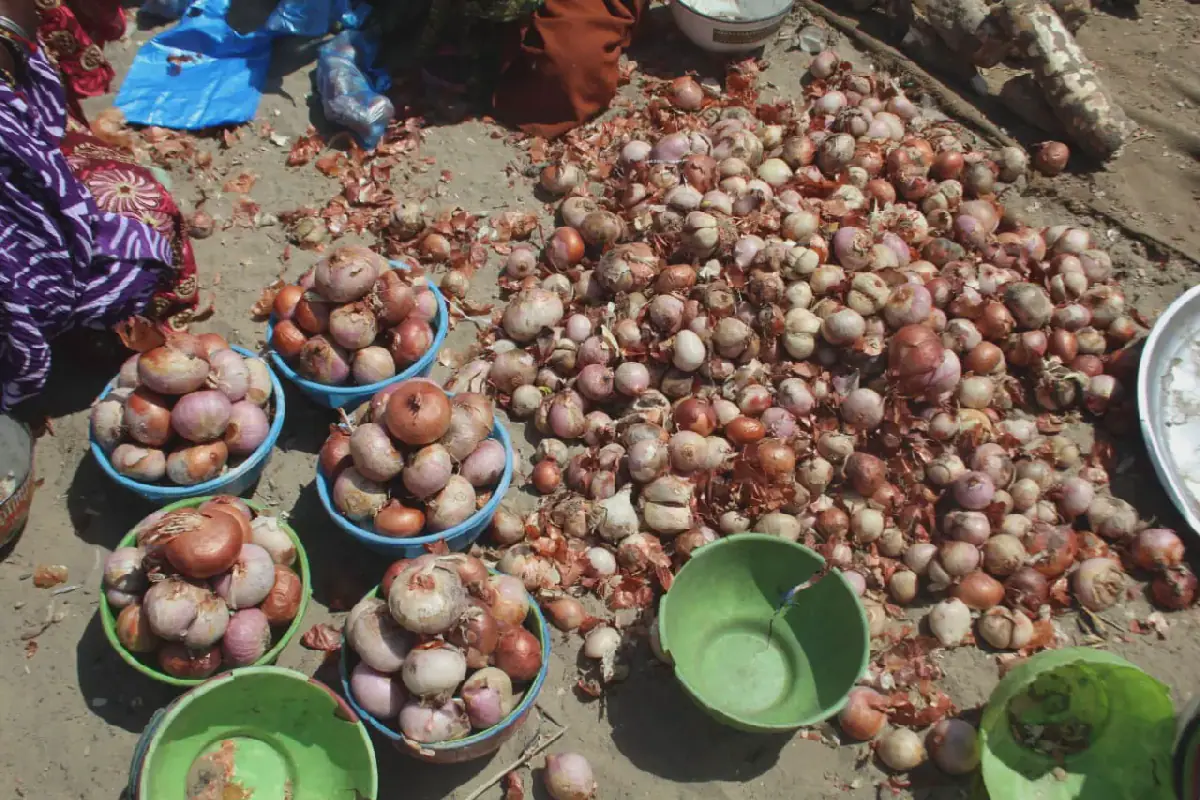
The weekly market in Diffa, Niger, presents a mixed picture of the economic situation for households, with some agricultural products experiencing a decline in prices while others remain high. The market, which has been a hub for traders, consumers, and displaced persons, showcases the resilience of vendors in the face of ongoing security and humanitarian challenges. A team from the Niger Agency for Press (ANP) visited the market to assess the availability and pricing of essential goods.
The Diffa region has hosted thousands of displaced individuals fleeing violence attributed to the Boko Haram terrorist group and its affiliates in the Lake Chad basin for over a decade. In response, host communities have demonstrated solidarity by welcoming displaced persons and refugees, some of whom have turned to commercial activities to sustain themselves. Over time, small-scale commerce, food processing, and the sale of agricultural products have become vital means of survival for many households.
Market realities vary depending on the product, with some vendors experiencing a significant decrease in prices, but this has not necessarily translated to improved revenues. Falmata, a pepper vendor, notes that prices have dropped considerably compared to the previous year, with a cup of pepper now costing 1,300 nairas (approximately 700 FCFA), down from 8,000 nairas (3,600 FCFA). She attributes this decline to difficulties in selling goods at desired prices.
Kaka Yaou, a okra vendor, reports similar trends, with the price of a unit of measurement (tia) ranging from 500 nairas (200 FCFA) to 300 nairas or 250 nairas for a half-measure, depending on the quantity sold. She emphasizes the need for vendors to adapt to market conditions and sell at prices acceptable to customers to avoid unsold goods.
Some consumers, like Idi, who purchases cereals for his activities, welcome the decrease in prices, particularly for millet. He notes that the reduction in millet prices is a positive development for households. However, the overall impact of these price fluctuations on household incomes and purchasing power remains a concern.
The market's dynamics reflect the complex interplay between supply, demand, and the challenges faced by vendors and consumers alike. As the region continues to grapple with security and humanitarian issues, the resilience of market participants and their ability to adapt to changing circumstances will be crucial in sustaining livelihoods.
The situation in Diffa highlights the need for continued support and investment in the region to address the root causes of displacement and promote economic stability. Key stakeholders, including local authorities and humanitarian organizations, must work together to develop strategies that enhance food security, improve market functioning, and support the well-being of affected populations.
Key points
- Prices of some agricultural products, such as pepper and okra, have decreased in the Diffa market.
- The decline in prices has not necessarily led to improved revenues for vendors.
- The market's dynamics reflect the complex interplay between supply, demand, and the challenges faced by vendors and consumers in the region.