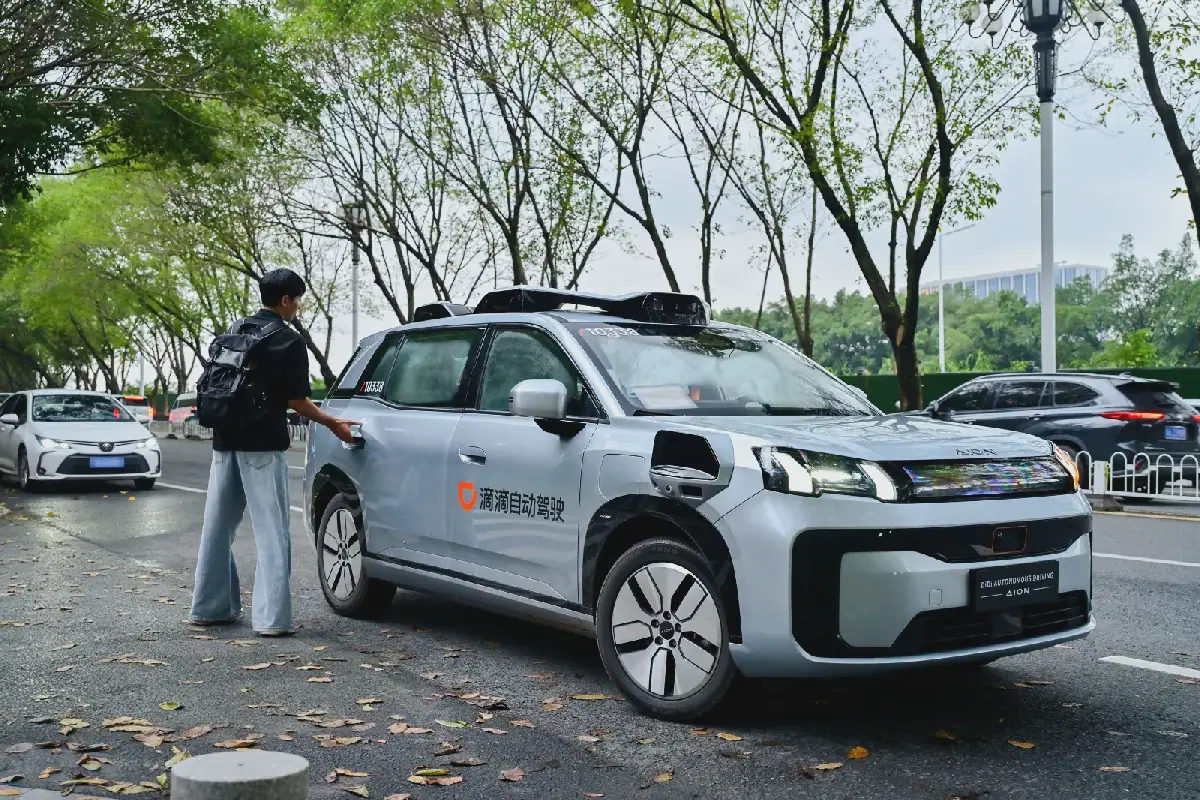
DiDi is advancing its autonomous driving operations in China through significant investments in Robotaxi technology, vehicle hardware, and integrated operating systems. The company is also focusing on public welfare initiatives that support drivers, strengthen emergency response, and improve transportation accessibility. At the center of its autonomous mobility operations is Huiju Port, described as the industry's first 24-hour, full-process Robotaxi operation center.
Huiju Port integrates five key functions: safety, user services, business operations, support, and vehicle operations and maintenance. DiDi Autonomous Driving has achieved a notable milestone with over 2,200 consecutive days of safe operation through passenger-carrying testing services in Beijing and Guangzhou. This demonstrates the company's commitment to safety and reliability in its autonomous driving technology.
A key development in DiDi's autonomous driving technology is the next-generation Robotaxi R2, developed in cooperation with GAC Aion and delivered in January 2026. The R2 features a 33-sensor system designed to provide comprehensive environmental perception. It also includes the industry's first mass-produced Three-Domain Converged Central Computing Unit (SCCU), which delivers over 2,000 TOPS of GPU computing power and incorporates 48 CPU cores.
The Robotaxi R2 is equipped with various passenger-focused technologies and amenities, including a front display for interaction with pedestrians, wider door openings, a 17.3-inch ceiling screen, customizable ambient lighting, and seats that recline up to 137 degrees. Additionally, it features an ultraviolet sterilization system that operates after each trip, enhancing passenger safety and comfort.
DiDi's autonomous driving technology is built around a full-stack Level 4 (L4) system that covers perception, prediction, decision-making, control, simulation, and machine learning. The company operates a hybrid dispatch model that integrates autonomous vehicles into its existing ride-hailing network, providing operational flexibility and enabling continuous testing and improvements across different traffic conditions and service scenarios.
DiDi's Director of Corporate Social Responsibility, Luo Zhenzhen, highlighted the company's public welfare programs, which focus on driver support, emergency response, and improving transportation accessibility. The DiDi Care Fund, established in cooperation with the Chinese Red Cross Foundation and the Beijing DiDi Foundation, provides assistance to driver families facing serious illnesses, accidents, or disasters. The fund has supported over 5,500 families.
DiDi's public welfare initiatives also include the DiDi Seeds Programme, which focuses on the education of drivers' children and has supported over 50,000 driver families over nine consecutive years. The company works with the Chinese Red Cross Foundation to provide first-aid equipment and training, and has trained nearly 20,000 certified individuals. Additionally, DiDi is making ride-hailing services more accessible to passengers with disabilities through priority matching and in-app verification systems.
Key points
- DiDi advances Robotaxi technology with investments in vehicle hardware and integrated operating systems.
- The company expands public welfare initiatives focused on driver support, emergency response, and transportation accessibility.
- DiDi's autonomous driving technology features a full-stack Level 4 system covering perception, prediction, and decision-making.