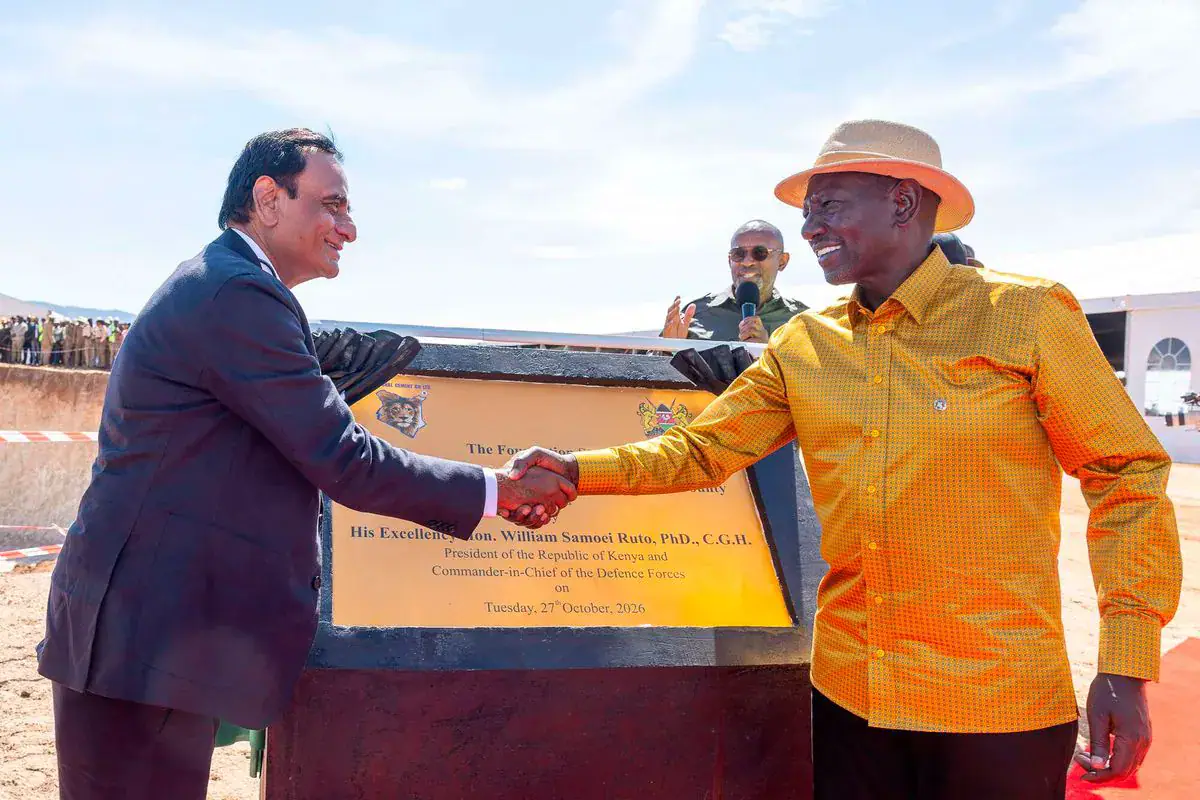
Devki Group, owned by billionaire Narendra Raval, is investing in a clinker plant in Ngaaie, Mwingi North, near Kitui's limestone deposits. The project, led by the National Cement Company subsidiary, aims to establish Kitui as a centre for cement production. President William Ruto presided over the groundbreaking ceremony on October 27, 2026, marking a significant step towards industrialisation in the region. The investment is expected to create jobs and stimulate economic growth.
The project has already started transforming the local economy, with construction attracting workers and traders to Kanana, near Ngaaie Hills. The area was previously characterised by limited commercial activity. President Ruto has emphasized the need to protect investors from bureaucratic hurdles, brokers, and demands for bribes or shares to create a predictable environment for businesses. The Devki project is seen as a test of Kenya's ability to turn its mineral wealth into jobs and industrial growth.
The clinker plant is expected to employ between 3,000 and 3,200 people permanently, with most jobs going to local residents. During construction, about 2,600 people are working at the site, with the number expected to exceed 4,000 at the peak. The project is also expected to stimulate economic activity in the surrounding communities, with increased demand for food, transport, housing, and other services.
Narendra Raval has presented industrialisation as a way to address unemployment among young people graduating from colleges and universities. He emphasized that industrialisation is crucial for creating jobs, stating that "we talk about GenZ but this is the only way for them to work." The Devki project comes as President Ruto seeks to show that his administration can create a more predictable environment for major investors.
President Ruto has referenced the failed attempt by Nigerian billionaire Aliko Dangote to establish a cement factory in Kitui, citing demands for shares and other conditions under the previous administration. Ruto announced that another investor was ready to establish a cement factory worth Sh33 billion in Kitui, although the investor's identity and production capacity were not disclosed.
The history of industrial projects in Kitui highlights the challenges of land acquisition and compensation. In 2014, Athi River Mining (ARM) announced plans to invest in a cement factory and limestone mining operation in the area, but the project triggered opposition from residents over land identification, consultation, and compensation. A Kenya Human Rights Commission report documented disputes between ARM and communities over land and graves.
The Devki project's success will depend on addressing the complex issues of land arrangements, community interests, and compensation. President Ruto has renewed his warning against brokers, cartels, and people demanding bribes or shares from investors, emphasizing the need for a predictable environment to attract capital and expand manufacturing. The project's impact on Kitui's economy and employment will be closely watched.
Key points
- The Devki Group's clinker plant project in Kitui is expected to create between 3,000 and 3,200 permanent jobs and stimulate economic growth in the region.