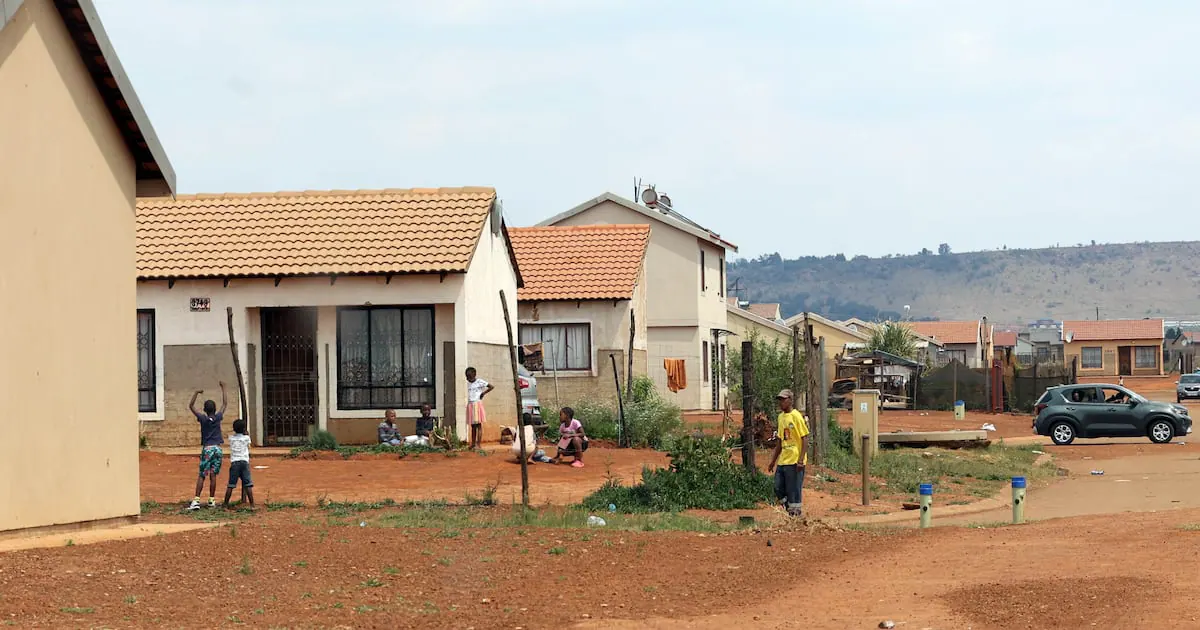
At least 14 government housing projects across Gauteng have been taken over by desperate home seekers who have occupied unfinished and vacant properties after years of waiting for allocation. The occupations have been driven by a housing crisis in areas such as Westonaria, where residents from Bekkersdal, Simunye, and Mohlakeng have moved into vacant units. Some families have been living in these homes since 2021.
Residents claim they were encouraged to occupy the houses after a WhatsApp voicenote circulated in the community, urging approved housing beneficiaries to move into unoccupied units. Many of the occupiers, including 44-year-old Mapule Mokone, have been on the housing waiting list for years, with Mokone waiting for 18 years before being approved for a house that was never allocated.
The occupations have resulted in at least 250 families refusing to leave the homes, which they now regard as their own. They have been living in backrooms, informal settlements, and overcrowded family homes for years. Resident Maria Mkoni stated that they have always wanted to pay for electricity and other services but have been unable to do so due to municipality restrictions.
Community leader Paseka Ndevu said many of the occupiers are elderly, disabled, or long-standing housing applicants who have been waiting for homes since the 1990s. Ndevu argued that residents have helped save the houses from further destruction by moving into them. However, the occupations have also resulted in the illegal use of stolen electricity and non-payment for water.
Gauteng human settlements MEC Tasneem Motara stated that 14 of the province's 45 housing projects have been affected by unlawful occupation over the past five years. Motara said the department is pursuing lengthy court processes to obtain eviction orders to remove squatters. There are currently 290,000 approved beneficiaries in Gauteng, but the national register stands at 1.5 million people.
The Gauteng department of human settlements has stated that the project could not be completed as planned due to the occupation. The department is working closely with the municipality to find a solution. Residents have faced an electricity crisis after the municipality disconnected power in May, leaving them without electricity for about five months.
The occupations have highlighted the need for a solution to the housing crisis in Gauteng. Residents are demanding that the government provide suitable accommodation for their families if they are to be removed from the occupied houses. The situation remains unresolved, with residents refusing to leave the homes they have occupied.
Key points
- Hundreds of families have occupied unfinished and vacant government housing projects in Gauteng, South Africa.
- The occupations have been driven by a housing crisis and state inefficiencies.
- Residents are demanding that the government provide suitable accommodation for their families if they are to be removed from the occupied houses.