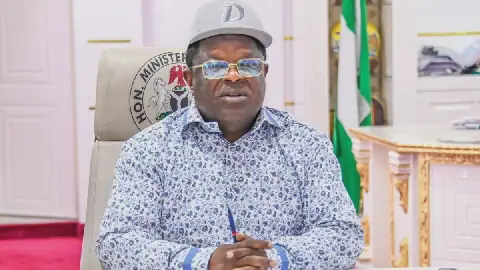
The conflict in eastern Democratic Republic of Congo has taken a new turn, with both sides engaging in a battle of images and information. A photo published on September 11 on social media platform X claims to show the destruction of three Rwandan drones by Congolese forces. The image had been viewed over 11,000 times and shared by 25 people by September 22. However, a thorough investigation has revealed that the photo is a fabrication.
A search of the official X account of the Congolese Armed Forces (FARDC) found no information confirming the destruction of the drones on September 11. A reverse image search also yielded no results. Further investigation using Hive Moderation, an AI-generated content detection tool, revealed that the image has a 99% probability of being AI-generated. This suggests that the photo is not authentic.
The conflict in eastern DRC has been marked by the use of misinformation and disinformation by both sides. The FARDC, supported by the Wazalendo, are fighting against rebels of the M23, who are allegedly supported by Rwanda. The situation has led to a complex web of alliances and rivalries, with various countries and international organizations involved.
Contrary to claims circulating on social media, there is no evidence to suggest that the European Union is supporting Rwanda in the conflict. In fact, the EU has publicly condemned Rwanda's involvement in eastern DRC and has taken measures to pressure the government to withdraw its troops. In February 2025, the EU summoned the Rwandan ambassador and demanded that the government cease its support for the M23.
The EU has also threatened to withhold 20 million euros in funding for Rwanda's military mission in Mozambique and to re-examine its agreement with Kigali on critical raw materials. These measures are part of a broader effort to put pressure on Rwanda to end its involvement in the conflict. The situation remains complex, with multiple parties involved and competing narratives.
The use of deepfakes and other forms of disinformation has become a significant challenge in the conflict, with both sides seeking to shape public opinion and influence the narrative. This has led to concerns about the integrity of information in the public sphere and the need for fact-checking and verification.
Christelle Luyindula Zola, a journalist with the Congolese national radio and television, contributed to this article as part of a project to promote fact-checking and integrity in public information. The article was reviewed by Moïse Esapa.
Key points
- The photo in question was generated using artificial intelligence and is not authentic.
- The European Union has condemned Rwanda's involvement in the conflict and has taken measures to pressure the government to withdraw its troops.
- The conflict in eastern DRC has been marked by the use of misinformation and disinformation by both sides.