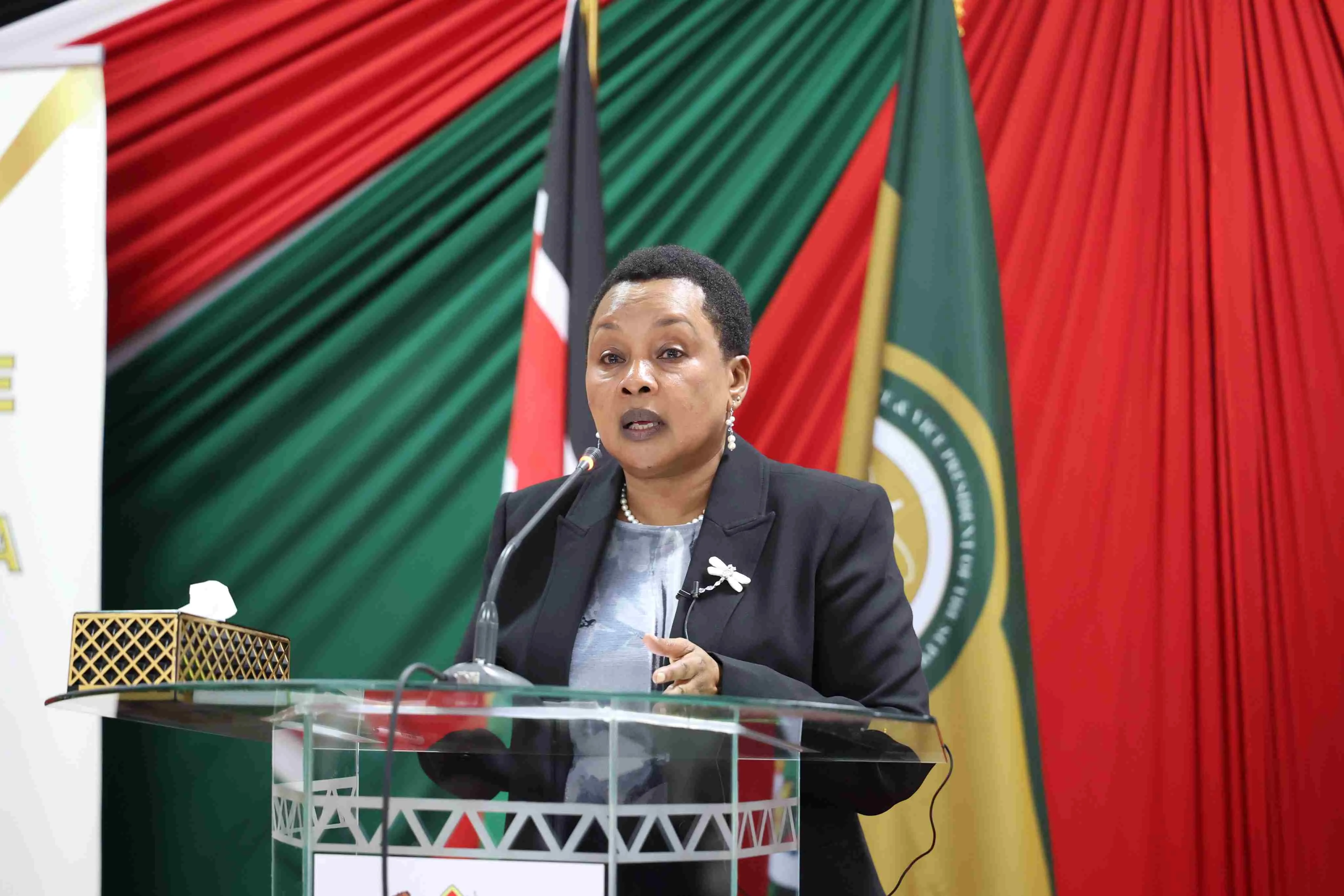
Deputy Chief Justice and Vice President of the Supreme Court, Philomena Mwilu, has stated that public participation has moved from a constitutional principle to a binding legal doctrine. Speaking to law students at Kenyatta University Parklands Law Campus, Mwilu explained that the Supreme Court has been shaping jurisprudence on meaningful participation. She emphasized that public participation must go beyond a mere procedural formality.
Mwilu highlighted the 2010 Constitution's role in redefining the relationship between citizens and the State. The Constitution affirms that sovereign power belongs to the people and embeds public participation across various sectors, including legislation, governance, devolution, environmental management, and public finance. This, she noted, has significantly impacted how the country approaches public engagement.
The Deputy Chief Justice cited the Supreme Court's ruling in British American Tobacco Kenya PLC v Cabinet Secretary for the Ministry of Health. In this case, the Court established criteria for meaningful participation, including reasonable notice, inclusive opportunity, transparency, clarity of the subject matter, and genuine, purposive public input. These criteria have become essential in ensuring that public participation is effective.
Mwilu also referred to the Court's 2024 Finance Act decision, which balanced the constitutional requirement for participation with legislative timelines. The Court held that amendments made after a public consultation do not automatically trigger a new round of consultations. However, submitted views must be taken seriously, indicating a nuanced approach to public participation.
To strengthen public participation, Mwilu called for a comprehensive legal framework to govern the process. The Public Participation Bill, 2025, which was approved by the National Assembly on 12 August 2026, aims to standardize participation procedures for state institutions, Parliament, county assemblies, and constitutional commissions. The Bill is awaiting presidential assent.
Addressing the audience, Mwilu urged young people to engage civically, including through digital platforms. She stressed that strengthening public participation is a shared responsibility of the judiciary, legislature, executive, civil society, and citizens. Mwilu concluded that the development of public participation remains an ongoing constitutional conversation, inviting continued dialogue among all stakeholders.
Key points
- Deputy Chief Justice Philomena Mwilu declares public participation a binding legal doctrine.
- The Supreme Court has established criteria for meaningful participation.
- The Public Participation Bill, 2025, aims to standardize participation procedures.