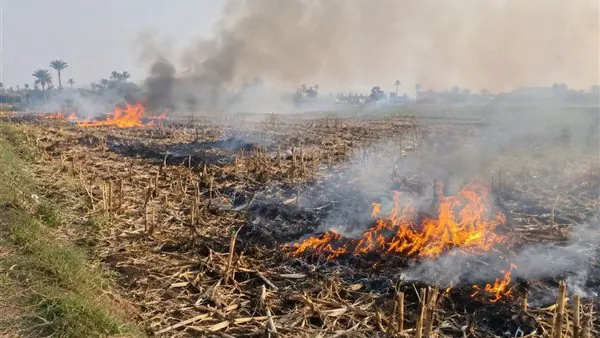
A severe environmental and health crisis has unfolded in the city of El-Adwa, located in Egypt's Minya governorate. Local farmers have been setting fire to crop residues in their fields, releasing massive amounts of toxic smoke into the air. The hazardous fumes have been blanketing the city, posing a significant threat to the health of residents, particularly those with pre-existing respiratory conditions.
The burning of crop residues has become a daily occurrence in El-Adwa, with residents waking up to thick clouds of smoke covering the city. This has resulted in a substantial increase in respiratory problems, exacerbating conditions for patients being treated at the local chest hospital. The situation has sparked concerns among residents, who are calling for urgent action to mitigate the crisis.
Despite warnings from local authorities, the practice of burning crop residues continues unabated. The city's mayor, Rajab Qayati, had previously issued a warning to farmers, urging them to cease the practice due to its adverse impact on public health. However, the efforts have yielded little results, with the burning of crop residues persisting.
The absence of effective regulation and enforcement by environmental authorities has exacerbated the situation. Egypt's environmental agencies, tasked with monitoring and addressing pollution, appear to be ineffective in curbing the practice. This has allowed the burning of crop residues to continue, further compromising the health and well-being of residents.
The El-Adwa chest hospital, located near the areas where the burning is taking place, is home to patients with severe respiratory conditions. The influx of toxic smoke has made it challenging for patients to recover, while also increasing the risk of complications. The situation has become a pressing concern for healthcare professionals, who are working to mitigate the impact of the pollution on patients.
The impact of the pollution extends beyond health concerns, with the smoke also affecting visibility on the roads. The dense fumes have made it difficult for drivers to navigate, particularly on the highway connecting El-Adwa to other parts of the country. This has raised concerns about road safety, with residents calling for measures to address the issue.
Residents are urging authorities to take decisive action to address the crisis. They are calling for alternative methods for disposing of crop residues, as well as stricter enforcement of environmental regulations. The situation in El-Adwa highlights the need for a comprehensive approach to addressing environmental pollution in Egypt, with a focus on protecting public health and promoting sustainable agricultural practices.
Key points
- The burning of crop residues in Egypt's Minya governorate has resulted in severe air pollution, threatening the health of residents, particularly those with respiratory conditions.
- Local authorities have issued warnings to farmers, but the practice continues, with little effective regulation from environmental agencies.
- The crisis has sparked concerns about public health, road safety, and sustainable agricultural practices in Egypt.