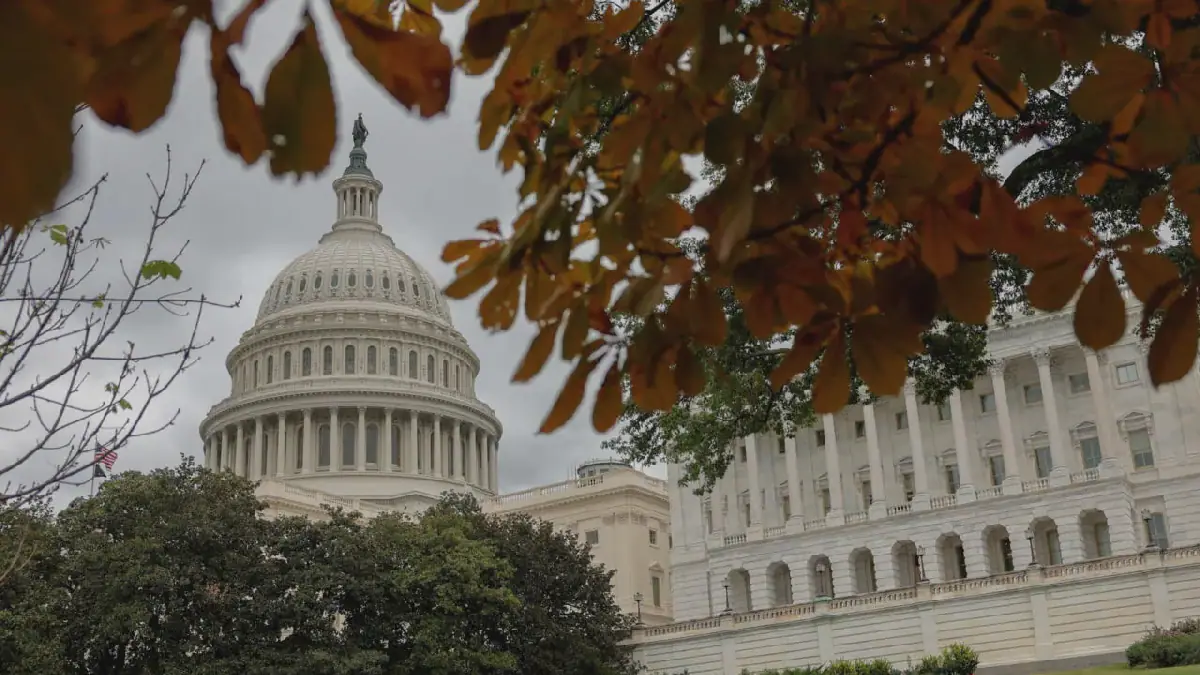
The Democrats have secured control of both houses of Congress in the US midterm elections, marking a significant setback for President Donald Trump. With 228 out of 435 seats in the House of Representatives, the Democrats have claimed a majority, while the Republicans hold 139 seats. The counting of remaining seats is ongoing. In the Senate, the Democrats have gained at least 54 out of 100 seats.
This shift in power renders Trump a lame-duck president, limiting his ability to advance his policies. Although he retains the power to veto legislation and remains commander-in-chief, the Democrats will have the authority to block bills and investigate his administration from January 3, 2027. The election results were influenced by voter concerns over rising living costs, Trump's tariff policies, and the conflict in Iran.
Voters expressed excitement over the outcome, with Democratic voter Kathy Jackoway saying it would help reclaim the country. Trump acknowledged his party's loss, stating that the Democrats "did a good job" and "fought hard." However, he distanced himself from the responsibility, insisting it wasn't a personal defeat. International reactions followed swiftly, with French Foreign Minister Jean-Noël Barrot calling the voting process a triumph for American democracy.
British Prime Minister Andy Burnham saw potential for constructive dialogue on shared issues like living costs. EU foreign policy chief Kaja Kallas expressed hopes that the new Congress would increase pressure on Russia, while Iran's supreme leader, Mojtaba Khamenei, dismissed any expectation of changes in US policy towards Iran. The Democrats also made surprising gains in traditionally Republican areas, including South Carolina, North Carolina, Iowa, Kansas, Ohio, Texas, and Maine.
In Maine, Troy Jackson defeated long-serving Republican Susan Collins. Kansas welcomed its first Democratic senator since 1932 with Adam Hamilton, a Methodist minister. In Iowa, Josh Turek, a former Paralympic athlete, captured a Senate seat. Michigan's Abdul El-Sayed made history by becoming the first Muslim elected to the Senate, while positions in the House expanded for Democrats in states like Pennsylvania, Arizona, and New Jersey.
The Democrats' gains also included the election of Keisha Lance Bottoms as the first Black woman governor in US history in Georgia. The Republicans found some solace with Byron Donalds becoming Florida's first Black governor and Ashley Moody retaining her Senate seat. Following the election results, both the dollar and oil prices fell as traders adjusted to the implications of a Democratic win.
Investment director Russ Mould from AJ Bell noted the uncertainty surrounding Trump's potential actions in the coming months as he declared he would assume the role of "Mr Veto." European stock markets reacted positively, showing gains despite eurozone inflation reaching a three-year high of 4.0 percent. The Democrats' victory marks a significant shift in power in the US Congress, with implications for Trump's presidency and the country's policy landscape.
Key points
- Democrats win control of US Congress, dealing blow to President Trump's policies
- Trump's lame-duck status limits his ability to advance policies
- Democrats make gains in traditionally Republican areas, including South Carolina and Kansas