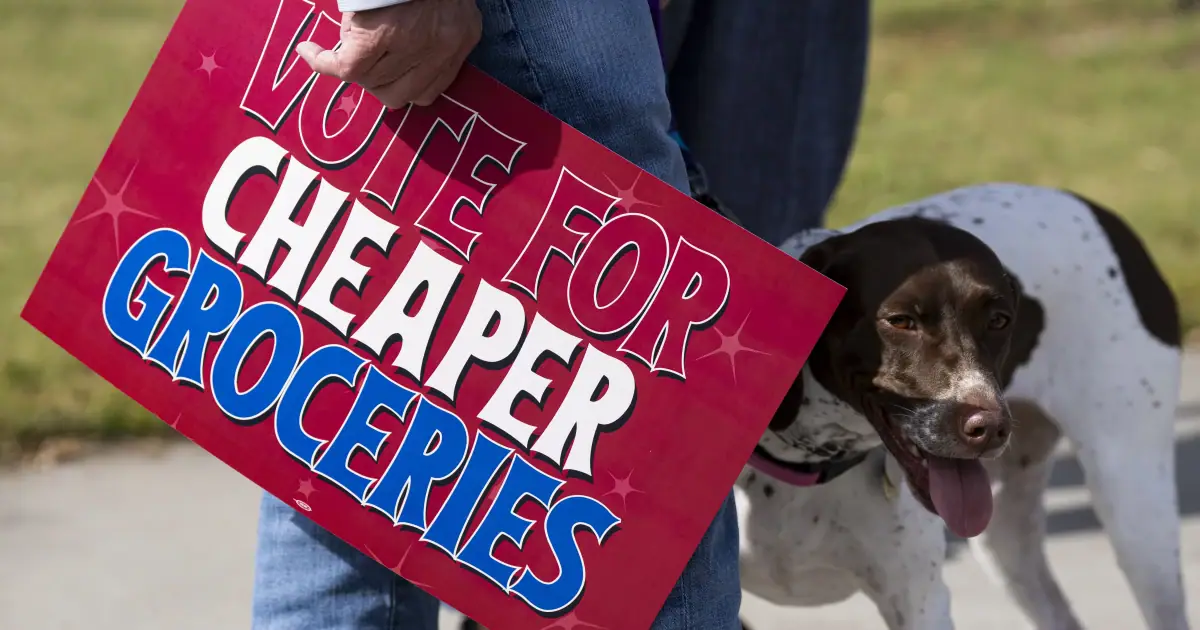
The recent midterm elections saw Democrats win control of both houses of Congress, with many voters citing economic concerns, including high food prices, as a key factor in their decision. House Democratic Leader Hakeem Jeffries said the incoming majority would prioritize tackling high prices come January. He stated that the victory was a strong rebuke of MAGA extremism, which has made life more expensive for everyday Americans.
High food prices have been a significant burden for many Americans, with factors such as President Trump's tariffs and the war in Iran contributing to the increase. Lael Brainard, who leads The Kitchen Table Project, said Americans are expecting relief from Washington and quickly. They feel squeezed by high prices that don't need to be that high.
Despite the challenges, Democrats intend to move ahead with plans to cut grocery bills, including rolling back Trump's tariffs. Those tariffs have raised the cost of certain foods and drinks imported to the U.S. and created other pressures on the food industry. The Iran war has led to a surge in energy prices, making it more expensive to transport goods.
However, getting Trump to backtrack on tariffs or the Iran war could prove tricky for Democrats. Lehigh University political science professor Chris Borick said the president would want to find ways to reduce the cost of groceries, but there is distance between the president and Democrats. Several incoming Democratic senators have floated proposals to make groceries more affordable.
Incoming Democratic senators James Talarico of Texas and Adam Hamilton of Kansas have proposed pushing back against attacks on federal food assistance programs and banning dynamic pricing in grocery stores, respectively. Multiple candidates, including Roy Cooper of North Carolina, vowed to block food industry mergers that would raise consumer prices.
Beyond the blue wave in Congress, Democrats also made gains in state capitals across the U.S. Incoming state governors have floated ideas for giving residents relief in the grocery aisle. Keisha Lance Bottoms proposed allowing municipalities in Georgia to suspend or eliminate local sales tax on groceries, baby formula, and diapers.
Americans say they want to see cheaper groceries soon, with nearly half of respondents in a poll released by the Kitchen Table Project and Global Strategy Group in September citing lowering grocery bills within six months as their most important goal. Democratic governors-elect, including Gina Hinojosa of Texas and Deb Haaland of New Mexico, have also proposed policies to address high food prices.
Key points
- Democrats aim to roll back Trump's tariffs to lower food prices
- Incoming Democratic senators propose various plans to make groceries more affordable
- Americans expect relief from high food prices within six months