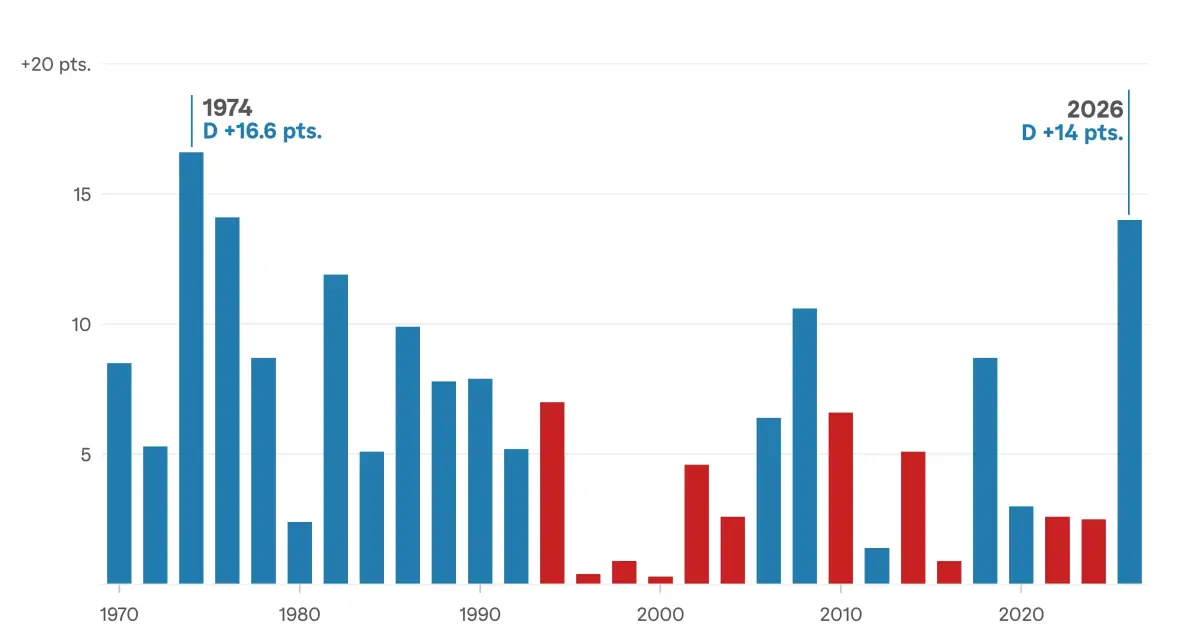
The recent midterm elections have resulted in a significant victory for Democrats, marking the largest win for either party in 50 years. According to NPR News, Democrats secured 56% of votes in House races, while Republicans received 42%, resulting in a 14-point spread. This substantial margin is reminiscent of the aftermath of the Watergate scandal. In comparison, previous midterm elections, such as those in 2018 and 2006, had much narrower margins, with 2010 being an exception due to the backlash against the Affordable Care Act.
The elections saw a substantial shift in House seats, with Democrats flipping 46 seats currently held by Republicans, and potentially rising to 49 as three other races remain undecided. This represents the second-largest number of flipped seats this century, following the 2010 elections when Republicans gained 66 seats. The significant change in party control is notable, with Democrats likely to have the largest majority in Congress since the early 1990s. If they win all the races where they are leading, they will secure 260 seats.
The midterm elections have resulted in a considerable change in the balance of power in the House of Representatives. For the first time in 40 years, Democrats will have control of the House, marking a significant shift from the previous Republican-led majority. This change is part of a larger trend of party control shifts in the House over the past 20 years, with control changing hands five times during this period.
The recent midterm elections have significant implications for the Republican Party, which has struggled to maintain its grip on power. The party's performance has been impacted by various factors, including the Affordable Care Act and the presidency of Donald Trump. The election results have also raised questions about the future of the Republican Party and its leadership.
The Democrats' victory has been attributed to various factors, including their strong campaign efforts and the popularity of their candidates. The party's success has also been linked to the changing demographics of the electorate and the growing popularity of progressive policies. As the party takes control of the House, it is expected to focus on key issues such as healthcare, education, and the economy.
The midterm elections have also highlighted the importance of voter turnout and engagement. The elections saw a significant increase in voter participation, particularly among young people and minority groups. This trend is expected to continue in future elections, with both parties seeking to mobilize their supporters and attract new voters.
As the new Congress prepares to take office, Democrats are expected to face significant challenges in governing and working with Republicans. The party's leadership, including Speaker Nancy Pelosi, will need to navigate complex negotiations and build coalitions to pass legislation. Despite these challenges, the Democrats' victory marks a significant moment in American politics, with the party poised to shape the country's agenda for the next two years.
Key points
- Democrats secured a 14-point spread in House races, the largest margin for either party in 50 years.