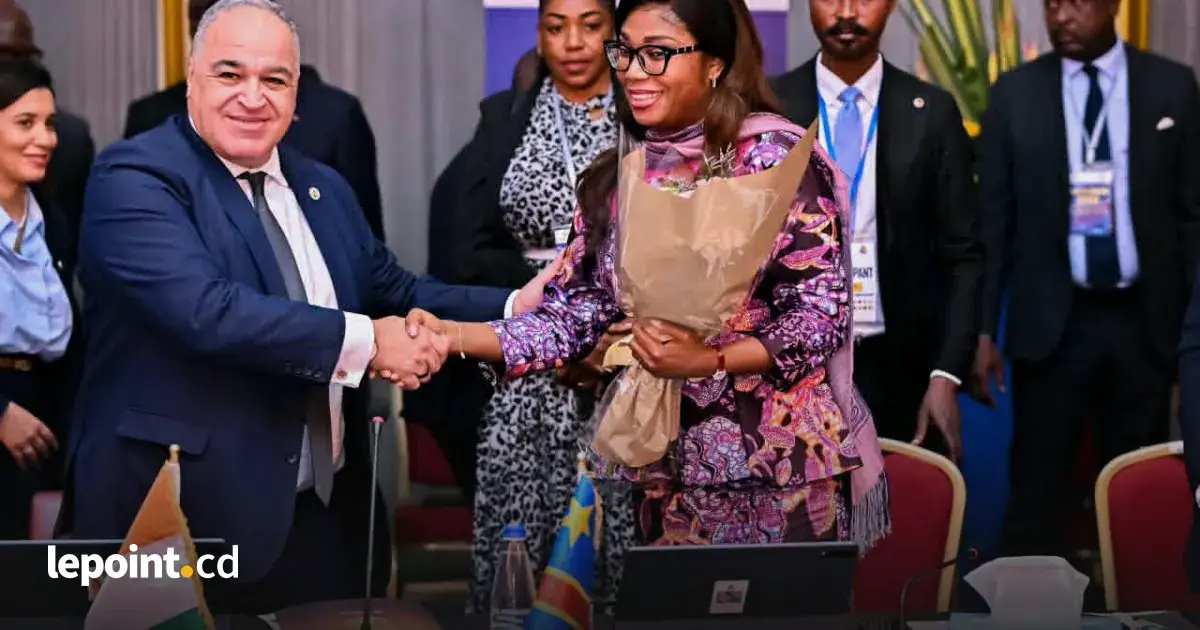
The Democratic Republic of Congo has taken over the presidency of the African Petroleum Producers' Organization (APPO) for the year 2027. Minister of Hydrocarbons Acacia Bandubola Mbongo assumed the role on November 17, 2026, in Abidjan, succeeding Ivory Coast's Mamadou Sangafowa-Coulibaly. This marks a historic moment as Bandubola Mbongo becomes the first woman to preside over the organization. The APPO, established in 1987, comprises 18 African oil-producing countries and Venezuela as an honorary member.
During her tenure, Bandubola Mbongo aims to utilize natural gas as a catalyst for industrialization in member countries. She also plans to organize the first summit of heads of state of APPO member countries. Furthermore, she condemned the ongoing conflict in eastern DRC, attributing it to Rwanda. The DRC will preside over APPO with a relatively modest oil production capacity. The country extracts between 8 and 10 million barrels per year, accounting for approximately 0.34% of Africa's total production in 2022.
According to a report by Ebuteli and the Congo Research Group, the DRC's oil production stands at around 25,000 barrels per day, primarily operated by Perenco. The oil sector contributes relatively little to the state's revenue, with oil revenues reaching approximately $328.8 million in 2022. This represents only 4.46% of the country's extractive revenues, compared to 95.54% from the mining sector. The DRC's previous attempt to auction off 30 oil blocks in July 2022 was canceled in October 2024 without any successful bids.
In contrast, three gas blocks in Lake Kivu were successfully allocated. The DRC's APPO presidency coincides with the launch of the African Energy Bank, established on October 31 in Abuja by APPO and Afreximbank. The bank has an authorized capital of $5 billion. At the Abidjan meeting, APPO Secretary-General Farid Ghezali urged member states that have not yet done so to contribute their share of the bank's capital.
Bandubola Mbongo's presidency of APPO is seen as an opportunity for the DRC to play a more significant role in Africa's energy sector. The DRC's energy landscape is characterized by vast natural resources, including oil and gas reserves. However, the sector faces challenges, including conflict in eastern DRC and limited investment. The country's oil production is expected to remain steady, with Perenco continuing to operate as the primary oil producer.
The African Energy Bank is expected to play a crucial role in financing energy projects across the continent. The bank's establishment is a significant development in Africa's energy sector, providing a much-needed financing mechanism for energy projects. The DRC's presidency of APPO provides an opportunity for the country to shape the organization's agenda and drive cooperation among member states.
As the DRC assumes the APPO presidency, the country faces challenges in maximizing its oil and gas resources. With a relatively modest production capacity, the DRC must navigate the complexities of the global energy market while addressing domestic challenges. The country's energy sector is poised for growth, driven by its vast natural resources and the establishment of the African Energy Bank.
Key points
- The DRC's Minister of Hydrocarbons, Acacia Bandubola Mbongo, is the first woman to preside over APPO.
- The DRC's oil production stands at around 25,000 barrels per day, primarily operated by Perenco.
- The African Energy Bank has an authorized capital of $5 billion and is expected to play a crucial role in financing energy projects across the continent.