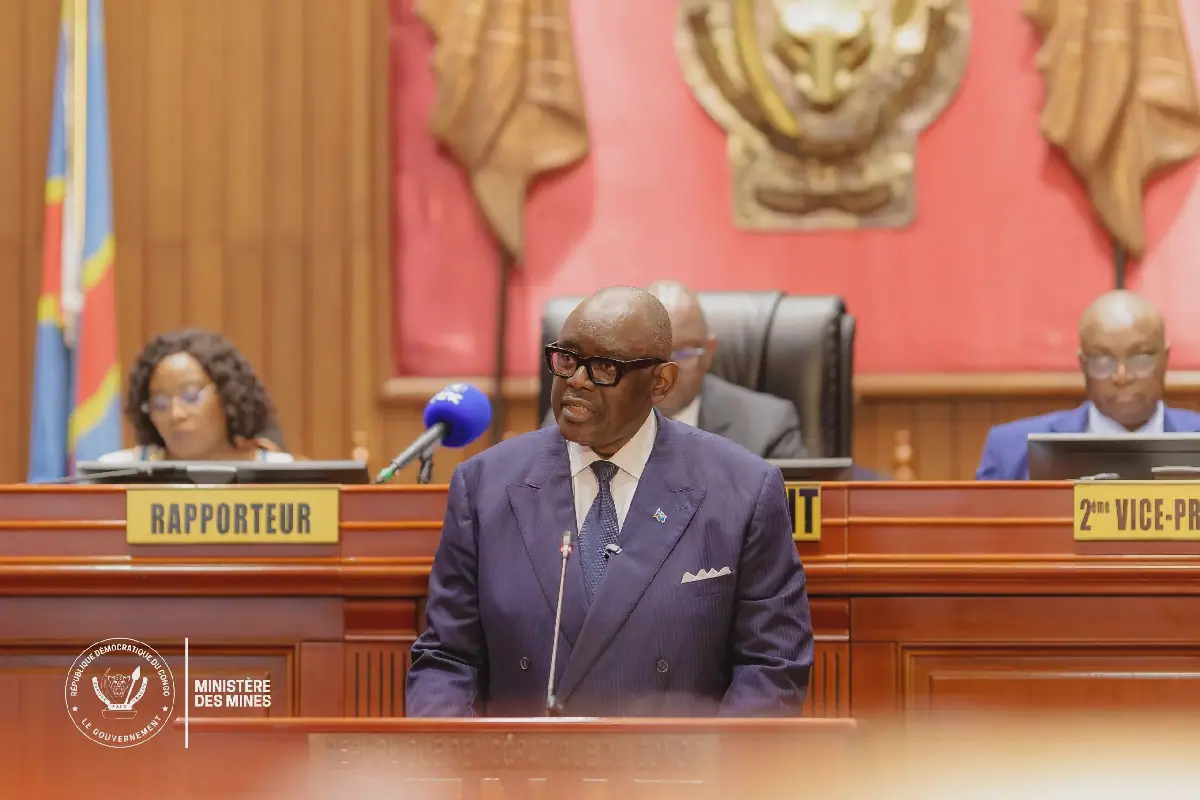
The Democratic Republic of Congo's mining sector was under scrutiny at a recent parliamentary control session in the Senate. Minister of Mines Louis Watum Kabamba addressed a question from Senator Boongo Nkoy Pancrace regarding the identification, valuation, and integration of mining by-products into the calculation of mining royalties. The issue at hand is crucial for the country's public finances, as it seeks to ensure that by-products from mining operations contribute to state revenue.
Minister Watum detailed the government's initiatives to effectively tax mining by-products, highlighting the inter-ministerial decree of June 29, 2026, which came into effect on October 1, 2026. The decree aims to strengthen the consideration of by-products in the collection of royalties. The minister emphasized the need to better identify marketable substances, determine their economic value, and ensure their integration into the tax base. This is particularly important in a sector where control over production and commercialization flows is vital for national revenue.
The discussion also touched on the validation mechanisms for mineral product analysis. Minister Watum discussed the role of public laboratories and the ARECOMS in the control and regulation system. The reliability of analysis results is a critical link in the valorization of natural resources, as it determines the composition of mineral products, their classification, and the application of corresponding tax obligations.
Furthermore, Minister Watum provided insights into the legal and fiscal framework applicable to the commercialization and export of mineral products. He also addressed the potential loss of revenue and the prospects for mobilizing additional revenue for the public treasury. The issue of channeling artisanal gold into official circuits was another significant aspect of his intervention. The minister highlighted progress in this area, particularly through the activities of DRC GOLD TRADING.
The evolution of artisanal gold volumes oriented towards formal circuits illustrates the advances made in efforts to ensure traceability and formalization of this sector. This is a strategic issue for the DRC, which seeks to better control the commercialization of its artisanal gold, limit informal circuits, and increase the economic benefits of this resource for the state.
Following the session, senators formulated several recommendations to the Minister of Mines. Additional concerns were raised, requiring clarifications on various aspects discussed during the debate. According to the Senate's internal regulations, Minister Watum has a 48-hour deadline to respond to the senators' concerns. This hearing takes place in a context where the mobilization of internal revenue and the optimization of the extractive sector's contribution to public finances are priorities for the Congolese authorities.
The discussions in the Senate bring to the forefront a fundamental question: how to transform the DRC's mining wealth into revenue effectively captured by the state? The response involves better fiscal regulation, credible technical expertise, and reinforced traceability of substances from mining operations. The challenge lies in effectively implementing these measures to ensure that the country's rich mineral resources translate into tangible economic benefits for its citizens.
Key points
- The Democratic Republic of Congo's government is working to strengthen the taxation of mining by-products to increase revenue.
- Minister of Mines Louis Watum highlighted initiatives to effectively tax mining by-products, including an inter-ministerial decree that came into effect in October 2026.
- The DRC seeks to better control the commercialization of artisanal gold and increase the economic benefits of this resource for the state.