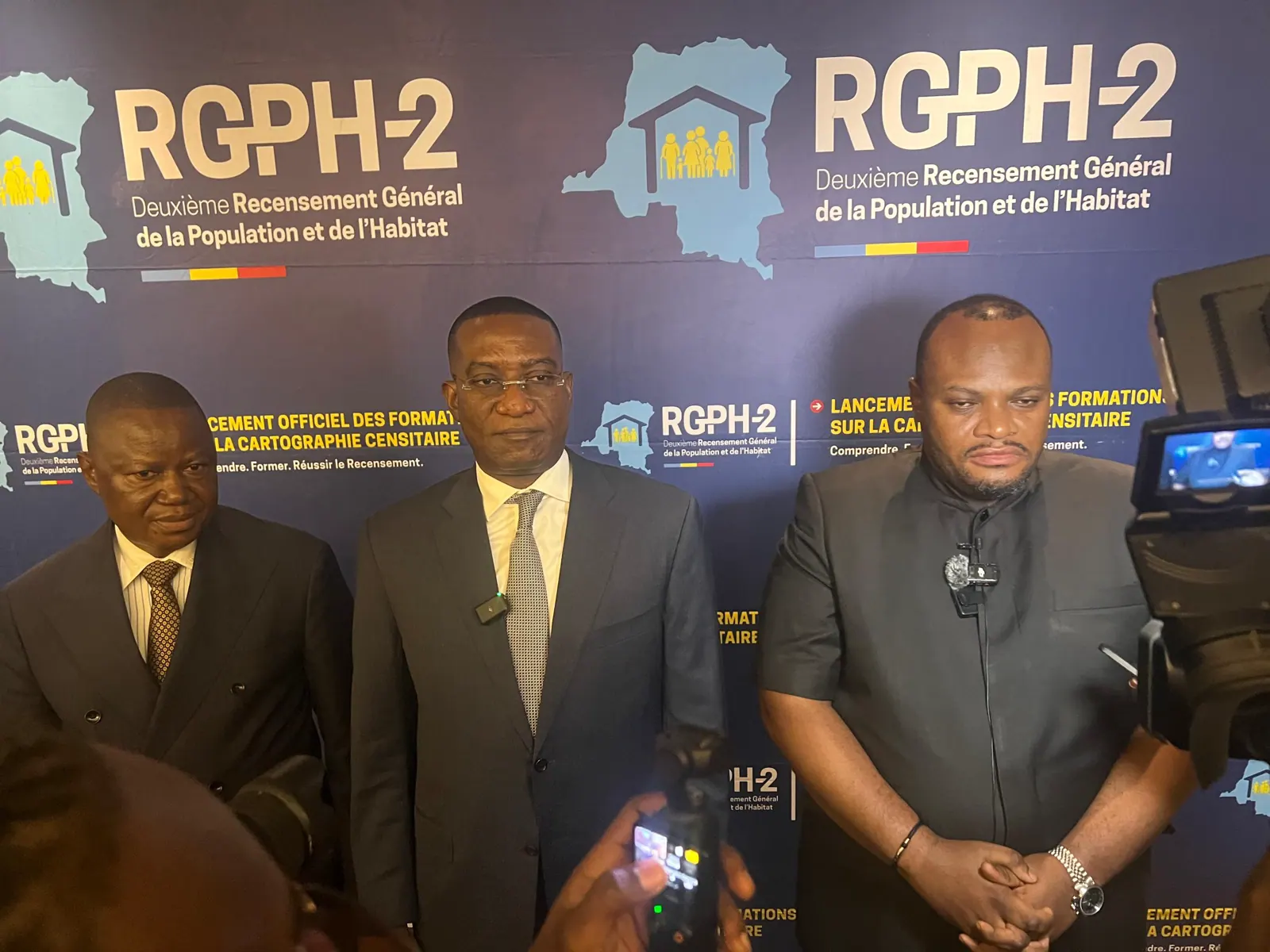
The Democratic Republic of Congo has officially launched the cartography phase of its second national census, known as RGPH-2, in Kinshasa. The initiative was launched by Minister of State for Planning, Guylain Nyembo, who emphasized the importance of accurate population data for effective governance and resource allocation. The cartography phase is a crucial step in the census process, enabling the identification and localization of buildings, households, and infrastructure.
According to Minister Nyembo, the development of the country requires reliable, up-to-date, and territorially precise data to ensure a thorough understanding of the population. This, he said, will enable better planning, governance, and service delivery to citizens. The minister urged provincial, municipal, territorial, and local authorities, as well as traditional leaders, community leaders, and religious officials, to facilitate the work of cartography teams and create favorable conditions for the operation.
The cartography phase will involve agents traversing Kinshasa's neighborhoods to identify households, dwellings, and infrastructure, and prepare areas for the general census scheduled for July 2027. The minister called on the population to cooperate with cartography agents and provide necessary information to facilitate their mission. He also requested security services to ensure the protection of teams and equipment.
Minister Nyembo expressed gratitude to technical and financial partners for their involvement in the RGPH-2 process, highlighting the value of their support in strengthening national capacities and achieving this critical phase. Following the launch ceremony, the minister will conduct a field visit, symbolically assuming the role of cartographer for the day and accompanying the team tasked with visiting the first household.
The cartography phase is expected to last for one month, during which agents will gather essential data to inform the general census. The minister emphasized that this phase is not merely a technical exercise but a fundamental step towards understanding the country's population and territories. Accurate data, he said, will enable better preparation for the future.
The RGPH-2 aims to provide a comprehensive understanding of the country's population, which will inform development planning, resource allocation, and service delivery. The initiative is expected to have a positive impact on the country's development trajectory. The government has urged all stakeholders to support the process and ensure its success.
The launch of the cartography phase marks a significant milestone in the RGPH-2 process. With the support of technical and financial partners, the government is confident that the census will provide accurate and reliable data to inform development planning and policy decisions. The success of the census will depend on the cooperation of all stakeholders, including the population, authorities, and partners.
Key points
- The Democratic Republic of Congo has launched the cartography phase of its second national census, aimed at gathering accurate population data.
- The initiative is expected to provide a comprehensive understanding of the country's population, which will inform development planning, resource allocation, and service delivery.
- The cartography phase will involve agents traversing Kinshasa's neighborhoods to identify households, dwellings, and infrastructure, and prepare areas for the general census scheduled for July 2027.