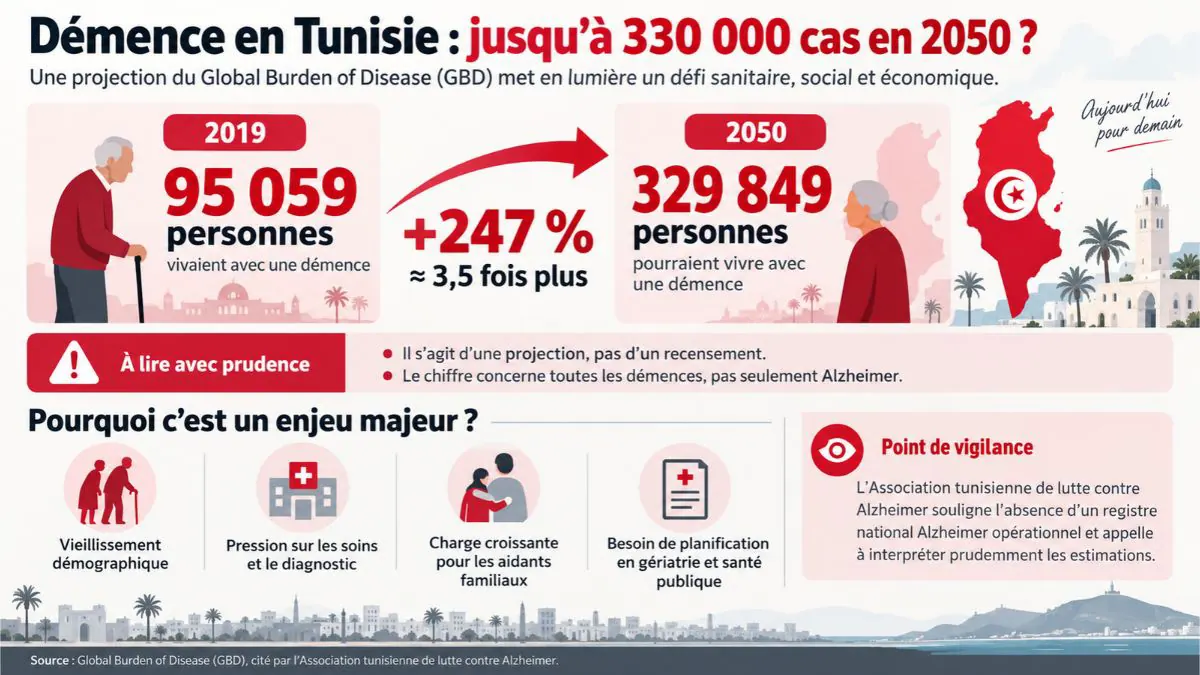
According to projections from the Global Burden of Disease, the number of people living with dementia in Tunisia is expected to increase substantially by 2050. In 2019, an estimated 95,059 individuals were living with the condition. By 2050, this number is projected to reach 329,849, representing a significant increase of approximately 247% over the 30-year period. This projection highlights the need for Tunisia to prepare for the challenges associated with an aging population.
The projected increase in dementia cases in Tunisia has significant implications for the country's healthcare system, economy, and social structures. As the population ages, more families are likely to be affected by the condition, leading to a greater need for prolonged care, support, and medical attention. This shift will require substantial adjustments in the way healthcare is delivered and in the support systems available to families and caregivers.
The issue of dementia in Tunisia extends beyond the healthcare sector, encompassing economic and social dimensions. The traditional role of family members in providing care may impact their professional availability and financial resources. Therefore, it is crucial to assess whether Tunisia has sufficient capacity for early diagnosis and to develop geriatric and neurological care. Additionally, strategies to support family caregivers must be considered.
The accuracy of the projected numbers is subject to some uncertainty, as it is based on estimates rather than definitive counts. The Association tunisienne de lutte contre Alzheimer has pointed out the absence of a functional national Alzheimer registry, emphasizing the need for cautious interpretation of available estimates. However, these projections serve as a critical signal for planning purposes.
To effectively address the anticipated rise in dementia cases, Tunisia must focus on measuring the current situation accurately and organizing care pathways. This involves better integration of caregivers into health and dependency policies. The Ministry of Health will play a crucial role in this process, which will require comprehensive planning and resource allocation.
Key statistics highlight the scale of the challenge: in 2019, there were an estimated 95,059 cases of dementia in Tunisia, projected to rise to 329,849 by 2050. This represents a multiplication of approximately 3.5 times the 2019 estimate. The increase underscores the need for proactive measures to manage the impact of dementia on individuals, families, and society as a whole.
The situation in Tunisia reflects broader global trends and challenges associated with aging populations. As countries face similar issues, there is an opportunity for knowledge sharing and collaboration to develop effective strategies for managing dementia. By addressing these challenges proactively, Tunisia can mitigate some of the social, economic, and healthcare impacts associated with the projected increase in dementia cases.
Key points
- The number of people living with dementia in Tunisia is projected to reach 329,849 by 2050.
- The increase in dementia cases will have significant implications for Tunisia's healthcare system, economy, and social structures.
- Accurate measurement of the current situation and organization of care pathways are crucial for addressing the anticipated rise in dementia cases.