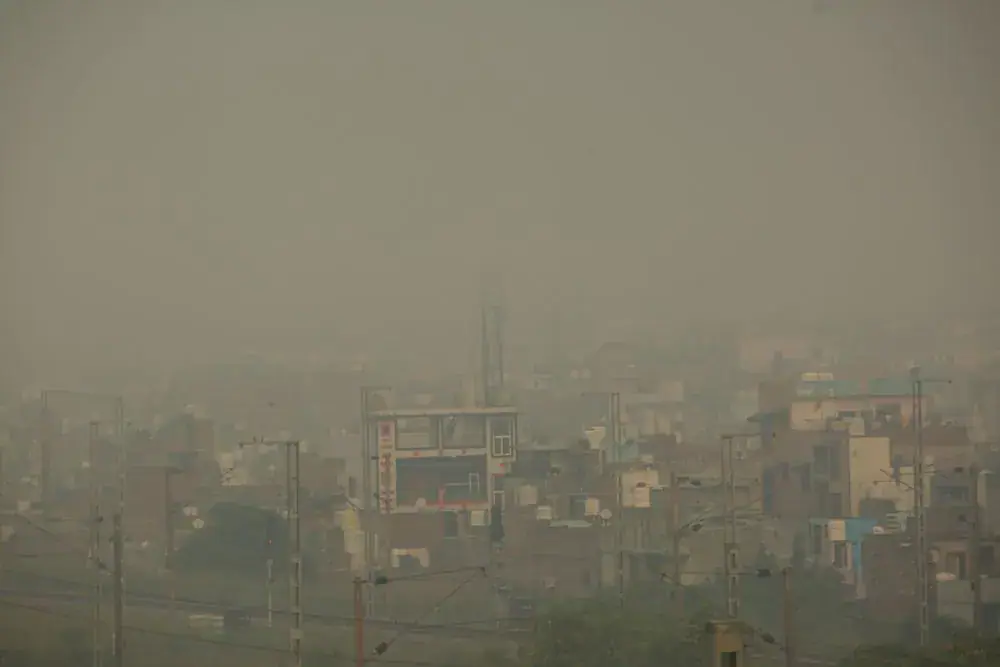
Air pollution in India's capital, New Delhi, skyrocketed to over 58 times the World Health Organization's recommended daily limit on Monday, following widespread fireworks celebrations during the Hindu festival of Diwali. According to monitoring organisation IQAir, levels of cancer-causing PM 2.5 microparticles hit 879 micrograms per cubic metre in the Mandir Marg locality. This significant spike in pollution was recorded around eight hours after the peak of fireworks bursting.
The Supreme Court had allowed the limited use of "green" firecrackers during Diwali, designed to produce fewer emissions. However, restrictions were routinely flouted, with the city experiencing widespread explosions. Millions of people celebrate Diwali with fireworks in one of the world's most polluted capitals, exacerbating winter smog caused by vehicle emissions, farm fires, and industry.
Authorities have implemented restrictions on traffic and construction in recent weeks to curb smog in New Delhi, home to over 30 million people. The city's pollution is attributed to various sources, including vehicles, biomass burning, and industry. According to India's environment ministry, vehicles account for 23% of Delhi's winter pollution, while biomass burning contributes 20%, and industry, including coal-fired power plants, contributes about 9%.
A significant portion of Delhi's pollution, 27%, comes from secondary particles formed when gases released by vehicles, industry, power plants, and biomass burning react in the atmosphere. The city's air pollution problem is further highlighted by a 2024 study published in The Lancet Planetary Health, which estimated that 3.8 million deaths in India between 2009 and 2019 were linked to air pollution.
The impact of air pollution on public health is a pressing concern in India. The country has been grappling with severe air pollution issues, particularly in cities like New Delhi. The government has been working to address the issue through various measures, including restrictions on traffic and construction, as well as promoting cleaner energy sources.
Despite efforts to mitigate air pollution, the problem persists, and Diwali celebrations only exacerbate the issue. The use of fireworks during the festival significantly contributes to the surge in pollution levels. The city's residents are often left to deal with the consequences of severe air pollution, which can have long-term effects on their health.
As India continues to struggle with air pollution, it is essential for the government and citizens to work together to find sustainable solutions to this pressing issue. The implementation of stricter regulations and the promotion of cleaner energy sources can help mitigate the effects of air pollution and create a healthier environment for the country's citizens.
Key points
- Delhi's air pollution surged to 58 times the WHO's recommended daily limit after Diwali fireworks.
- Vehicles account for 23% of Delhi's winter pollution, while biomass burning contributes 20%, and industry contributes about 9%.
- A 2024 study estimated that 3.8 million deaths in India between 2009 and 2019 were linked to air pollution.