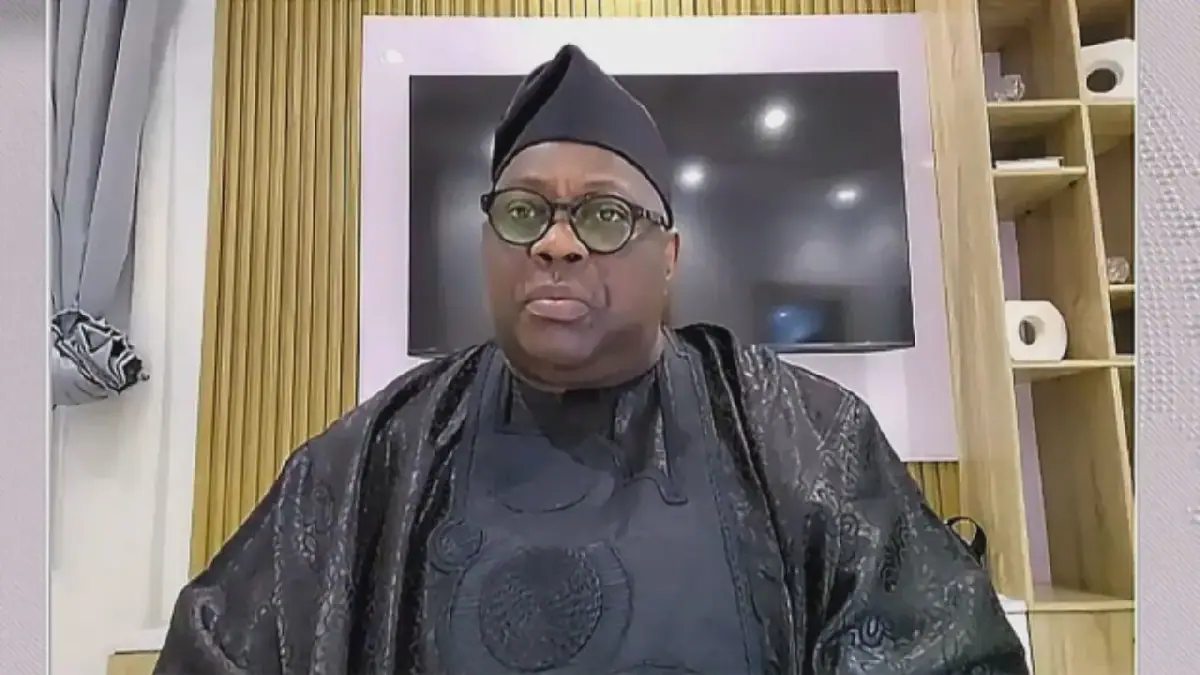
Nigerian politician and ADC chieftain, Dele Momodu, has expressed concerns about the country's democratic future ahead of the 2027 general elections. He invoked former President Goodluck Jonathan's handling of the 2015 general elections, where Jonathan conceded defeat to President Muhammadu Buhari despite facing significant opposition. Momodu emphasized that Jonathan placed national peace above his personal ambition, choosing peaceful coexistence over retaliation against his opponents.
Momodu contrasted the 2015 experience with the growing political tension and uncertainty surrounding Nigeria's electoral institutions ahead of the 2027 elections. He cited the Osun State Gubernatorial election, where about 50 lives were allegedly lost, as an example of the current state of affairs. Momodu questioned whether Nigerians could confidently rely on President Bola Tinubu and the Independent National Electoral Commission (INEC) to deliver free, transparent, and credible elections in 2027.
The former presidential candidate also expressed concerns about the judiciary's involvement in political disputes, arguing that public confidence in democratic institutions was under pressure. He wondered whether Nigerians who fought against military dictatorship had inadvertently created room for another form of authoritarianism under civilian government. Momodu's concerns highlight the challenges facing Nigeria's democracy and the need for stakeholders to address these issues.
Momodu's comments come at a time when there are growing concerns about the state of Nigeria's democracy. The country's electoral institutions have faced criticism for their handling of recent elections, with many Nigerians expressing skepticism about the ability of INEC to deliver credible elections. The 2027 general elections are expected to be a crucial test of Nigeria's democracy, with many stakeholders watching closely to see if the country can make progress in consolidating its democratic gains.
In 2015, Jonathan conceded defeat to Buhari and congratulated him while INEC was still collating the results. He subsequently explained that his decision was guided by his conviction that no political ambition was worth the blood of Nigerians. Jonathan reiterated in December 2016 that nobody pressured him into conceding defeat, describing the decision as a personal principle and conviction. Momodu's invocation of Jonathan's experience highlights the importance of leadership and the need for politicians to prioritize national interests over personal ambitions.
Momodu's concerns about Nigeria's democratic future are shared by many stakeholders, who are calling for reforms to address the challenges facing the country's electoral institutions. The country's democracy has made significant progress since the transition from military rule in 1999, but there are concerns that recent developments could undermine these gains. The 2027 elections will be a critical test of Nigeria's democracy, and stakeholders must work together to ensure that the country makes progress in consolidating its democratic institutions.
Momodu concluded his message by calling for prayers and expressing hope for divine intervention in Nigeria's political affairs. His comments highlight the need for stakeholders to work together to address the challenges facing Nigeria's democracy and ensure that the country continues to make progress in consolidating its democratic gains. The country's democratic future depends on the ability of its leaders to prioritize national interests and work towards creating a more stable and prosperous Nigeria.
Key points
- Dele Momodu expresses concerns about Nigeria's democratic future ahead of the 2027 general elections, citing growing political tension and uncertainty.