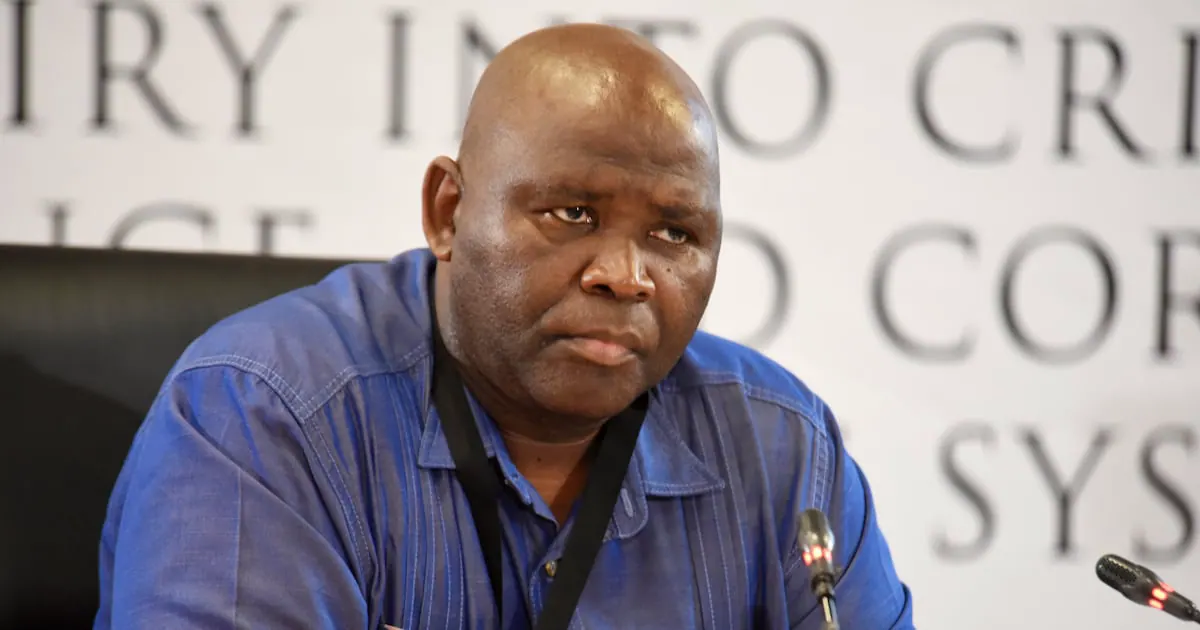
Public Service Commission chair Somadoda Fikeni has expressed concerns about a "political economy of inefficiency" in the South African government, where broken systems allow opportunities for corruption. Fikeni stated that politicians and bureaucrats rely on persistent delays, structural roadblocks, and systemic gaps to engineer an environment where accountability can easily be dodged. This results in incapable people being appointed to positions of authority, unleashing mayhem and enabling large-scale thievery.
Fikeni's comments were made during a submission to the Madlanga commission, where he highlighted the issue of "performative reform" in the public sector. This refers to the practice of promising reform to usher in accountability while actively stalling it. Fikeni's submission raises questions about the intentions of politicians and bureaucrats, blurring the lines between those seeking and resisting reforms. The issue is further complicated by the fact that not every failing entity is the embodiment of corruption.
The concerns raised by Fikeni are echoed in the case of Thapelo Amad and Kabelo Gwamanda of Al Jama-ah, who became mayors of Johannesburg despite being relatively unknown. Their appointment raises questions about the ability of small parties like Al Jama-ah to lead and showcase their capability to voters. The corollary is that those who thrust Amad into the mayor's office may have done so to siphon off as much as possible during his short stay.
The issue of delayed appointments is also evident in the case of the IFP's public service and administration minister, Mzamo Buthelezi. Buthelezi has taken almost two years to replace director-general Yoliswa Makhasi, whose contract ended in February 2025. The minister claims that recruitment commenced within the eight-month period prescribed in regulation 65, and the post was advertised on April 25. However, this has raised concerns about the lack of urgency in filling the position.
The recruitment process for the DG position was stalled due to the unavailability of ministers who were part of the selection panel. This has resulted in the process being restarted, with the post projected to be filled within a period of four months starting September 2026. The delay has raised concerns about the ability of the department to deliver services of quality.
Fikeni's comments and the case of Buthelezi's delayed appointment have raised concerns about the "political economy of inefficiency" in the South African government. The IFP, which is in charge of the public service and administration department, is supposed to be an example of how to run public administration. However, the party's inability to fill a senior position has raised questions about its ability to deliver services.
The delay in filling the DG position has significant implications for the delivery of services in the public sector. The public service and administration department is supposed to be a model for best practice in statecraft, but its inability to fill a senior position has raised concerns about its effectiveness. The issue highlights the need for urgent action to address the "political economy of inefficiency" and ensure that appointments are made in a timely and transparent manner.
Key points
- The South African government is facing concerns about a "political economy of inefficiency" where broken systems allow opportunities for corruption.
- The IFP's public service and administration minister, Mzamo Buthelezi, has taken almost two years to replace director-general Yoliswa Makhasi, whose contract ended in February 2025.
- The delay in filling the DG position has significant implications for the delivery of services in the public sector.