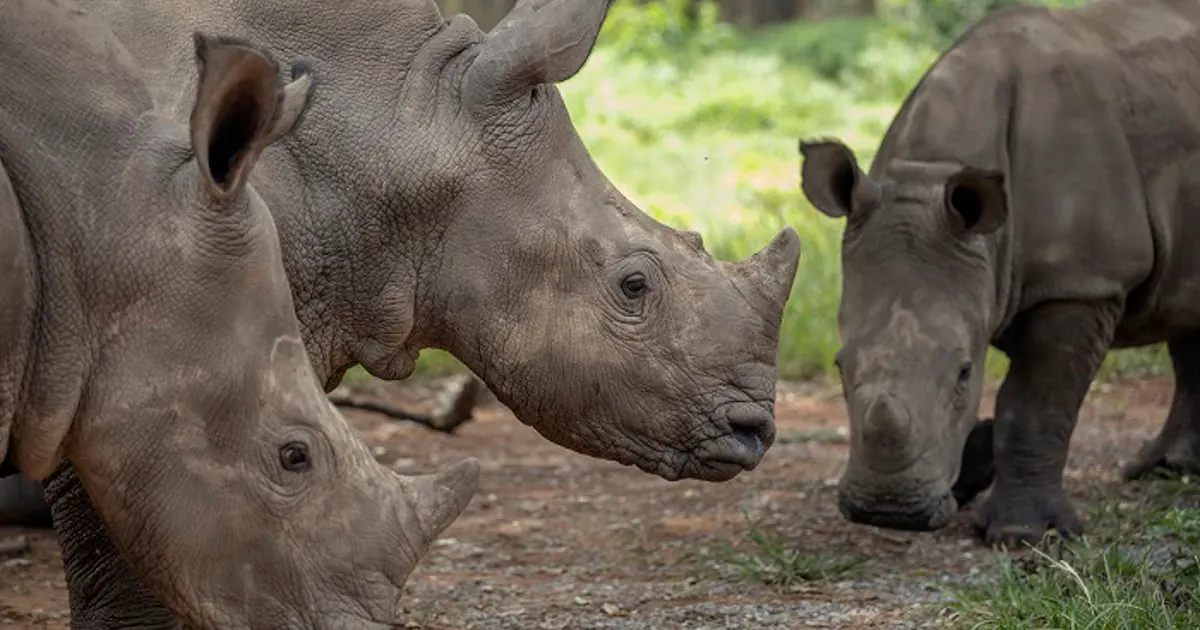
A rhino and her two-year-old calf were recently killed at Kariega Game Reserve in South Africa. The rhino had previously been dehorned, a practice aimed at reducing the incentive for poachers to target the animals for their valuable horns. According to Tim Kuiper, a Senior Lecturer in Biodiversity and Statistics at Nelson Mandela University, dehorning does not remove the entire horn, with up to a quarter of the weight remaining.
The killing of the dehorned rhino and her calf has raised concerns about the effectiveness of dehorning as a conservation strategy. Kuiper explained that rhino horn can fetch a high price on the black market, estimated at around $30,000 per kilogram. This means that even a dehorned animal can still hold significant value for poachers. The fact that the calf's horn was also removed suggests that even small amounts of horn can be valuable to poachers.
Despite the recent killing, Kuiper emphasized that dehorning is not a magic bullet, but the evidence suggests that it does work. A study he worked on in the Greater Kruger found that rhino poaching dropped by an average of 80% after dehorning. Kariega Game Reserve has been dehorning rhinos for almost 15 years and has not lost a rhino to poaching since 2012.
The killing of the rhino and her calf at Kariega Game Reserve is a setback for conservation efforts. Kuiper noted that dehorning is not foolproof and should be used in conjunction with other conservation strategies. The incident highlights the ongoing threat of poaching to rhino populations, despite efforts to protect them.
Rhino poaching remains a significant threat to the survival of the species. The International Rhino Foundation (IRF) and other conservation organizations are working to combat rhino poaching and protect rhino populations. The recent killing of the dehorned rhino and her calf at Kariega Game Reserve serves as a reminder of the need for continued conservation efforts.
The value of rhino horn on the black market drives the poaching of these animals. Conservation efforts, including dehorning, are aimed at reducing the incentive for poachers to target rhinos. However, as the recent killing at Kariega Game Reserve shows, more needs to be done to protect these animals.
The incident at Kariega Game Reserve highlights the complexities of rhino conservation. While dehorning can be an effective strategy, it is not a guarantee against poaching. Conservationists and wildlife experts are working to develop and implement effective conservation strategies to protect rhino populations and combat poaching.
Key points
- Dehorning can reduce rhino poaching by up to 80%, but it is not a foolproof method.
- Rhino horn can fetch a high price on the black market, estimated at around $30,000 per kilogram.
- Kariega Game Reserve has not lost a rhino to poaching since 2012, despite the recent killing of a dehorned rhino and her calf.