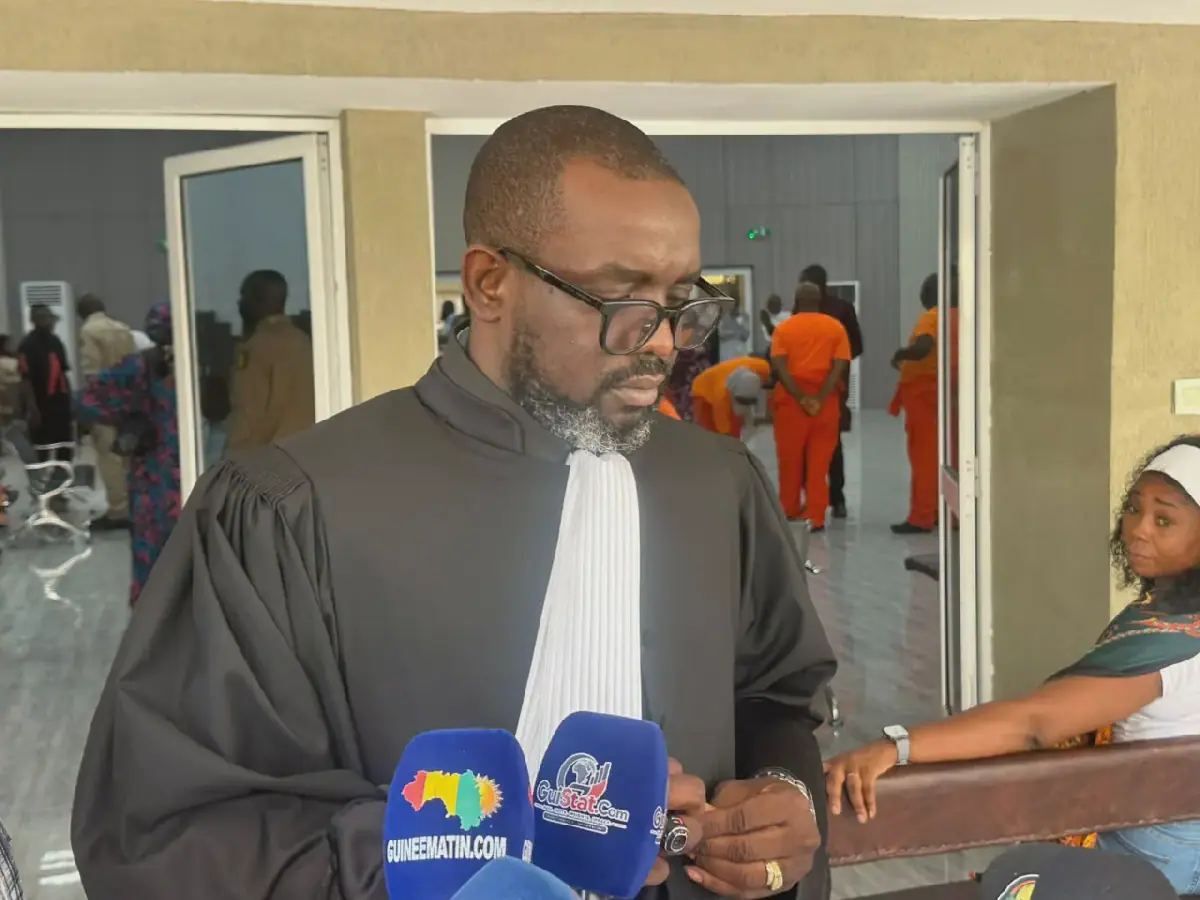
The defense of 22 territorial administrators in Guinea has countered the prosecution's arguments in a case involving the illegal exploitation of mines in Siguiri. The administrators' lawyers argue that there is no tangible evidence to establish their clients' guilt. They are seeking to have their clients dismissed from the case. The trial is being held at the Court of Repression of Economic and Financial Crimes (CRIEF).
The case has been ongoing, with debates continuing on November 16, 2026, before the CRIEF's judgment chamber. The defense team, led by lawyer Abdourahmane Dabo, disputes the prosecution's requisitions. Dabo claims that the prosecution's main piece of evidence, a video projection, is from before his clients' appointment as administrators. He argues that this video does not incriminate his clients.
Dabo further asserts that the prosecution's requisitions lack solid evidence to justify a conviction. He believes the prosecution is trying to appear firm in its accusation. According to him, the prosecution's actions are an attempt to justify the detention of his clients, who have been held for over a week. Dabo cites Article 497 of the Code of Criminal Procedure, which governs the principle of contradictory proceedings and the evaluation of evidence by the judge.
The lawyer emphasizes that a conviction cannot be based on elements that have not been discussed by the parties. He expresses confidence in the court's decision, hoping that the law will be upheld. Dabo reiterates that no conclusive evidence has been produced against his clients. The defense team is seeking to have their clients dismissed from the case, citing a lack of sufficient evidence.
The case involves the illegal exploitation of mining resources in the Siguiri prefecture. The 22 territorial administrators have been charged in connection with this case. Their lawyers argue that the charges are not supported by sufficient evidence. The court's decision is now awaited in this case.
The trial was suspended at the time of writing and was expected to resume shortly. The defense team's arguments have raised questions about the prosecution's case. If the court rules in favor of the defense, the 22 administrators may be dismissed from the case.
The outcome of this case may have implications for the mining sector in Guinea. The authorities have been cracking down on illegal mining activities in recent years. The CRIEF's decision will be closely watched by stakeholders in the mining industry and human rights groups.
Key points
- The defense argues that there is no tangible evidence to establish the guilt of the 22 territorial administrators.
- The prosecution's main piece of evidence, a video projection, is from before the administrators' appointment.
- The defense is seeking to have their clients dismissed from the case, citing a lack of sufficient evidence.