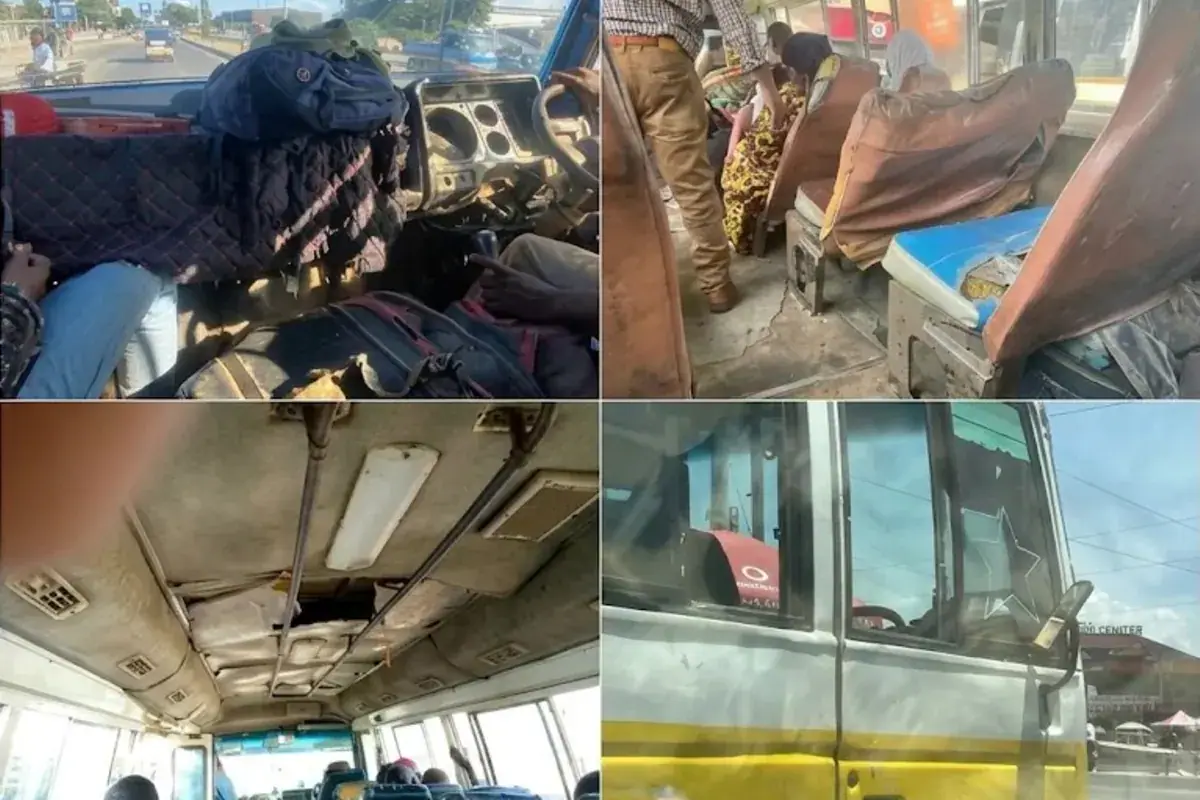
A recent investigation by Mwananchi Communications Limited in Dar es Salaam, Arusha, Morogoro, Dodoma, Kilimanjaro, and Mbeya found numerous daladala minibuses with various mechanical and structural defects. For thousands of Tanzanians who rely on daladala daily, travelling in poorly maintained vehicles has become part of their routine, despite the risks. The problems were attributed to high maintenance costs, poor road conditions, inadequate supervision by owners, and a lack of accountability among drivers.
On November 14, 2026, a traffic police operation in Dar es Salaam stopped 53 daladala with defects from operating. Of the vehicles, nine had worn-out tyres, 27 had deteriorated bodywork, while 17 had their registration plates removed due to their poor condition. Drivers were directed to repair the vehicles and present them for police inspection before returning to service. Passengers have raised safety concerns, citing worn-out seats, frequent breakdowns, and poorly maintained vehicles.
Ladislaus Kimaro, a resident of Ubungo in Dar es Salaam, said daladala operating on routes from Masaki to Simu 2000 and Gerezani were in poor condition. “We regard Masaki as an upmarket area, but the daladala serving it are an embarrassment, particularly those operating on the Simu 2000 route. They do not match the status of the area. Their seats are worn out and the floors are in poor condition. But because we have limited options, we end up boarding them,” he said.
In Morogoro, Zephania Joseph, a passenger on the Manyuki–Katikati ya Mji route, alleged that some vehicle owners might receive preferential treatment during inspections because of their former positions in public service. Veronica Suda, a resident of Ihumwa in Dodoma, said some daladala serving the area appeared to have gone for long periods without maintenance. Said Chuma, a Kilimanjaro resident, said some owners were reluctant to deploy newer vehicles on routes with poor roads, leaving passengers with ageing minibuses.
Morogoro-based motor vehicle mechanic Abdul Yahaya said many daladala brought to his garage had problems involving electrical systems, tyres, and bodywork, with some defects posing a danger to passengers. Drivers and owners have traded blame for the defective vehicles, with drivers citing delays by owners in approving and financing repairs, and pressure to meet daily revenue targets.
Rashid Kazeri, a daladala driver on the Masaki route in Dar es Salaam, said owners often delayed repairs when drivers reported faults. Michael Mushi, who drives on the Tengeru–Mjini route in Arusha, said drivers risked losing their jobs if they failed to meet daily targets, even when vehicles needed repairs. However, Alex Njamasi, a daladala driver serving passengers at Benjamin Mkapa Hospital in Dodoma, said the vehicles he operated were regularly maintained and inspected by the relevant authorities.
Daladala owners have also shared their perspectives, with Gharib Mohamed saying drivers were responsible for the daily supervision and cleanliness of vehicles, as well as reporting mechanical problems. Godfrey Laizer, from Arusha, cited operating costs, including spare parts, tyres, fuel, loan repayments, insurance, and taxes, as some of the challenges facing operators. In Mbeya, driver Lukumay Mzirai said the condition of daladala had improved compared with previous years, when vehicle deterioration and disregard for traffic regulations were major concerns.
Key points
- 53 daladala vehicles were stopped from operating in Dar es Salaam due to various mechanical and structural defects.
- Passengers face safety risks daily due to poorly maintained daladala vehicles.
- Drivers and owners trade blame for the defective vehicles, citing delays in repairs and pressure to meet revenue targets.
Reporting sources
- Defective daladala put public transport users at risk · The Citizen