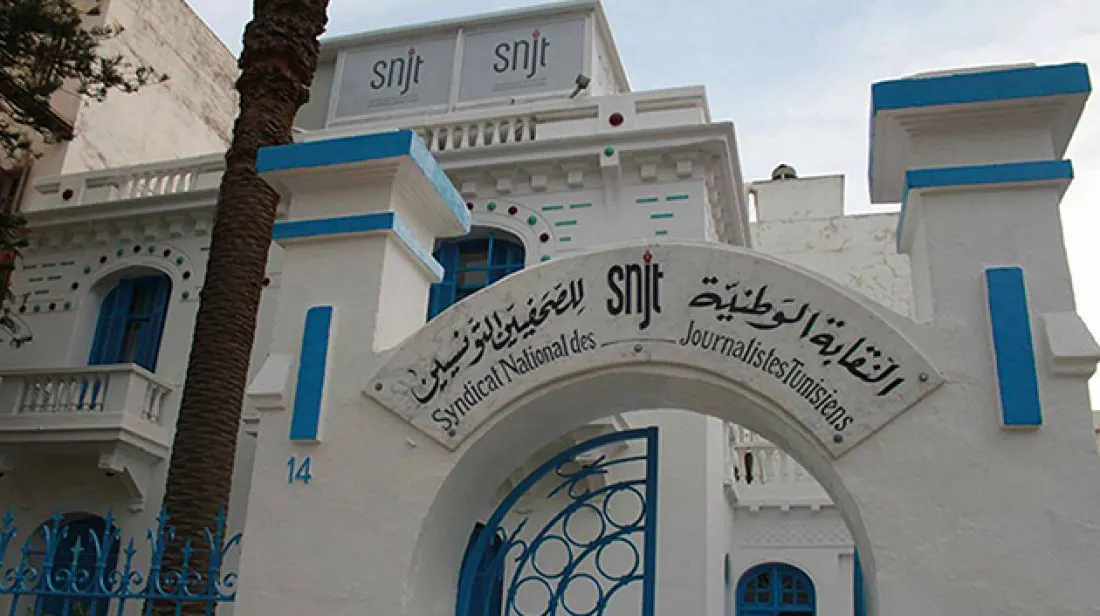
The National Union of Tunisian Journalists (SNJT) reported a decrease in attacks on journalists and photojournalists in August 2026. According to the union's monitoring unit, there were 8 attacks out of 10 reported cases, compared to 22 attacks in July. The victims included 17 individuals, 9 females and 8 males, working for 7 media institutions. The attacks involved 3 cases of harassment, 2 cases of work prohibition, 1 case of arbitrary detention, 1 case of censorship, and 1 case of judicial pursuit.
The SNJT's report revealed that security forces were responsible for 3 attacks, while festival organizers were responsible for 2 attacks. One attack was attributed to a social media activist, and another to the management of a media institution. The union called on the government to establish a clear policy to protect journalists while performing their duties, ensuring respect for their independence and preventing direct or indirect pressure on them due to their opinions or journalistic content.
The SNJT urged the Interior Ministry to issue clear instructions to security units, affirming respect for journalists' rights to work and conduct field coverage, and preventing them from being hindered or detained. The union also requested that the ministry conduct serious investigations into cases of attacks and harassment against journalists and hold those responsible accountable. Furthermore, the SNJT asked the ministry to enhance the training of security personnel on press freedom and journalists' rights during coverage, especially in situations of tension, protests, and crises.
The SNJT reiterated its demands to the judiciary to open investigations into attacks, threats, and campaigns of incitement and defamation targeting journalists. The union called for journalists to be protected from targeting due to their opinions and journalistic content, and for respect for the independence of journalism when dealing with issues related to publication and expression. The SNJT also requested that the judiciary ensure respect for journalists' rights during investigations, particularly the right to information and the right to defense.
The SNJT called on festival organizers and cultural event planners to respect journalists' rights to coverage and not prevent them from performing their duties after obtaining accreditation or providing clear and professional reasons for denial. The union requested that organizers ensure that the content of journalistic coverage is not interfered with and that no pressure is exerted on media institutions due to the nature of published content or the angle chosen by journalists.
The SNJT recommended that the Parliament strengthen the legislative framework guaranteeing press freedom and freedom of expression, and review legislation related to intellectual property and digital content. The union emphasized the need to ensure that national legislation aligns with international standards related to press freedom and journalist protection in both physical and digital spaces.
The decrease in attacks on journalists in August 2026 is a positive development, but the SNJT's recommendations highlight the ongoing challenges faced by journalists in Tunisia. The union's efforts to promote press freedom and protect journalists' rights are crucial in ensuring a safe and independent media environment. Key stakeholders, including the government, judiciary, and festival organizers, must work together to address these concerns and promote a culture of respect for journalists and their work.
Key points
- The National Union of Tunisian Journalists reported 8 attacks on journalists in August 2026, a decrease from 22 in July.
- The SNJT called on the government to establish a clear policy to protect journalists and ensure respect for their independence.
- The union recommended that the Parliament strengthen the legislative framework guaranteeing press freedom and freedom of expression.