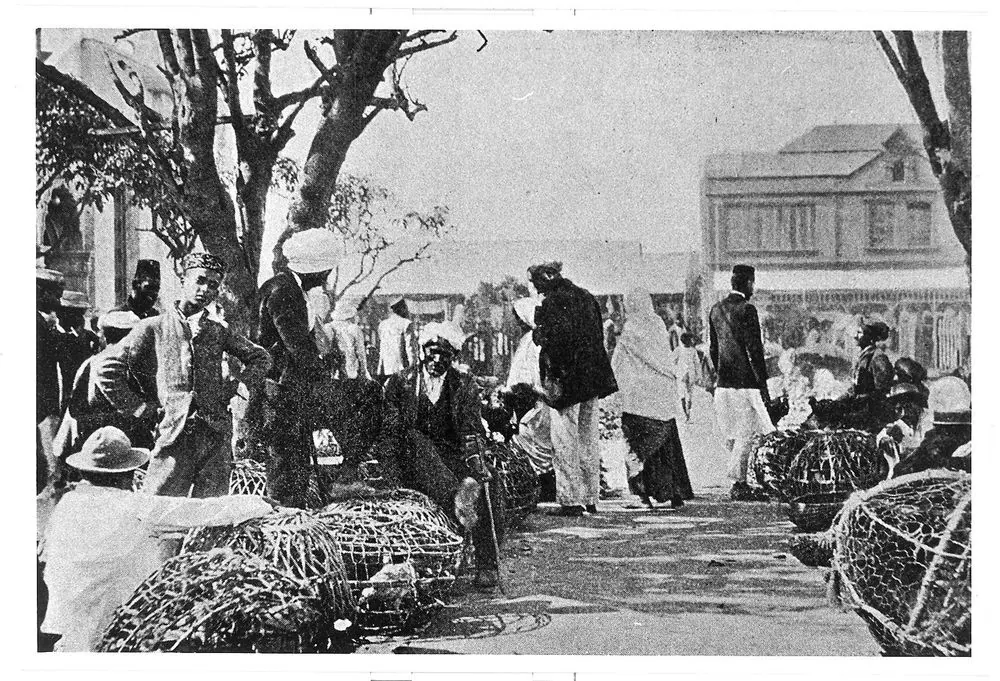
Under colonial rule in India, impoverished farmers and landless peasants faced high land taxes and crop failures, leading them to borrow money or grain from moneylenders at exorbitant interest rates. This often resulted in permanent destitution, stripping them of land and livestock. Many were forced to leave their homeland and be recruited into the system of indenture across the colonial world, including in Natal.
In colonial Natal, indentured workers often remained trapped in cycles of debt and low wages long after their contracts ended. Sirdars or Kanganis, Indian foremen, overseers, and labour recruiters, acted as key intermediaries between plantation owners and indentured workers. They not only collected and managed labour but also provided loans and played a crucial role in re-engaging workers at the end of their contracts.
The agreement between workers and plantation owners became an inescapable shackle of bondage, where workers were forced to remain when absence from work or minor breaches brought fines and imprisonment that extended five-year contracts into 10 years of servitude. A plantation owner, Mr. Richardson, deposed to the 1885 Wragg Commission that Indian money-lenders in the Colony charged exorbitant interest rates, sometimes two shillings and sixpence in the pound a month.
Beyond the indebtedness to the system of indenture, indentured workers, free from their contract, were forced into debt to moneylenders in order to survive. Money lending also affected passenger Indians who came to Natal. The Indian Immigration files hold an interesting transcript on the movements of Daya Purbhoo, who resided at 26 Doornfontein, Johannesburg, and had to pay money lenders for ancestral family land in India.
The first recorded passenger Indians arrived in 1877 and travelled to the diamond fields of Griqualand West. Research by Maureen Swan in her book Gandhi, The South African Experience, highlights the usurious relationship that existed within the trader network and their relationship with indenture and ex-indentured workers. Large merchants rented property to small traders and provided loans, often leading to a vicious circle of usury.
In many instances, merchants established a bondage relationship with newly freed Indian labourers, setting them up on smallholdings under conditions which were as stringent as the contract of indenture. A Magistrate's report noted that some tenancy agreements included the condition that the cultivator's produce must be sold to the landlord at an essentially unfavourable rate.
Seminal work by Professor Goolam Vahed highlights that the links between the ex-indentured community and the commercial elite were well defined. Merchant marketing of Indian produce played a crucial role, with most Indian market gardeners and petty farmers selling their produce in the Grey Street Mosque Market. Durban's leading Indian merchants were approached by a de facto monopoly.
Key points
- Indentured workers in colonial Natal were trapped in debt cycles that extended beyond their contracts.
- Sirdars played a crucial role in managing labour and providing loans to workers.
- Merchants established bondage relationships with newly freed Indian labourers, setting them up on smallholdings under stringent conditions.