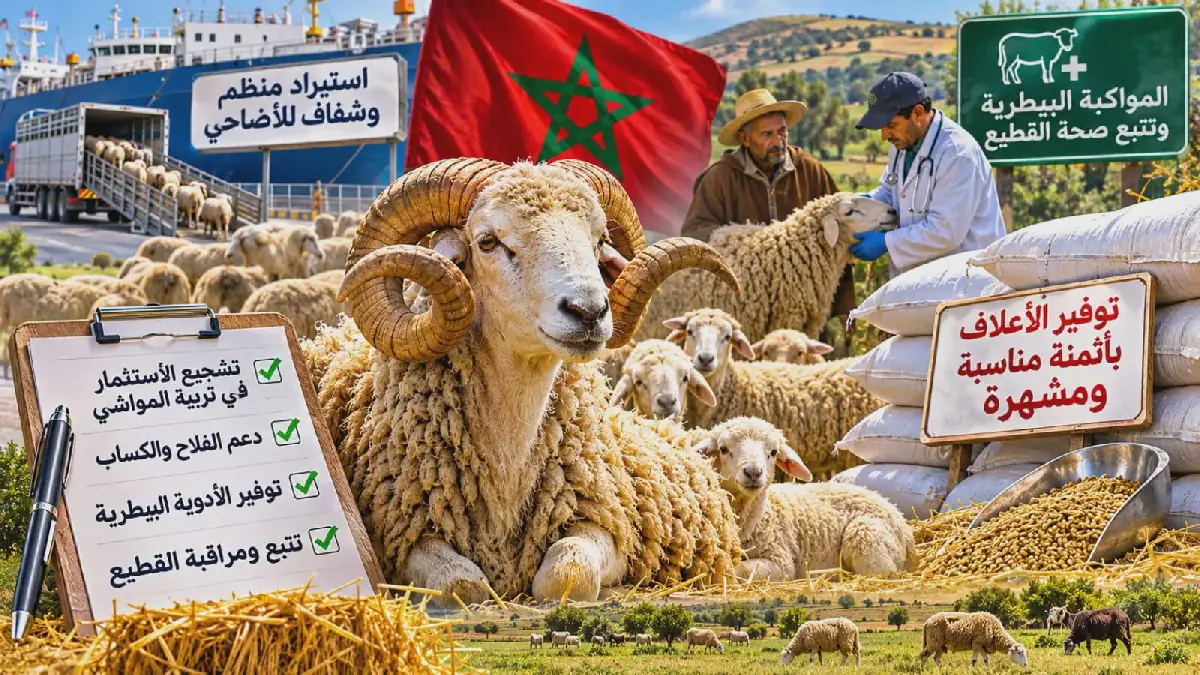
The discussion around the possibility of canceling Eid al-Adha in Morocco has sparked a heated debate, given concerns over the state of the national livestock and the decline in sheep, goats, and cattle. This has raised questions about the impact on supply, prices, and the purchasing power of Moroccan families. Some argue that canceling the celebration could provide relief to the national herd, allowing it to recover and breed, while others see it as an ineffective measure that does not address the root causes of the problem.
The cancellation of Eid al-Adha would have significant economic and social implications for a wide range of professionals, breeders, and livestock farmers who rely on this event as a crucial part of their business and production cycle. For these individuals, Eid al-Adha is not just a period of consumption but a source of income, investments, and financial obligations. Continuous disruption of this activity could lead to bankruptcy for some and their eventual exit from the sector.
To address the national livestock crisis, three key approaches have been proposed. First, importing sacrificial animals under a clear framework that ensures transparency and benefits consumers. This involves setting a binding specification for importers, determining the country and source of the animals, and establishing a permitted profit margin that considers actual costs. Second, supporting farmers and breeders by providing them with feed at affordable prices through known and approved distribution points.
The second approach also involves making support for farmers and breeders a priority, particularly in terms of feed, which is a major component of livestock breeding costs. It is crucial not only to allocate financial support for feed but also to ensure its availability in sufficient quantities and at suitable prices. This can be achieved by setting up a transparent and organized system for feed distribution, inspired by successful models such as that of SONACOS.
The third approach involves encouraging investment in livestock breeding and supporting farmers to rebuild the national herd. This requires promoting local production, providing support for investment, facilitating financing, and ensuring access to veterinary medicines at reasonable prices. The government should play a more active role in monitoring and supporting breeders through regular health checks and vaccinations.
The debate over Eid al-Adha cancellation should serve as an opportunity to reconsider the future of the livestock sector in Morocco, moving beyond temporary solutions that emerge around consumption periods. A comprehensive policy that combines organized imports, feed support, and investment incentives is needed to ensure the sector's sustainability and food security.
Ultimately, Morocco needs a robust national sector that makes local production the foundation of food security and national sovereignty, with imports serving as a complementary option. The goal is to create a sustainable livestock sector that provides breeders with continuity conditions, professionals with stable activities, and consumers with affordable sacrificial animals.
Key points
- The Moroccan government is considering three main approaches to address the national livestock crisis: importing sacrificial animals with transparency, supporting farmers and breeders with feed, and encouraging investment in livestock breeding.