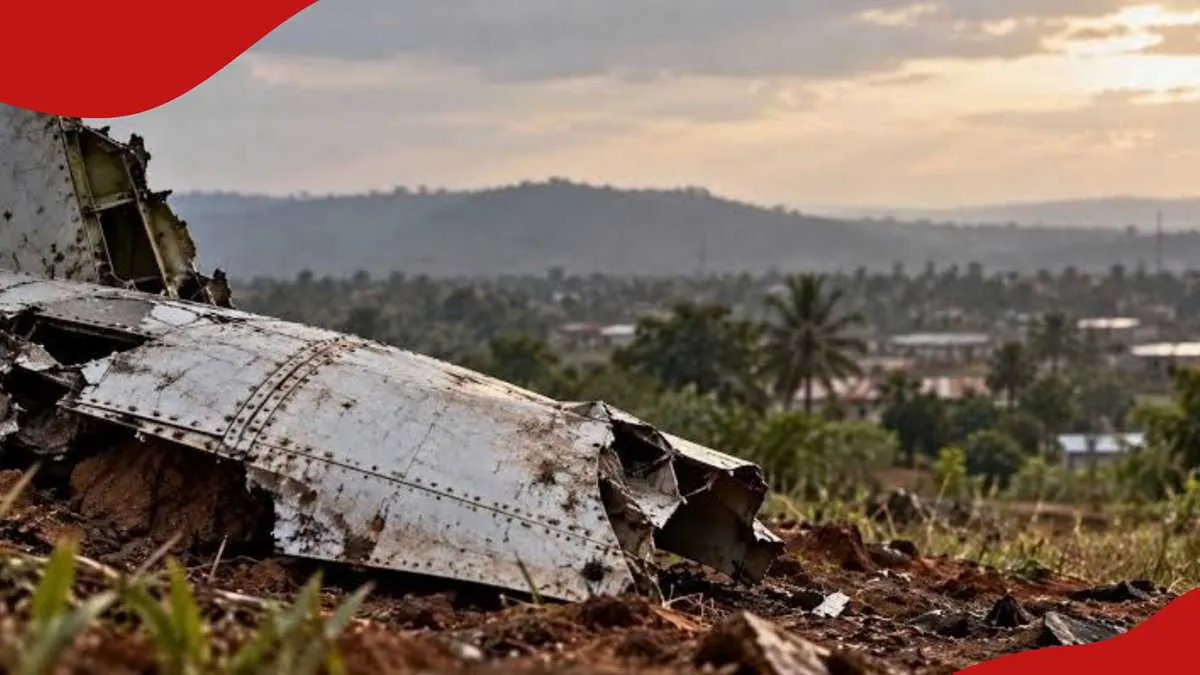
A tragic plane crash in Kenge, the capital of Kwango province in the Democratic Republic of Congo, has claimed the lives of 17 people. The accident occurred on Friday, September 25, when a Let L-410 aircraft operated by Tracep Airlines came down in the Manzawu neighbourhood. The plane had departed Kikwit at 1:50 p.m. and was en route to Kinshasa when a problem developed over Kenge roughly 10 minutes into the flight.
According to Kwango Vice-Governor Rémy Saki, the pilot circled above the city several times in search of a safe area to attempt an emergency landing before the aircraft went down at approximately 2 p.m. Unfortunately, no one on board survived the crash. The victims included high-ranking military officials, with Lieutenant-General Lucien-René Likulia Bakumi, Inspector General of the Armed Forces of the Democratic Republic of Congo (FARDC), among those killed.
The causes of the accident are yet to be officially determined, but the crash has drawn attention to the structural deficiencies that continue to plague aviation in the DRC. The pilot, facing a critical emergency, had no functioning airstrip available, with eyewitnesses reporting that the aircraft lowered its landing gear in the vicinity of the old Kenge aerodrome, a facility that has long since ceased to operate.
Further concern surrounds the nature of the flight itself, with investigators finding remnants of cargo at the crash site, including fresh fish. This suggests that the aircraft was carrying a mixture of passengers and goods, a routine feature of domestic aviation across the country that raises persistent questions about safety standards and regulatory oversight.
The tragedy is the latest in a long series of fatal aviation incidents in the DRC, a country whose domestic airspace has for decades been regarded as among the most hazardous in the world. Repeated pledges by successive governments to retire ageing and unsafe aircraft have yielded limited results, leaving passengers on internal routes frequently exposed to significant risk.
The crash has sparked renewed calls for improved aviation safety in the DRC, with many questioning the country's ability to effectively regulate its domestic airspace. The government has faced criticism for its handling of the aviation sector, with concerns about the age and condition of aircraft operating in the country.
An investigation into the crash is expected to be launched, with officials working to determine the cause of the accident and identify measures to prevent similar tragedies in the future. The incident has sent shockwaves through the region, with many paying tribute to those killed in the crash, including Lieutenant-General Lucien-René Likulia Bakumi.
Key points
- All 17 people on board the Tracep Airlines aircraft died in the crash, including high-ranking military officials.
- The crash has highlighted concerns about aviation safety in the DRC, with many questioning the country's ability to effectively regulate its domestic airspace.
- The causes of the accident are yet to be officially determined, but the crash has drawn attention to the structural deficiencies that continue to plague aviation in the DRC.