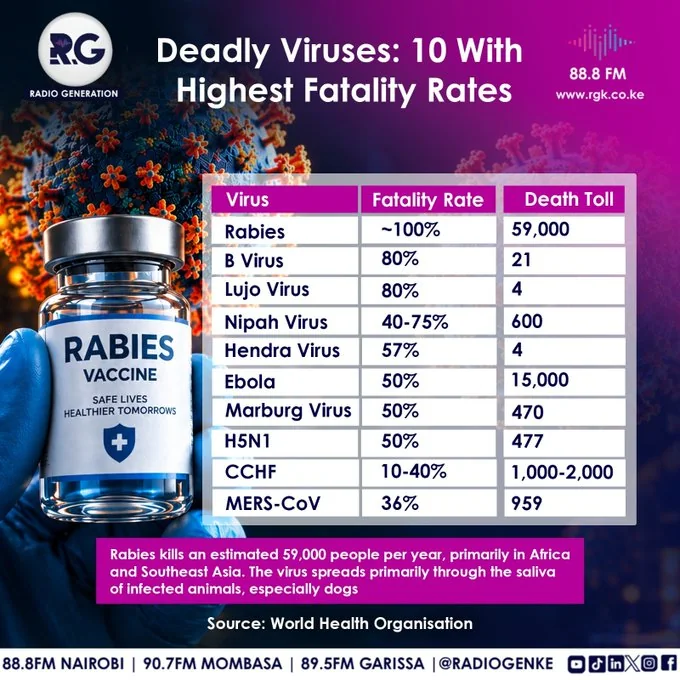
Viruses differ significantly in their deadliness, with some causing far higher fatality rates than others once symptoms develop. According to a recent report by Radio Generation Kenya, the fatality rate of a virus refers to the proportion of individuals who die from the disease after symptoms appear. This rate can vary depending on several factors, including the quality of healthcare and the population's overall health. Understanding these fatality rates is crucial for public health officials to develop effective strategies for preventing and treating viral outbreaks.
The report ranks 10 viruses by their reported fatality rates, providing key context on what "fatality rate" means and why it can vary. The ranking is based on data from reputable sources, including the World Health Organization and the Centers for Disease Control and Prevention. By highlighting the deadliest viruses, the report aims to raise awareness about the risks associated with these diseases and the importance of taking preventive measures.
The list of deadliest viruses includes Ebola, with a fatality rate of up to 90%, and Rabies, with a fatality rate of nearly 100% if left untreated. Other viruses on the list include HIV, Hepatitis B, and Influenza, which can have fatality rates ranging from 10% to 50% or more, depending on the circumstances. Understanding the fatality rates of these viruses is essential for developing effective treatment and prevention strategies.
Health experts emphasize that fatality rates can vary depending on several factors, including the quality of healthcare, the population's overall health, and the availability of effective treatments. For example, the fatality rate for Ebola can be significantly lower in areas with access to high-quality healthcare and effective treatments. Similarly, the fatality rate for Influenza can be higher in areas with limited access to healthcare and vaccines.
The Kenyan government has been working to strengthen its healthcare system and improve its response to viral outbreaks. In recent years, the country has experienced several outbreaks of viral diseases, including Ebola and Influenza. The government has implemented various measures to prevent and control the spread of these diseases, including vaccination campaigns and public awareness initiatives.
Public health officials in Kenya are urging citizens to take preventive measures to protect themselves against viral diseases. These measures include getting vaccinated, practicing good hygiene, and avoiding close contact with individuals who are sick. By taking these precautions, individuals can significantly reduce their risk of contracting a viral disease and help prevent the spread of these diseases in their communities.
The report on the 10 deadliest viruses is part of a broader effort to raise awareness about the risks associated with viral diseases and the importance of taking preventive measures. By understanding the fatality rates of these diseases and taking steps to protect themselves, individuals can help reduce the spread of viral diseases and save lives.
Key points
- The 10 deadliest viruses have fatality rates that vary widely, ranging from 10% to 100% or more.
- Understanding fatality rates is crucial for public health officials to develop effective strategies for preventing and treating viral outbreaks.
- Preventive measures, such as vaccination and good hygiene, can significantly reduce the risk of contracting a viral disease.