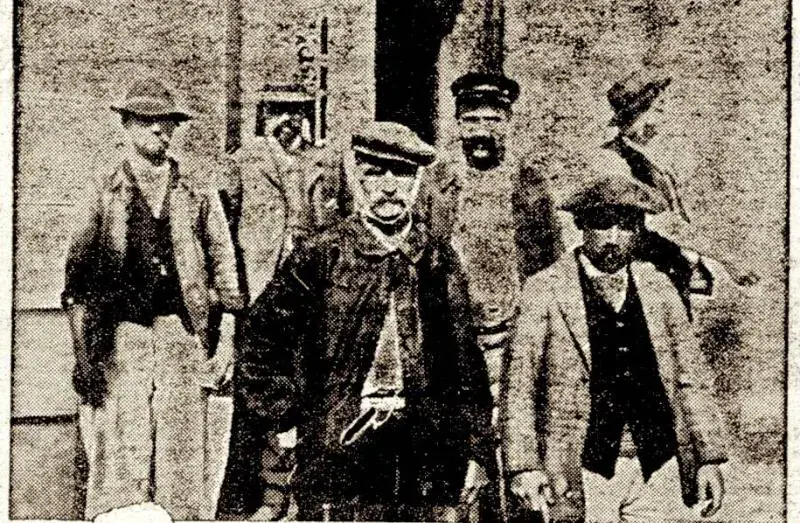
In May 1908, workers from the quarries of Draveil and Villeneuve-Saint-Georges, represented by the union of carriers, miners, and well diggers of Chevreuse, went on strike. Their demands included a 10-hour workday, weekly rest, wage increases, and an end to task-based work. The quarry companies refused to negotiate and instead hired strikebreakers to resume work, leading to heightened tensions between strikers, non-union workers, and gendarmes throughout May.
On June 2, 1908, clashes between gendarmes and strikers turned violent, culminating in the gendarmes attacking the union hall where unarmed strikers, women, and children were present. The gendarmes opened fire, killing Pierre Le Foll and Émile Giobellina and injuring around a dozen people. The incident sparked widespread outrage, particularly in the socialist newspaper L'Humanité, which condemned the actions of the gendarmes and accused Prime Minister Georges Clemenceau of culpability.
The investigation into the June 2 incident revealed that a gendarmerie officer had overstepped his authority and that outside agitators had contributed to the escalation of violence. Despite this, the strike continued into June and July, with the préfet de l'Oise banning public gatherings and demonstrations. In an effort to strengthen their position, the Fédération du bâtiment called for a 24-hour general strike and a July 30 demonstration in Villeneuve-Saint-Georges.
The July 30 demonstration began peacefully but quickly turned violent when it encountered regiments of dragoons and 200 gendarmes. The ensuing clash resulted in four worker fatalities and over 200 injuries, with 69 reported injuries among the security forces. The event became known as the "journée sanglante" (bloody day), with widespread media coverage condemning the violence.
Observers described the events leading up to the violence as a series of military-style maneuvers, with the government and security forces seeking to defend key infrastructure and industrial sites against the perceived threat of strikers and their supporters. The confrontation was marked by charges, barricades, and gunfire, resulting in significant loss of life and injury.
Prime Minister Clemenceau responded to the crisis by ordering the arrest of 30 strike leaders, further escalating tensions. The 1908 labor strike in Draveil and Villeneuve-Saint-Georges highlighted the deep-seated conflicts between workers and the French state, as well as the struggles of the labor movement to achieve better working conditions and rights.
The legacy of the 1908 strike and its violent suppression continued to resonate in French politics and labor relations for years to come, influencing the trajectory of the labor movement and shaping public discourse around issues of workers' rights and state power.
Key points
- The 1908 labor strike in Draveil and Villeneuve-Saint-Georges resulted in multiple fatalities and injuries when French police opened fire on workers.
- The strike was sparked by workers' demands for better working conditions, including a 10-hour workday, weekly rest, and wage increases.
- The violent suppression of the strike had lasting impacts on French labor relations and the trajectory of the labor movement.