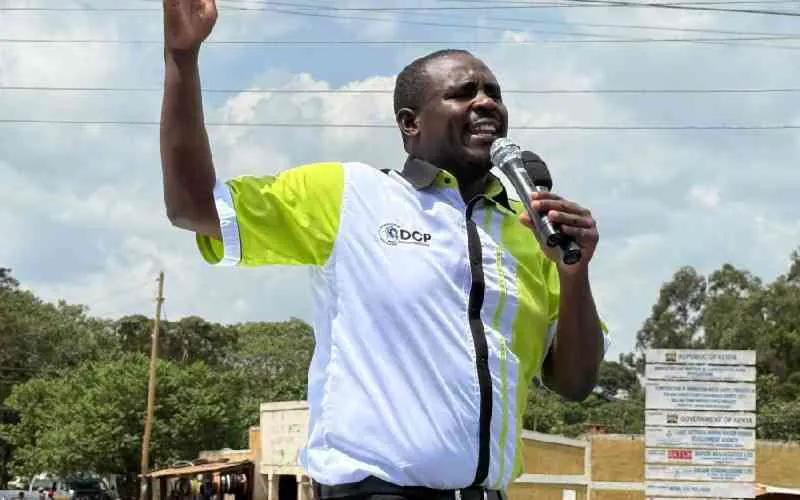
The Democracy for the Citizens Party (DCP) has cautioned opposition leaders against giving equal bargaining power to small political parties without a strong grassroots presence. Deputy party leader Cleophas Malala made the remarks while addressing aspirants from Kiambu County. He warned that this approach could undermine efforts to field a joint presidential candidate in the 2027 General Election. Malala emphasized the need for the opposition to carefully negotiate coalition arrangements.
Malala criticized what he termed ‘briefcase parties’, accusing some of seeking influential positions in coalition negotiations despite having little support on the ground. He mentioned that some parties could challenge the nomination process in court after a candidate had been selected, arguing that the opposition needed a clear and tactical approach to coalition negotiations to avoid such disputes. This, he said, could potentially derail the opposition's efforts to agree on a joint flag bearer ahead of the 2027 elections.
The DCP leader called for negotiations among opposition formations to establish a common position on the presidential candidature. He proposed that the different formations agree on a single representative to negotiate on their behalf rather than having every party leader demand an individual seat at the negotiating table. This, Malala argued, would help to streamline the negotiation process and avoid conflicts.
Malala also accused opposition politicians of facing hostility at churches and political rallies. He said that the sacrifices made by established political formations should be considered when sharing positions and responsibilities within a coalition. Malala insisted that the opposition should support one presidential candidate but argued that the process of identifying the flag bearer must be guided by measurable political strength and the ability to mobilise voters.
Malala emphasized that establishing a political party should not, on its own, qualify an individual to become a principal in a coalition. Instead, leaders must demonstrate their influence through grassroots organisation and sustained engagement with voters. He cited the example of opening a new party, arguing that this should not automatically grant someone a position of power in a coalition.
The DCP deputy leader said that the era when political leaders could simply convene meetings and negotiate power-sharing arrangements as though they were holding political rallies was over. His remarks point to potential disagreements within the opposition over the criteria for selecting a joint presidential candidate and allocating political positions. Parties are beginning to position themselves ahead of the 2027 General Election.
The caution by Malala comes as parties begin positioning themselves ahead of the 2027 General Election. The opposition is yet to agree on a joint presidential candidate, with different parties vying for influence. Key points include the need for a clear and tactical approach to coalition negotiations, the importance of measurable political strength in selecting a flag bearer, and the warning against giving equal bargaining power to small parties without grassroots presence.
Key points
- DCP cautions opposition against 'briefcase parties' in 2027 unity push.
- Opposition leaders warned against giving equal bargaining power to small parties without grassroots presence.
- DCP proposes single representative to negotiate on behalf of opposition formations.