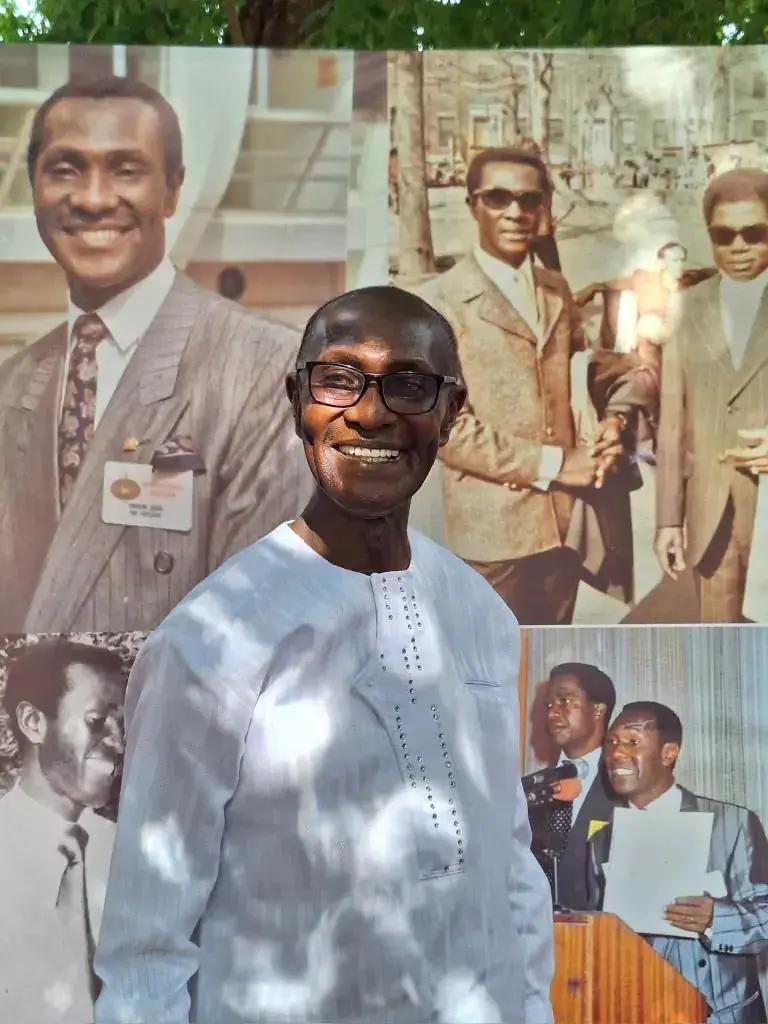
Rev. Dr. Kwabena Darko, founder of Darko Farms, has spoken about the impact of a 1972 government policy decision on his business, which resulted in the loss of a $10 million World Bank loan. Dr. Darko made the revelation at the launch of his memoir, Courage To Lead. He recounted how the government announced it would repudiate its foreign debts following the 1972 coup, prompting the World Bank to withdraw its support for his business.
Darko Farms was founded in 1967 and pioneered commercial poultry farming in Ghana, growing into one of the largest African-owned poultry businesses on the continent. Dr. Darko credits part of that success to the Kwame Nkrumah administration, which sponsored his studies in poultry farming abroad. The business was poised for further growth with a $10 million loan from the World Bank at an interest rate of about 5 percent.
However, the government's decision to repudiate its foreign debts led to the World Bank withdrawing its support, causing Darko Farms to lose the loan opportunity. Dr. Darko said that some foreign friends had introduced him to the World Bank, which was willing to lend him the $10 million. He emphasized the importance of integrity in leadership, stating that leaders should live by the truth.
Dr. Darko called on the government to consider the interests of local industries when crafting economic policy, warning that decisions made without regard for Ghanaian enterprises can cripple them and hurt the wider economy. He urged policymakers to protect local businesses from similar harm in the future.
The memoir launch drew business leaders, clergy, and academics, including former Rector of the Ghana Institute of Management and Public Administration (GIMPA), Prof. Stephen Adei. Prof. Adei argued for support for businesses that is not tied to political connections, citing his role in bringing microfinance banking to Ghana.
Prof. Adei pointed to South Korea as a model worth studying, noting that the country identified genuine entrepreneurs regardless of political affiliation and backed them with supportive policy and affordable credit. He cited Samsung and Hyundai as companies whose individual economies now outstrip that of Ghana.
The debate over how far government should go to shield local industry from foreign competition and policy shocks has resurfaced elsewhere in Ghana's economy, including in calls from the seed industry for curbs on rice and maize imports to protect domestic producers. Dr. Darko remains active as a mentor through various organizations, including the Scripture Union and the Full Gospel Business Men's Fellowship.
Key points
- A 1972 government policy decision led to Darko Farms losing a $10 million World Bank loan.
- Rev. Dr. Kwabena Darko urges policymakers to consider the interests of local industries when crafting economic policy.
- Prof. Stephen Adei cites South Korea as a model for supporting genuine entrepreneurs with policy and affordable credit.