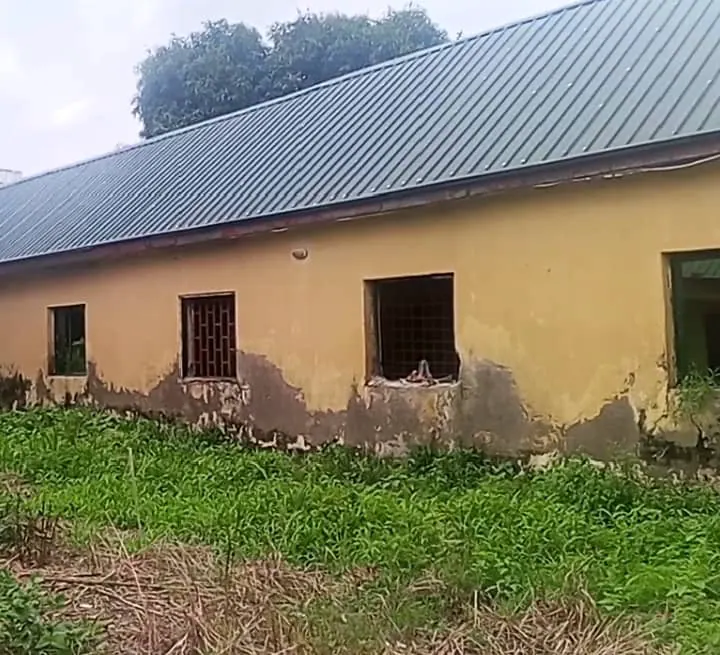
The Federal Capital Territory Vocational and Rehabilitation Centre, Kuchiko-Bwari, was established to provide rehabilitation and vocational training to vulnerable persons, including those living with disabilities, street beggars, and drug-dependent persons. However, a visit by a News Agency of Nigeria correspondent revealed a picture of decay, with dilapidated buildings, overgrown weeds, and visibly neglected surroundings. The centre, which operates under the FCT Administration's Social Development Secretariat, has a mandate to provide rehabilitation alongside practical skills training.
The centre was designed to equip beneficiaries with skills in areas such as welding, metalwork, tailoring, electronics, footwear, and leather production. In 2020, about 35 trainees graduated from different sections and received starter support to establish small businesses using their acquired skills. However, accounts from former workers and residents suggest that the centre has suffered a sharp decline in facilities, manpower, and basic services. The premises lack basic infrastructure, including regular electricity and water, while vandalised facilities and unused workshops further reflect the centre's decline.
A former worker, Mr Linus Chol, described the centre as largely empty and deserted, with facilities no longer adequate for meaningful rehabilitation. He recalled that the centre was once an important rehabilitation facility where beneficiaries were trained in welding, metalwork, and other practical skills. Chol said the situation deteriorated further after the death of the centre's former administrator, Bala Tsoho Musa, in 2024. Musa was a master metalworker and disability advocate who was recognised for his contribution to vocational empowerment and advocacy for persons living with disabilities.
Following Musa's death, reports indicated that no new principal had immediately been appointed to take over the centre's leadership. Blessing Yakubu, another former worker who still resides at the centre, described the current situation as a far cry from what obtained in previous years. Yakubu said persons apprehended from Abuja streets were sometimes brought to the facility but received little or no food, training, or structured rehabilitation. She alleged that the centre's abandoned appearance had made it vulnerable to criminal activities, while police personnel sometimes used parts of the premises as shelter during patrols.
Yakubu also claimed that about seven former casual workers, mostly women with children, were still living on the premises because they were owed salaries and allowances from previous years. She said authorities had issued them quit notices, but they were unable to relocate because of unpaid entitlements and the high cost of accommodation. The centre's decline has also affected its ability to provide psychosocial therapy to beneficiaries, with reports indicating that more than 160 persons removed from Abuja streets were receiving therapy at the Bwari facility in 2024.
Mrs Stephanie Elias, a resident, described her experience at the centre as distressing after taking a family member there for drug rehabilitation in 2023. Elias said the family was repeatedly asked to provide food and clothing and take the beneficiary to hospital when her condition deteriorated. She added that although the then administrator tried to maintain the place, she was not sure he had enough support from the government. Elias said a functional centre would have made a significant difference in the lives of vulnerable persons.
The centre's current state has raised concerns about its ability to fulfil its original mandate. With dilapidated structures, overgrown surroundings, and a lack of basic infrastructure, the centre's decline is a far cry from its former status as a rehabilitation facility. The FCT Administration's Social Development Secretariat has yet to comment on the centre's current state and plans for its revival.
Key points
- The centre's decline has affected its ability to provide rehabilitation and vocational training to vulnerable persons.
- The centre's former administrator, Bala Tsoho Musa, was killed in 2024, and no new principal has been appointed to take over the centre's leadership.
- Former workers and residents have described the centre's current state as distressing, with a lack of basic infrastructure, including regular electricity and water.