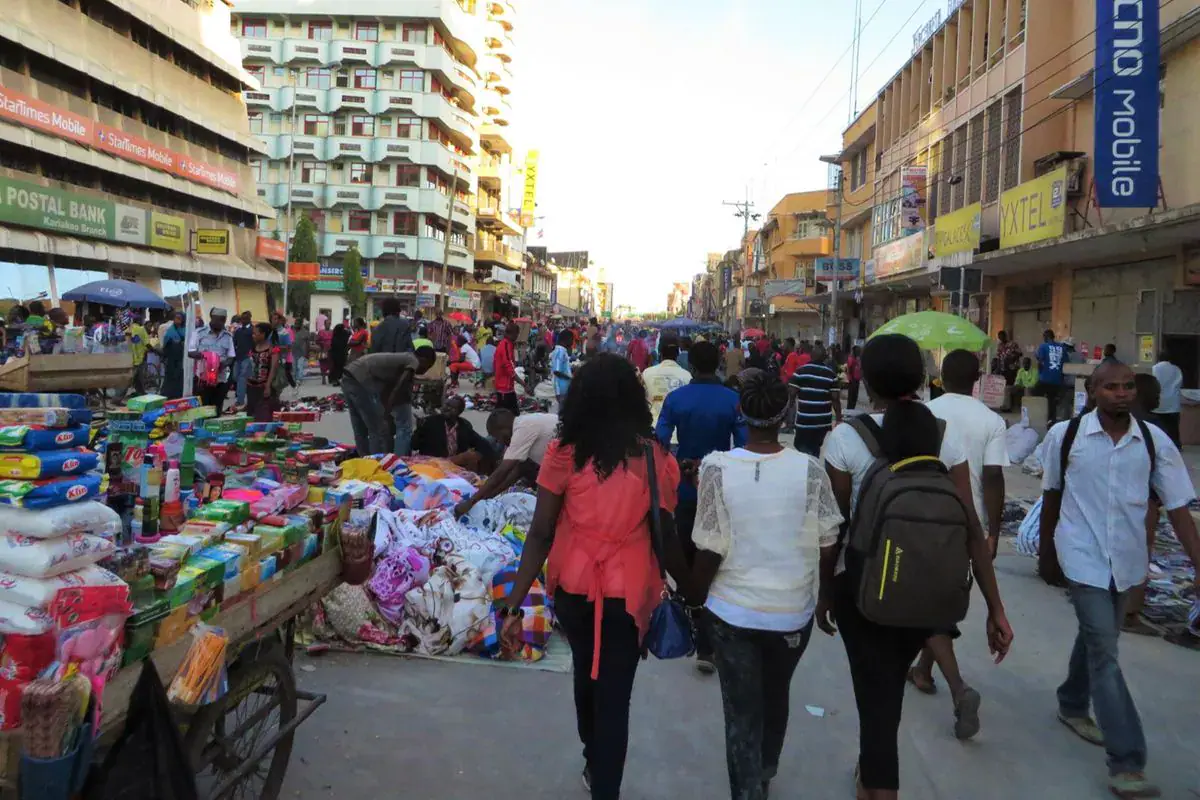
Dar es Salaam, Tanzania's largest city, is undergoing a significant transformation with the aim of modernising its commercial centres, upgrading infrastructure, and restoring order to its streets. However, this urban development has raised concerns over whether it is improving residents' lives or threatening the livelihoods of those who depend on informal economic activities. Scholars and researchers are questioning whose interests are being served by urban development policies, warning that efforts to create a modern and orderly city could push low-income earners further to the margins.
The debate gained prominence following a directive by Dar es Salaam Regional Commissioner Albert Chalamila, who on September 24, 2026, gave small-scale traders operating along Kariakoo roads and outside shops one month to relocate their businesses into formal shop premises or designated trading areas. The government said the move was intended to reopen roads, protect drainage channels, and improve access for motorists, pedestrians, and emergency services. However, academics argue that such interventions need to balance urban planning objectives with the livelihoods of people who depend on informal trade and other activities to survive.
Prof Mette Fog Olwig of Denmark's Roskilde University, whose book examines how simplified narratives about development influence policies and interventions, argued that development approaches often portray professionals as heroes and local communities as helpless victims who need to be rescued from their own practices. She warned that such perspectives can produce interventions that overlook local realities and the complex circumstances in which people live and work. "Universal development models can overlook complex local realities, particularly when global sustainability ambitions and commercial interests shape decisions," she cautioned.
The discussion found a practical example in Dar es Salaam, where efforts to formalise informal trade have repeatedly raised questions about whether government interventions adequately reflect how small-scale traders earn their livelihoods. Dr Sabatho Nyamsenda, a lecturer and political scientist at the University of Dar es Salaam, argued that the ambition to create a world-class city through infrastructure expansion, beautification, and modern urban planning risks excluding the very people who sustain its economy. He said informal workers played a central role in keeping urban economies functioning by facilitating the movement of goods, providing services, and creating markets.
Dr Nyamsenda questioned whether the benefits of urban modernisation were reaching these groups or whether they were increasingly being displaced from commercially valuable spaces. He said urban development policies were increasingly prioritising favourable conditions for private investment without giving adequate attention to social protection and democratic accountability. The concerns also extend beyond street trading to major government-backed redevelopment projects, such as the World Bank-funded $200 million Msimbazi Basin Development Project.
The World Bank-funded project has raised questions about compensation and resettlement arrangements for affected communities. In April 2026, a complaint representing 412 people was submitted to the World Bank Inspection Panel, alleging shortcomings in compensation and resettlement. The World Bank's Board approved a recommendation for an investigation in September before the affected parties agreed on October 19 to pursue facilitated dispute resolution. Another dimension was introduced by the Principal of UDSM's College of Social Sciences, Prof Christine Noe, through her presentation on contested habitability.
Research by UDSM scholars found that relocating street vendors to designated markets could disrupt their livelihoods, particularly when alternative trading locations were far from established commercial and transport centres. The economic significance of informal activities is also reflected in national statistics, with 44.5 percent of Tanzania's working-age population engaged in informal-sector activities, and 64.3 percent of households having at least one member participating in the sector.
Key points
- The modernisation of Dar es Salaam has raised concerns over the livelihoods of low-income earners and informal traders.
- Scholars argue that urban development policies need to balance planning objectives with the livelihoods of people who depend on informal trade and other activities.
- The World Bank-funded Msimbazi Basin Development Project has raised questions about compensation and resettlement arrangements for affected communities.