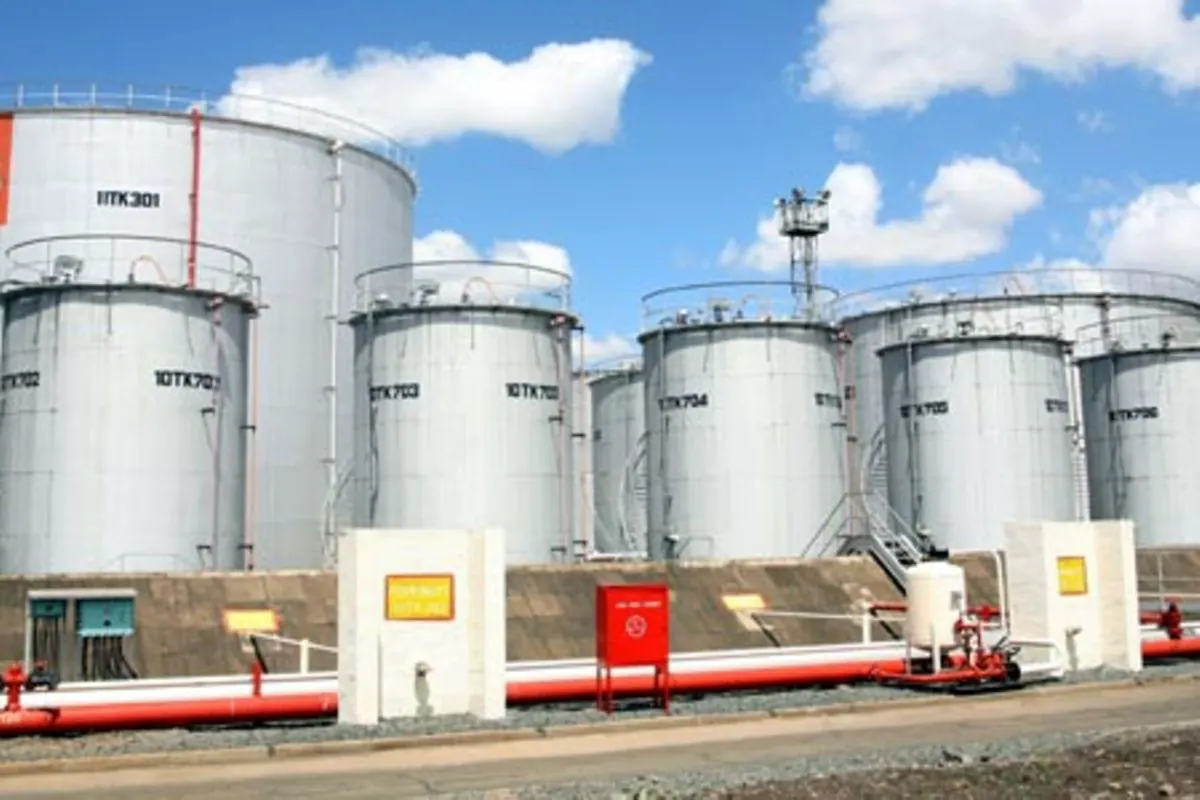
The Kenyan government's efforts to privatize Kenya Pipeline Company (KPC) have taken a significant turn with the acquisition of a 24.7 percent stake by the Dangote Group in a $300 million block transaction. According to Dr. Kenne Belgrade, the dealmaker who closed the transaction, the sale preserved the value for investors who bought shares at Sh9 during the initial public offering (IPO) in March. The shares were sold to Dangote at Sh9.36, ensuring that investors did not lose a dime.
The IPO, which was initially met with skepticism, has been validated by the Dangote Group's investment. Belgrade argued that the IPO left an unsustainable concentration of State-linked pension funds among shareholders. To address this, shares held by entities such as the National Social Security Fund (NSSF) and pension schemes sponsored by Kenya Power, Kenya Revenue Authority (KRA), KPC, and Kenya Ports Authority (KPA) were offloaded to Dangote. This move replaced public sector capital with a private investor, validating the IPO price.
The acquisition has significant implications for the region's energy landscape. KPC is a critical commercial tollgate for East Africa's petroleum flows, with three competing business models now in play. The Kenyan government's import system, the Vitol-financed trader model supplying Uganda, and Dangote's proposed import-displacing refinery at Lamu are set to clash. The amended Memorandum and Articles of Association convert this commercial tug-of-war into a boardroom contest.
The Kenyan government retains a 35 percent stake in KPC, while Uganda holds 20.15 percent through the Uganda National Oil Company (UNOC). Dangote's 24.7 percent stake makes him the second-largest shareholder. However, despite his significant investment, Dangote does not have explicit veto powers. Reserved-matter vetoes over key decisions belong exclusively to joint approval by the Kenyan and Ugandan government directors.
The voting arithmetic gives the Kenyan government, Uganda, and Dangote each an effective blocking minority. However, ordinary board mechanics favor the incumbents, with seats reserved for the Treasury, Uganda, local institutional groups, and oil marketing companies. Dangote's interests are likely to conflict with existing import margins and trading houses, as he requires offtake and infrastructure alignment for his Lamu refinery.
The future of KPC hinges on which alignment breaks the impasse. Dangote may remain a passive major shareholder, or he could find operational convergence with local import networks. Uganda has begun asserting direct influence, with its Treasury and Energy permanent secretaries taking board seats and unlocking stalled executive appointments. The $300 million transaction has ensured that KPC's boardroom will remain the primary arena for the region's energy politics.
The acquisition has also raised concerns about the Kenyan State's operational control of KPC. A hostile takeover via rights issues remains an uphill task due to the high voting threshold required to introduce capital expansions onto the corporate agenda. Furthermore, reducing the State's remaining 35 percent holding requires explicit legislative approval. Governance dynamics remain delicate, with KPC experiencing administrative friction, key staff turnover, and an unprecedented rise in trade union militancy.
Key points
- The Dangote Group's $300 million investment in KPC has significant implications for the region's energy landscape.
- The acquisition has sparked intense competition among three business models: Kenya's government-to-government import system, the Vitol-financed trader model supplying Uganda, and Dangote's proposed import-displacing refinery at Lamu.
- The voting arithmetic gives the Kenyan government, Uganda, and Dangote each an effective blocking minority, but ordinary board mechanics favor the incumbents.