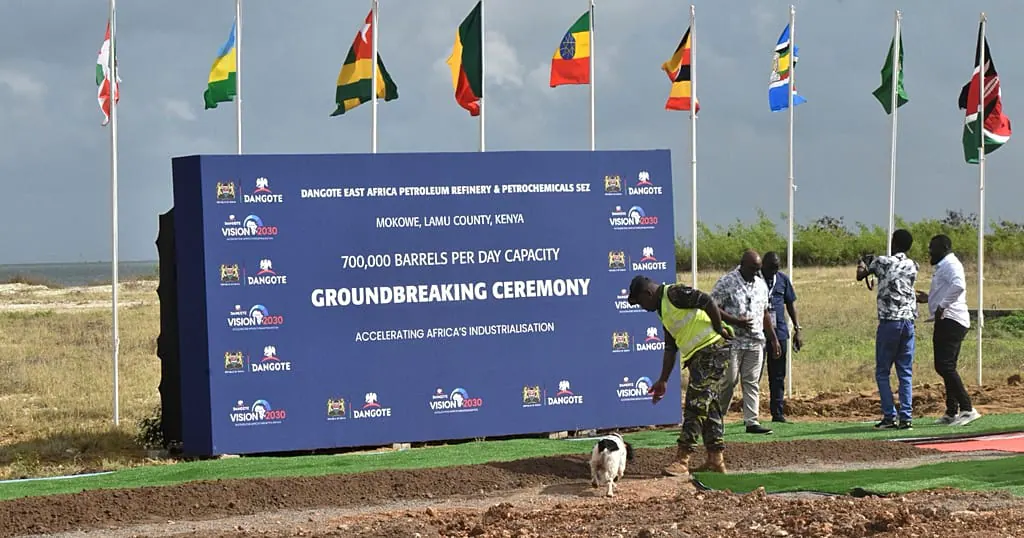
Africa's richest man, Aliko Dangote, has broken ground on a $16 billion mega-refinery in Kenya's Lamu County. The refinery, set to be completed within 30 to 40 months, will have a capacity of 700,000 barrels per day, making it larger than any refinery in Europe. The project aims to reduce Africa's reliance on imports of refined fuel and foreign expertise. Dangote says the refinery marks a "new chapter in Africa's industrial journey".
The project has faced challenges, including a lawsuit from a local community over land rights. A court ruling allowed the ground-breaking to proceed, but the case will continue. Environmentalists, including Greenpeace, have also raised objections over the project's impact. Lamu is a tourist hotspot and a UNESCO World Heritage site, known for the oldest Swahili settlement founded in the 12th century.
Dangote dismissed the challenges, saying he is prepared to address any concerns. He was joined by Kenyan President William Ruto and regional leaders, including Ethiopian Prime Minister Abiy Ahmed and Ugandan President Yoweri Museveni, for the ceremony. Ruto said Lamu will be a key development hub for Kenya and reassured locals that land and environmental concerns will be handled lawfully and fairly.
The project is part of a complex regional competition, with Uganda and Tanzania announcing a rival $20 billion refinery and energy hub at the Tanzanian port of Tanga in August. Details of that venture remain sketchy, but it is seen as a challenge to Dangote's Kenyan refinery. Most of the crude being refined at Dangote's Kenyan refinery will have to come by ship from other regions, at least initially.
Dangote told reporters that the refinery will source crude from the Middle East, the United States, and other areas, but will be ready as countries like Kenya and Mozambique start producing more oil. He initially considered building the refinery in Tanzania but chose Lamu for its deep seaport and "solid land". The refinery will include a 1,000-megawatt power facility, with half the production going back into the Kenyan grid.
The refinery is seen as a vital step towards Africa reducing its reliance on imports of refined fuel and foreign expertise. Dangote says that for too long, Africa has exported crude oil and imported refined products, leading to a loss of jobs and opportunities. He argues that Africa cannot build lasting prosperity by exporting its resources and importing what it needs.
Kenyan President William Ruto cited figures showing that Africa produced 6.8 million barrels of crude oil per day in 2024, while consuming 4.5 million of refined petroleum products. This, he said, is a sign of high demand, but also a sign that Africa is surrendering the biggest profits to overseas refiners. The refinery is expected to change this dynamic and create new opportunities for Africa.
Key points
- The refinery will have a capacity of 700,000 barrels per day, making it larger than any refinery in Europe.
- The project aims to reduce Africa's reliance on imports of refined fuel and foreign expertise.
- The refinery is expected to be completed within 30 to 40 months.