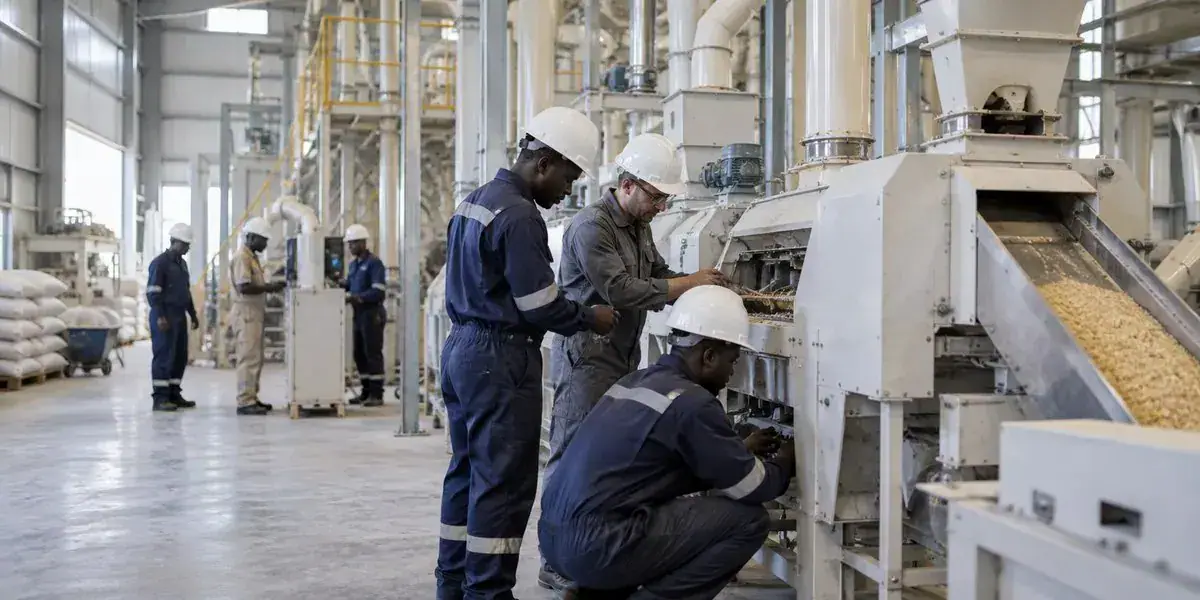
The Dangote rice mill project in Nigeria has reached a significant milestone with the delivery of a 16-tonne-per-hour processing plant in Hadin, Jigawa State. The facility was handed over by Swiss equipment maker Bühler on 11 November 2026. The plant is equipped with an integrated line that covers pre-cleaning, drying, storage, parboiling, milling, and packaging. This development marks a major step forward for Dangote Rice Limited, which began its rice programme in 2014 with a commitment of US$1B to domestic farming and processing.
The Jigawa project, valued at US$150M, is part of Dangote's plan to establish six rice mills with a combined annual capacity of 700,000 tonnes of parboiled rice. The group had initially planned to cover 150,000 hectares across five states with two mills. The new mill in Jigawa is the first of the planned six sites. To support the project, Dangote Rice signed a 10-year partnership with Niger Foods in July 2025, covering 25,000 hectares of commercial rice farms and support for 50,000 farmers.
The partnership with Niger Foods includes a commitment from Dangote to purchase one million tonnes of paddy under the agreement. This move is crucial in securing raw material supply, which is essential for the success of the project. Nigeria's demand for rice is significant, with USDA forecasts showing imports rising 11% to 3.1 million tonnes during the 2026/27 marketing year. Domestic consumption is expected to be 9.1 million tonnes for the same period.
Despite the potential of the project, local processors face significant challenges. According to Andy Ekwelem, managing director of the Rice Processors Association of Nigeria, about 90 of 150 mills had suspended operations, and the remaining facilities were running at between 30% and 70% of installed capacity. The farm economics have also softened, with paddy prices falling to around 350,800 naira (US$261) per tonne in April 2026, down from 720,000 naira per tonne in 2025.
The decline in paddy prices has squeezed farmer returns, while production costs remain elevated. To ease food inflation for consumers, Nigeria cut tariffs on bulk rice from 70% to 47.5% in 2026. However, this move also raises competitive pressure on domestic mills already running below capacity. The success of the Dangote rice mill project will depend on its ability to secure paddy, sustain utilisation, and reach distribution markets.
The project's value rests on supply-chain execution, with securing paddy and sustaining utilisation being critical factors. The InvestJigawa project register, updated in September 2026, includes the mill and an associated commercial farming programme. The construction of the plant began in March 2018, following a groundbreaking ceremony led by Aliko Dangote.
The Dangote rice mill project has the potential to make a significant impact on Nigeria's rice industry. With a focus on securing paddy and sustaining utilisation, the project can help increase domestic rice production and reduce reliance on imports. As the project moves forward, it will be essential to monitor its progress and assess its impact on the local economy and the rice industry as a whole.
Key points
- The Dangote rice mill project in Nigeria has started commercial operations with a 16-tonne-per-hour processing plant.
Reporting sources
- Dangote rice mill Nigeria opens at 16 tonnes per hour · FurtherAfrica