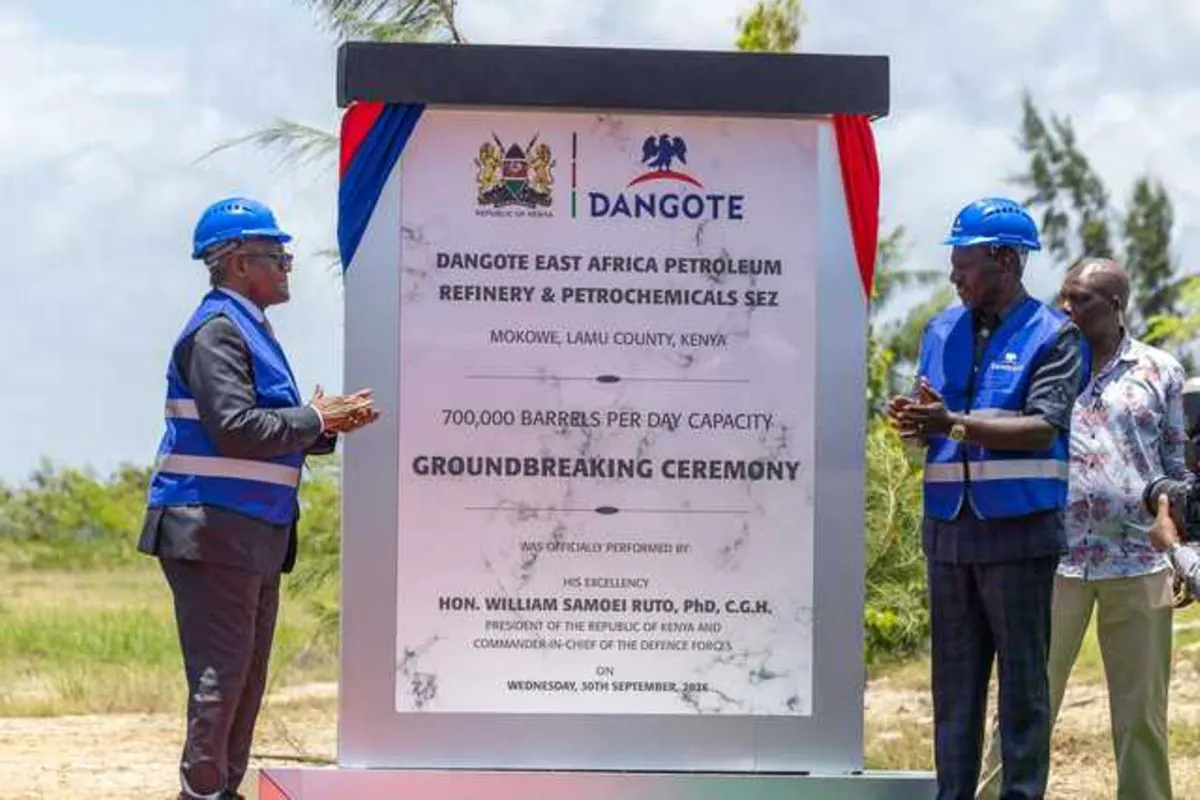
The recent groundbreaking ceremony of the Dangote East Africa Refineries in Lamu, Kenya, drew high-level attendance from across the continent. Five African heads of state were present, underscoring the project's pan-African significance and geostrategic importance. The event highlighted the ambitious vision for the refinery, billed as the largest industrial complex on Africa's east coast. President William Ruto declared that Lamu would become a major industrial hub and metropolis, anchoring a new logistics corridor linking the Kenyan coast to the hinterland through South Sudan, Ethiopia, and Central Africa.
The ceremony featured notable speeches from various leaders, including President Yoweri Museveni, who praised Aliko Dangote as a symbol of a new breed of African entrepreneur. Museveni noted that Dangote had transitioned from a comprador class to an authentic national bourgeoisie, capable of supplanting Western multinationals that have dominated African industry. Former Nigerian president Olusegun Obasanjo also delivered an inspiring speech, emphasizing the need for African leaders to craft policies that foster a domestic class of industrialists and risk-takers. He cited Dangote's rise from a major cement importer to a dominant cement producer and now, owner of two of the continent's largest refineries.
Obasanjo's speech was notable for its emphasis on the role of leadership in driving industrialization. He attributed Dangote's success to deliberate policy choices, including investment guarantees, free land, and tariff exemptions. The former president's message was clear: Africa must prioritize industrial policy to replicate the Dangote story. His words resonated with the audience, as he spoke from lived experience, having played a key role in Nigeria's industrialization.
The Dangote refinery is expected to have a significant impact on Kenya's oil project and its ambition to become a producer and hub in the regional petroleum and gas supply chain. With a refinery in the region, Kenya can refine its Turkana crude, improving the bankability of Lokichar. The refinery is also likely to attract more investment and exploration interest in the Tertiary Rift, Anza, Lamu, and Mandera basins, as it provides a facility to add value to any crude discovered.
The refinery's operations will primarily source crude from the Gulf, opening a new shipping corridor to Asia and India. Its proximity to Gulf supply and demand from India and China will make it highly competitive, with economies of scale due to its capacity of 700,000 barrels a day. The region consumes about 20 million tonnes of petroleum products a year, roughly 400,000 barrels a day, against a potential regional crude production of about 600,000.
The refinery's impact on pump prices is also expected to be significant. With lower freight and premium costs on refined products, the landed cost at Mombasa is likely to decrease. The region spends over $10 billion a year on imported petroleum products, with Kenya accounting for about $4 billion. The refinery could lead to substantial savings, particularly in freight, insurance, and related costs.
The construction of the refinery is expected to create 50,000 to 60,000 jobs and inject about Sh2 billion a month in wages. The project could add about three percentage points to manufacturing's share of GDP, with associated petrochemicals adding another two. The refinery and related activity could also lift Lamu into Kenya's five largest county economies. Ultimately, the refinery's value will be measured beyond barrels and pump prices, as it sets a precedent for industrialization in the region.
Key points
- The Dangote refinery is expected to create 50,000 to 60,000 jobs and inject Sh2 billion a month in wages during construction.
- The refinery could add about three percentage points to manufacturing's share of GDP.
- The project may lead to substantial savings in freight, insurance, and related costs, potentially lowering pump prices in the region.