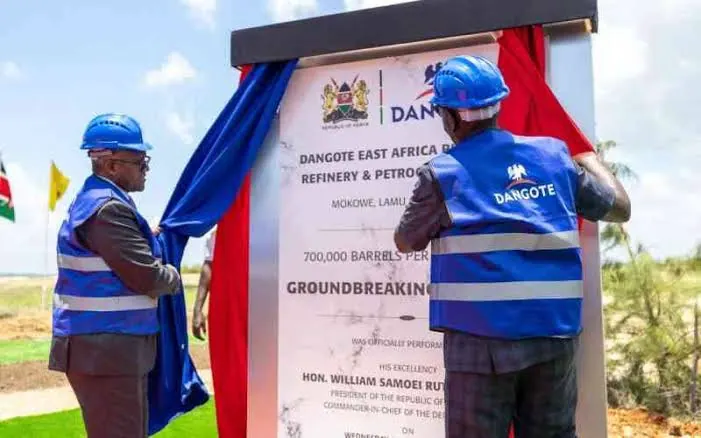
The Dangote refinery, a major investment in Kenya's manufacturing sector, is expected to reverse the declining fortunes of the industry and boost the economy of Lamu County. According to David Ndii, President Ruto's economic advisor, the refinery could contribute as much as 5% to the Gross Domestic Product (GDP), increasing the manufacturing sector's contribution to GDP to 12%. This is a significant increase from the sector's current contribution of 7.1% to GDP.
The manufacturing sector has been on a decline for over a decade, with its contribution to GDP peaking at 12.8% in 2007 and steadily decreasing since then. The Dangote refinery is expected to produce petroleum products and materials used in the manufacture of plastics and rubbers, providing a much-needed boost to the sector. Ndii noted that the refinery's potential for growth is substantial, with projections showing that it could increase the sector's contribution to GDP to 10%, and with the petrochemical industry's multiplier effect, this could increase to 12%.
The construction phase of the project is expected to create around 60,000 jobs, with workers earning a combined Sh2 billion per month. A significant portion of this income will be spent in the Lamu economy, providing a substantial boost to the local community. When operational, the project is expected to move Lamu from being one of the poorest counties in Kenya to one of the counties with the biggest GDPs. The county's economy is currently driven by tourism and fishing, but the refinery is expected to have a significant impact on the local economy.
Lamu County's Gross County Product (GCP) is currently classified among the poorest at Sh50.9 billion, contributing only 0.4% to the Kenyan economy. However, the GCP per capita is one of the highest at Sh304,000, above the national average, and ranks Lamu as the fifth richest county per capita in Kenya. The refinery is expected to have a significant impact on the county's economy, with Ndii estimating that it will move Lamu to fifth position in terms of GDP, and with the multiplier effect, it could become the fourth largest county economy in Kenya in less than a decade.
The refinery will largely be financed by the Dangote Group, which will have a 70% stake, while the balance is expected to be held by governments in the region. Kenya is expected to have a 10% stake and will invest Sh64.7 billion in the project. Ndii noted that the investment makes sense, even if Kenya does not have crude oil, as the refinery will add value for the regional market and provide significant benefits, including lower prices at the pump and foreign exchange.
The Dangote refinery will import most of the oil it will refine, which has raised concerns that despite the trillions that will be pumped into the facility, it will not shield Kenya and the region from volatility in global markets. However, Ndii noted that in developing the project, both petroleum resources available in the region and imports were considered, and in both instances, the refinery was economically viable and offered significant benefits.
Ndii touted the investment as an instance of getting African solutions to challenges that the continent faces, adding that it is unlikely that the project would have moved ahead with funding from lenders and companies from developed countries. The investment in the refinery is about $16 billion, with Ndii noting that it has an eight-year payback period from savings on shipping costs alone.
Key points
- The Dangote refinery is expected to increase the manufacturing sector's contribution to GDP to 12%.
- The refinery is expected to create around 60,000 jobs during the construction phase.
- The project is expected to move Lamu County from being one of the poorest counties in Kenya to one of the counties with the biggest GDPs.