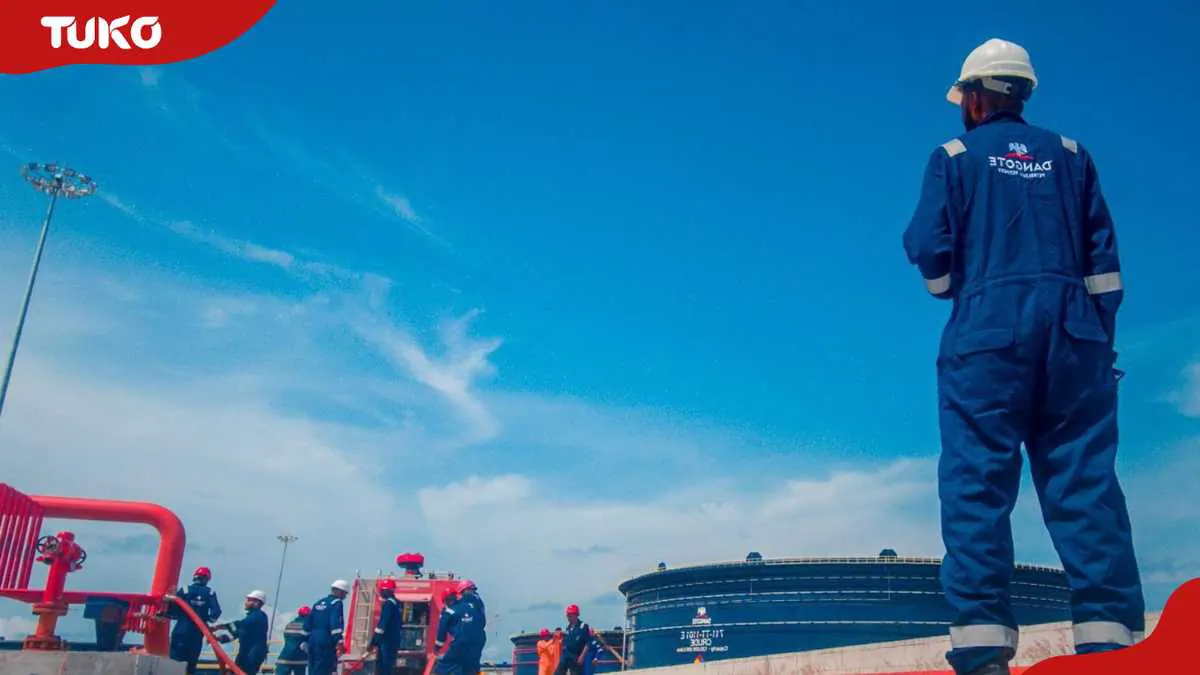
On September 30, 2026, Aliko Dangote, president of Dangote Group, publicly guaranteed employment for all holders of engineering degrees, diplomas, or technical qualifications linked to the East Africa Oil Refinery project. The project was officially launched at a groundbreaking ceremony in Lamu, Kenya. Dangote stated that anyone with an engineering degree, diploma, or technical qualification has a guaranteed job. The refinery is expected to create numerous possibilities, making it a significant industrial project.
The KSh 2.2 trillion (USD 16 billion) East Africa Oil Refinery, located on the Lamu Port-South Sudan-Ethiopia Transport (LAPSSET) Corridor, will have a processing capacity of 700,000 barrels of crude oil per day. This makes it larger than any facility currently operating in Europe. The project, developed by Dangote Industries in partnership with the Africa Finance Corporation, is expected to reach completion by 2030. Engineers India Limited has been awarded a KSh 58 billion (USD 450 million) contract to manage construction.
The refinery will draw crude oil from Kenya's Turkana oilfields and other East and southern African sources. It will distribute refined petroleum products to Uganda, Tanzania, Ethiopia, South Sudan, Rwanda, Burundi, and the Democratic Republic of Congo. A 1,000-megawatt power plant fired by petroleum coke will run alongside the refinery, with 500 megawatts earmarked for sale to the Kenyan government. The project is expected to support up to 60,000 direct jobs at the height of construction.
The groundbreaking ceremony was attended by Kenyan President William Ruto and several other African heads of state. These included Ugandan President Yoweri Museveni, Ethiopian Prime Minister Abiy Ahmed, and Benin's President Romuald Wadagni. The first cargo of heavy construction machinery arrived at Lamu Port in late September. The project faces legal hurdles, with 133 residents of Chandavai in Lamu filing a lawsuit seeking to halt activities over ancestral land claims.
Lamu residents have called for at least 70% of jobs to be reserved for locals and urged the Dangote Group to establish training programs for area youth. Dangote assured Lamu residents of 1,000 training and employment opportunities. He will establish a training school to equip Kenyans with relevant oil and petroleum skills. The project is expected to cut the region's dependence on imported fuel and reduce exposure to international price volatility.
Kenya imported 5.5 million tonnes of petroleum products in 2025, up 12.2% from the previous year, at a cost of KSh 528.8 billion (USD 4.1 billion). Environmental groups, including Greenpeace, have raised concerns about the project's potential impact on Lamu Old Town, a UNESCO World Heritage site. The Malindi Environment and Land Court declined to stop the groundbreaking but ordered the parties to maintain the status quo on the disputed parcel.
Dangote responded to the ongoing court petition, stating that legal challenges were routine for his group. The court directed parties to maintain the status quo until an October 14 hearing but did not stop the September 30 groundbreaking. East African nations have collectively been offered a 30% equity stake in the project, with Kenya intending to hold a 10% shareholding valued at KSh 65 billion (USD 500 million).
Key points
- Aliko Dangote guarantees jobs for Kenyan engineering graduates at the KSh 2.2 trillion Lamu refinery project.
- The refinery is expected to create up to 60,000 direct jobs at peak construction.
- The project will be completed by 2030 and will process up to 700,000 barrels of crude oil per day.