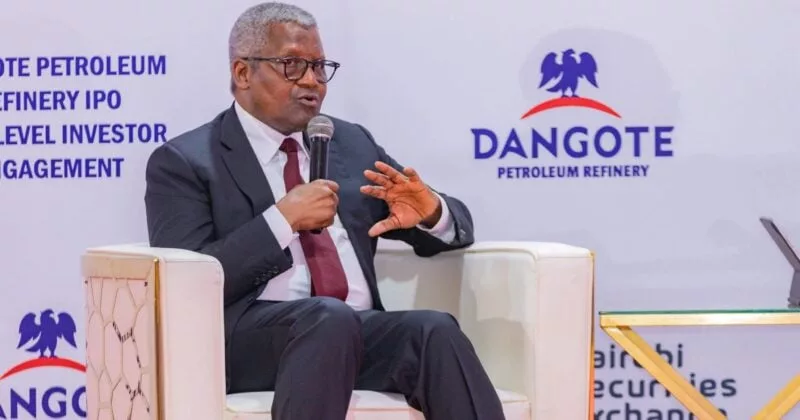
Nigerian billionaire Aliko Dangote has defended his decision to locate a planned $16 billion refinery in Lamu, Kenya. The refinery, estimated to cost roughly Sh2 trillion, will have a processing capacity of approximately 700,000 barrels per day. Dangote argued that an oil refinery does not necessarily have to be established where crude oil is produced, but rather where there is access to water, port depth, and the ability to receive large crude carriers.
Dangote cited Singapore and India as examples of countries with significant refining capacity despite producing little or no crude oil. He noted that Singapore has no oil but has a huge refining capacity, while India has a huge refining capacity with very little oil, less than five per cent of its own demand. This, he said, demonstrates that proximity to oilfields is not a determining factor in choosing a refinery location.
The billionaire revealed that logistical considerations, particularly access to water and the depth of the port, informed the choice of Lamu. He said the facility would need to receive very large vessels carrying crude, which Lamu's port can accommodate. Dangote also noted that his existing refinery in Lagos, Nigeria, is not located in an oil-producing area, but rather in a location with suitable infrastructure.
Dangote said the refinery would initially prioritize crude produced in East Africa, including Kenya's Turkana oilfields, before sourcing additional supplies from the Middle East and other producing regions. He emphasized the global competition for crude oil, saying the refinery would need to secure supplies from different sources. This, he argued, would ensure a stable supply of crude to the refinery.
The planned Dangote East African Refinery is expected to create a wide range of products and industrial inputs, with Dangote noting that "from crude oil, you produce 6,800 items." He believes that the refinery will not only meet Kenya's and East Africa's demand for petroleum products but also create jobs and stimulate economic growth in the region.
Dangote revealed that Lamu was not his first preference when he began considering locations for the project. He had initially considered other ports along the East African coast, including Tanga and Mombasa. However, he only became familiar with Lamu recently and was impressed by its suitability for the project.
The Dangote East African Refinery is expected to have a significant impact on Kenya's and East Africa's economies. With a processing capacity of approximately 700,000 barrels per day, the refinery will help meet the region's growing demand for petroleum products. Dangote's decision to prioritize crude produced in East Africa will also support the growth of the region's oil industry.
Key points
- The refinery's location in Lamu was chosen for its access to water and port depth.
- The refinery will initially prioritize crude produced in East Africa.
- The project is expected to create jobs and stimulate economic growth in the region.