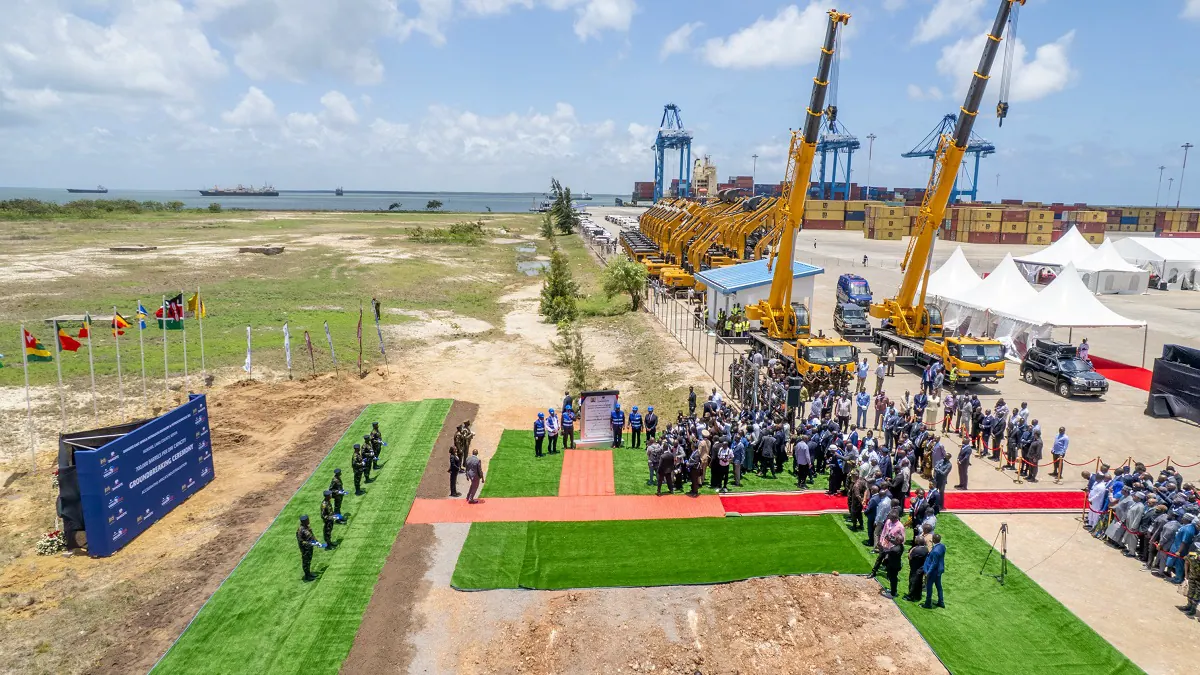
Nigerian billionaire Aliko Dangote has attributed protests surrounding his proposed $16 billion refinery in Lamu, Kenya to local petroleum marketers and international oil companies. The 700,000 barrels-per-day refinery, expected to be completed by 2030, has faced opposition from residents over land acquisition and compensation. A Kenyan court has restricted construction activities on the disputed land, pending the next court hearing scheduled for October 14.
The refinery, planned to be one of the largest refining projects in Africa, has sparked concerns over its potential impact on the local environment. The Save Lamu campaign group has demanded access to the project's environmental impact assessment and proposed mitigation measures. Walid Ali, co-founder of the group, expressed concerns about the potential effects of the refinery on communities and the environment.
Dangote rejected claims that his company had acquired more land than required for the project, stating that the company was using only the portion allocated to it by the Kenyan government. He described the demonstrations as "games played by local marketers and international players" and maintained that they would not derail the project or its planned completion date.
The project has garnered significant attention, with the groundbreaking ceremony attended by leaders of Uganda, Ethiopia, Togo, and Benin. According to Reuters, Dangote has offered regional governments a combined 30 percent stake in the refinery. The project is expected to create about 60,000 jobs at the peak of construction, with local communities expected to benefit from the development.
The refinery will also include a 1,000-megawatt power plant intended to supply Dangote's operations and other industries that could establish businesses around the refinery. If completed as planned, the Lamu refinery would become Kenya's largest infrastructure project since independence, surpassing the $5.1 billion Standard Gauge Railway.
Dangote said the project would seek to replicate the experience of his 700,000-bpd refinery in Nigeria, which he cited as evidence that large-scale refining projects can be developed on the continent. "Lekki proved that it can be done, Lamu must prove that it can be repeated," he said. The project is considered Dangote's largest proposed investment outside Nigeria.
The Lamu refinery project has significant implications for Kenya's economy and energy sector. With a processing capacity of 700,000 barrels per day, the refinery is expected to meet Kenya's growing demand for petroleum products and reduce the country's reliance on imports. The project's success could also pave the way for similar large-scale refining projects in the region.
Key points
- Aliko Dangote blames local petroleum marketers and international oil companies for protests against his $16 billion refinery in Lamu, Kenya.
- The refinery is expected to create about 60,000 jobs at the peak of construction and include a 1,000-megawatt power plant.
- The project has faced opposition from residents over land acquisition and compensation, and concerns have been raised about its potential impact on the local environment.