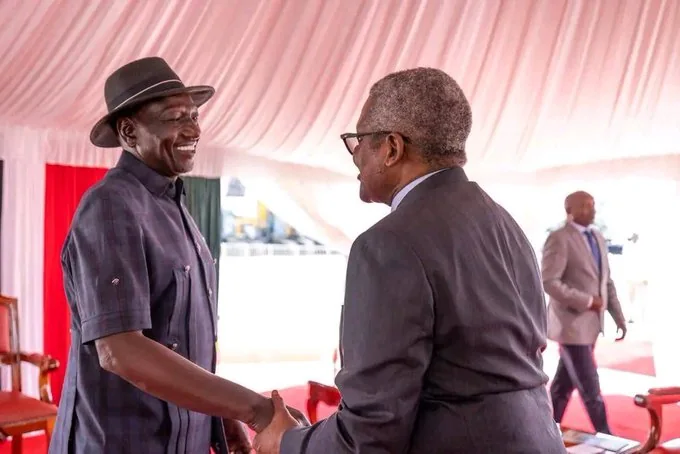
On September 30, 2026, Nigerian billionaire Aliko Dangote and President William Ruto marked the beginning of construction for a $16 billion refinery in Lamu, Kenya. The project, valued at Sh2.2 trillion, aims to significantly reduce Kenya's reliance on imported petroleum products. According to the Kenya National Bureau of Statistics, petroleum-product imports increased by 12.2% to 5.5 million tonnes in 2025, with domestic demand rising by 9.9% to 5.7 million tonnes.
The refinery, expected to be completed around 2030, will process up to 700,000 barrels of crude oil per day and supply refined petroleum products to Kenya and East Africa. Dangote stated that the project has crossed an important stage with all agreements signed, paving the way for physical work to begin. The facility is planned to create approximately 60,000 direct and indirect jobs, with the actual number depending on construction and refinery operations.
The project is part of the Dangote Group's wider investment program, with $50 billion set aside for projects to be implemented by 2030. The Lamu refinery will be the group's second major refinery investment, following a 650,000-barrel-per-day facility in Nigeria. Dangote acknowledged a legal challenge from residents over the land earmarked for the development but expressed readiness to address any hurdles.
The refinery is expected to boost Lamu Port and the Lamu Port-South Sudan-Ethiopia Transport (LAPSSET) corridor, with potential business activity in logistics, petrochemicals, manufacturing, and energy. However, 133 Chandavai residents have taken the matter to court, arguing that the contested property is ancestral land. The Malindi Environment and Land Court has ordered the parties to maintain the existing status quo over the disputed land.
Dangote expressed gratitude to Deputy President Kithure Kindiki and the Kenyan government for facilitating the agreements needed for the project. He emphasized that transformative projects often face challenges but can be achieved with determination. The groundbreaking ceremony marked a significant milestone, with Dangote envisioning an industrial city emerging at the site.
The project will involve laying foundations, constructing steel structures, extending pipelines, and installing processing units. Dangote described the journey from planning to a functioning refinery as a series of stages, with the groundbreaking ceremony symbolizing the transition from idea to physical reality. The refinery is anticipated to have a substantial impact on Kenya's energy sector and economy.
As construction commences, the Dangote Group will focus on navigating the ongoing land case and meeting technical and logistical requirements to complete the refinery by 2030. The project's success is expected to have far-reaching implications for Kenya's refining capacity and reliance on imported fuels.
Key points
- The Dangote Group has invested Sh2.2 trillion in the Lamu refinery project.
- The refinery is expected to process up to 700,000 barrels of crude oil per day.
- The project aims to create approximately 60,000 direct and indirect jobs.