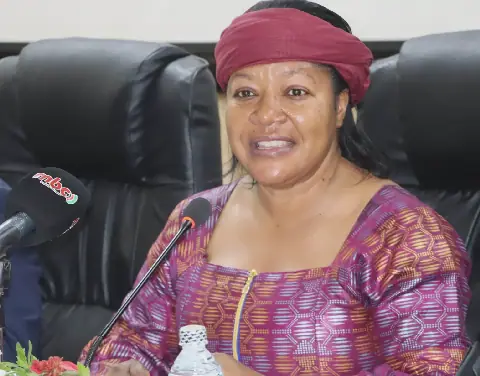
Dalberg Advisors associate partner Chimdi Onwudiegwu has called on African financial institutions to reform their funding processes for women entrepreneurs. She emphasized that greater female representation in investment decisions must translate into access to capital. Onwudiegwu made these remarks at the Africa Financial Summit in Luanda, Angola, which took place on November 3 and 4. The summit focused on directing African capital towards productive businesses and economic growth.
Onwudiegwu identified several obstacles that institutions need to address, including collateral requirements, investment practices, and limited influence within decision-making bodies. She noted that increasing the number of women on committees does not automatically resolve weaknesses elsewhere in the investment process. Her comments followed a summit workshop that examined the gap between women's representation among capital allocators and the funding reaching female founders.
Research by the African Private Capital Association found that women accounted for 33% of investment committee members across its surveyed firms in January. The study covered 218 investors operating in areas including private equity, venture capital, and infrastructure. Additionally, Africa: The Big Deal's review of 2025 funding showed that solo women founders and founding teams consisting entirely of women received less than 1% of the capital raised by African startups.
Onwudiegwu emphasized that institutions need to consider whether women serving on boards and investment committees can meaningfully influence decisions. She also called for accountability within institutions so that financing women-owned businesses remains a priority beyond discussions about representation. Onwudiegwu highlighted access to property titles as an example of how conventional lending requirements can disadvantage women entrepreneurs.
Onwudiegwu urged financial institutions to examine both their collateral demands and the methods they use to assess risk. She argued that lenders need to understand the circumstances in which women operate their businesses when deciding whether and how to provide finance. Onwudiegwu also cautioned against treating women-owned enterprises as a single category with identical requirements, citing the need for different financing approaches for small traders and businesses seeking venture capital.
The Africa Financial Summit, co-hosted by the International Finance Corporation and Jeune Afrique Media Group, aimed to expand private investment, finance productive sectors, and turn African savings into investment within the continent. Onwudiegwu noted that mobilizing capital will have limited value if firms cannot obtain the support needed to operate and grow. She emphasized the importance of developing financing approaches suited to smaller firms, citing Nigeria as an example of widespread entrepreneurial activity among women.
Onwudiegwu expressed encouragement by the range of businesses she encountered across African markets, particularly in Nigeria, where many women entrepreneurs operate microenterprises. She stressed the importance of ensuring that women's participation in financial decisions translates into practical benefits, highlighting Dalberg's work with businesses and development partners across areas including agriculture, health, financial inclusion, and gender.
Key points
- Financial institutions must reform funding processes to address obstacles faced by women entrepreneurs.
- Women entrepreneurs need both participation in financial decisions and practical benefits from that participation.
- Financing approaches should be tailored to the specific needs of women-owned enterprises, including smaller firms and microenterprises.
Reporting sources
- Dalberg urges funding reform for women · Prime 9ja Online