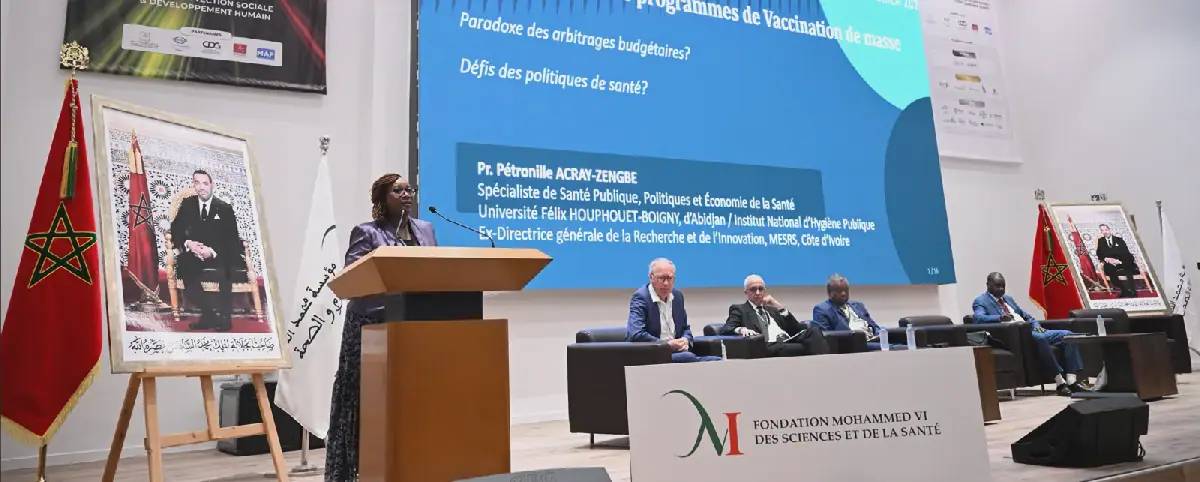
The second edition of the Dakhla Global Summit, held on November 20-21, concluded with the adoption of a final declaration. The declaration urges African countries to consider health as a strategic investment and a common good. It emphasizes the need to strengthen the continent's health sovereignty, improve public financing, train healthcare professionals, and develop local capacities for producing medicines and vaccines.
The summit, organized by the Mohammed VI Foundation for Science and Health, in collaboration with the African Academy of Health Sciences, brought together representatives from nearly 30 African countries and other regions. The event drew policymakers, diplomats, academic and hospital leaders, researchers, healthcare professionals, and students to discuss the future of African health systems. The final declaration reaffirms the principles adopted during the previous edition, including the right to health for all, equity, solidarity, and health sovereignty.
A key aspect of the declaration focuses on the need to consider health expenditures as sustainable investments in human and economic development. Participants called on African states to allocate more budgetary resources to the health sector to address increasing needs and high operating costs. This financial mobilization aims to support the initial and specialized training of healthcare professionals, while improving medical infrastructure and services.
The declaration also stresses the importance of better organizing care pathways by establishing functional links between local health structures and reference hospitals. Participants recommend developing medical protocols with effectiveness assessed based on obtained results. They also committed to promoting networking among African centers of excellence to enhance competence exchange and cooperation between specialized institutions.
The issue of human resources is a priority concern, with the brain drain of medical professionals being a significant challenge. The declaration encourages African countries to strengthen their cooperation and investments in the health sector to address challenges related to access to care, availability of human resources, and security of medical supplies.
The Dakhla Global Summit's final declaration, also known as the Dakhla Declaration 2026, outlines a roadmap for improving Africa's health systems. It advocates for a more significant role for artificial intelligence in healthcare, while ensuring its use is regulated. The declaration also highlights the need for environmental considerations to be integrated into health policies.
The Mohammed VI Foundation for Science and Health, in partnership with the African Academy of Health Sciences, will likely play a crucial role in implementing the Dakhla Declaration 2026. The foundation and the academy will work together to support African countries in strengthening their health systems and addressing the challenges outlined in the declaration.
Key points
- The Dakhla Global Summit's final declaration calls for African countries to view health as a strategic investment and common good.
- The declaration emphasizes the need to strengthen health sovereignty, improve public financing, and develop local capacities for producing medicines and vaccines.
- The summit's recommendations focus on improving healthcare access, addressing human resource challenges, and integrating environmental considerations into health policies.
Reporting sources
- Dakhla Global Summit : la santé, un « investissement stratégique » · La Nouvelle Tribune