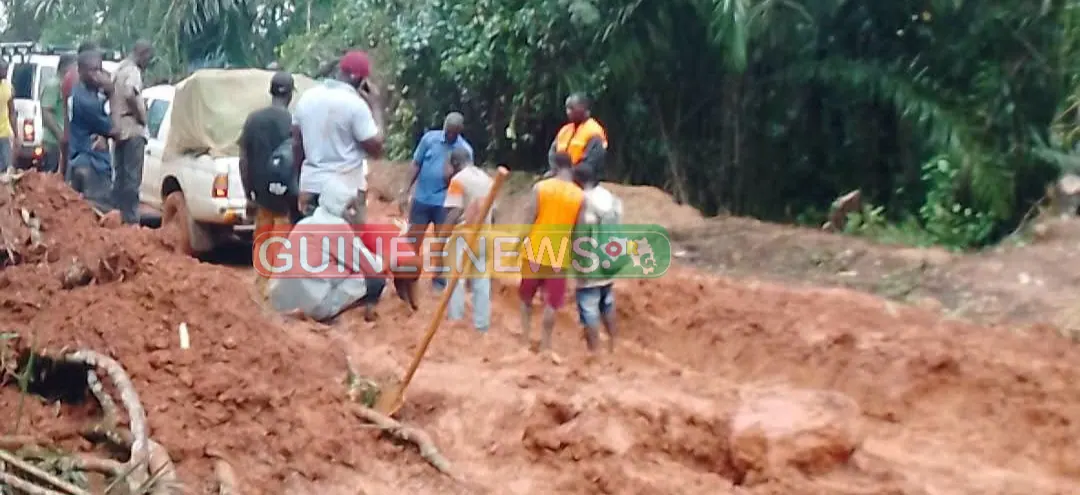
The Péla-Diéké to Bignamou route in Guinea has become a nightmare for travelers, with the road's condition deteriorating significantly due to the rainy season. The stretch, vital for exchanges between the two localities, is now almost impassable, forcing pedestrians, motorcyclists, vehicle drivers, and passengers to make slow and laborious progress. If authorities do not intervene promptly, this route could be completely cut off.
The situation on the ground is dire, with everyone agreeing that the road has degenerated into a trap for those who use it. Vehicles get stuck, passengers disembark to lighten the load and push, while drivers desperately seek less muddy passageways, often in vain. Each kilometer is gained through considerable effort, with travelers spending hours stuck in the mud. Gnakoye Delamou, traveling to Diéké, described his ordeal, saying that what should be a simple journey has turned into a day-long exhaustion.
The difficulties are not limited to the slow pace of travel. The delays accumulate, and transportation costs increase as drivers, who wear out their vehicles and fuel, pass on these extra costs to passengers. Local traders see their goods exposed to rain and mud, risking loss before they even reach the market. Perishable agricultural products are particularly vulnerable. Sensitive movements, such as evacuating the sick to a health center or students trying to get to school, become unpredictable.
The road's poor state has significant implications for the local population. Emmanuel Bongono, traveling to Bignamou, expressed his frustration and concern, warning that if nothing is done by the authorities, the road could be cut off, isolating the villages. He emphasized that the route is crucial for daily activities, including work, selling products, and accessing healthcare. The population fears that a closed road would halt supplies, stop local products from being sold, and leave the localities to fend for themselves.
The situation is taking a toll on the local economy and daily life. With the road in such a state, traders are struggling to get their goods to market, and farmers are finding it difficult to transport their produce. This is having a ripple effect on the local economy, with many people relying on the road for their livelihood. The situation is also affecting access to essential services, including healthcare and education.
The urgency of the situation is clear to travelers and residents. They are calling for immediate action, at least in the form of rehabilitation and drainage works, to prevent the road from deteriorating further. Every day of delay worsens the road's condition and increases the cost of potential repairs. Until then, travelers and drivers continue to face the mud, day after day, in the hope that their plea will be heard.
The people using this road are now anxiously waiting for help. They just want a road that they can use without risking their lives or damaging their goods. Unless something is done soon, the consequences could be severe, with the potential for the road to be closed for an extended period. The travelers and residents are urging the authorities to take immediate action to address this critical issue.
Key points
- The Péla-Diéké to Bignamou route in Guinea has become almost impassable due to the rainy season.
- Travelers face significant challenges, including delays, increased transportation costs, and risks to their safety and goods.
- The local population is calling for urgent action from authorities to rehabilitate and drain the road to prevent further deterioration.