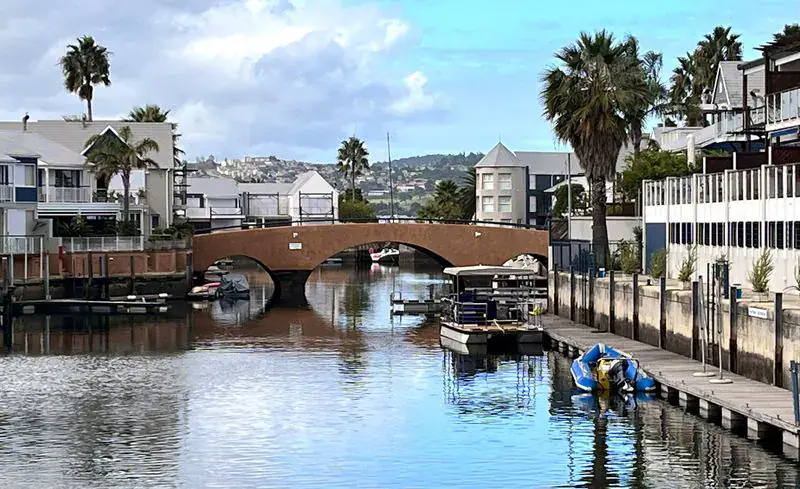
The coastal town of Knysna in the Western Cape remains a hung council after the 4 November local elections, with the Democratic Alliance (DA) failing to secure outright control. Despite gaining one extra seat in the 21-strong council, the DA's 44.41% voting share was not enough to win a majority. The party currently holds nine seats, while the African National Congress (ANC) has four, the Patriotic Alliance and two single seats are held by parties including the South African Communist Party (SACP), EFF, and Freedom Front Plus (FF+).
Knysna has a history of political instability and coalition-making since 2016, with recent problems including corruption and non-functioning sewerage pumps. In October 2026, ex-mayor Thando Matika, the then acting municipal manager Boy Ngubo, and acting chief financial officer Busisiwe Lubelwana were arrested and released on bail in connection with kickbacks linked to a security tender. The council has clashed with DA local government MEC Anton Bredell, who opposed Ngubo's appointment and went to court over provincial attempts to dissolve the council.
The DA's vote share in Knysna increased from 35.44% in 2021, but remains less than the 49.61% support the party received in the 2016 municipal election. In 2016, the DA's 10 seats, together with Cope's one seat, secured control of the council. Currently, coalition talks are underway, with the DA seeking to partner with the FF+ and Knysna Civic Association to take control of the council. However, a coalition of everyone but the DA and FF+ could also secure the required 11 seats for control.
Similar coalition dynamics are playing out in other key economic hubs across the Western Cape, including Beaufort West and Saldanha Bay. In Saldanha, the DA obtained 49.11% of the vote, slightly up from 2021, but not enough to win outright control. The Patriotic Alliance (PA) is the second-largest party in the 31-seat council with six seats, followed by the ANC with four seats.
In contrast, the DA secured outright control of several municipalities, including Stellenbosch with 62.09% of the vote, Drakenstein (56.12%), Hessequa (51.47%), Bergrivier (64.24%), Swartland (60.73%), Overstrand (61.01%), and Mossel Bay (66.15%). The results in George were extremely close, with the DA obtaining 28 of the council's 55 seats with 50.26% support.
The Western Cape's five district councils are yet to be announced, as local municipalities must appoint councillors to supplement the directly elected ones. The final results for Cape Town were outstanding on 6 November, although the DA declared it a win a day earlier based on its own projections. According to Marianne Merten, writing for the Daily Maverick, the DA's performance in the local elections has significant implications for the province.
The DA's coalition negotiations in Knysna and other municipalities will be crucial in determining the outcome of the local elections. The party's ability to form coalitions with smaller parties will likely determine its success in governing key economic hubs in the Western Cape. As the situation continues to unfold, one thing is certain - the DA's performance in the local elections has set the stage for a complex and potentially contentious period of coalition negotiations.
Key points
- The DA needs to partner with the FF+ and Knysna Civic Association to secure control of the Knysna council.
- The DA secured outright control of several municipalities, including Stellenbosch, Drakenstein, and Mossel Bay.
- Coalition dynamics are playing out in other key economic hubs across the Western Cape, including Beaufort West and Saldanha Bay.