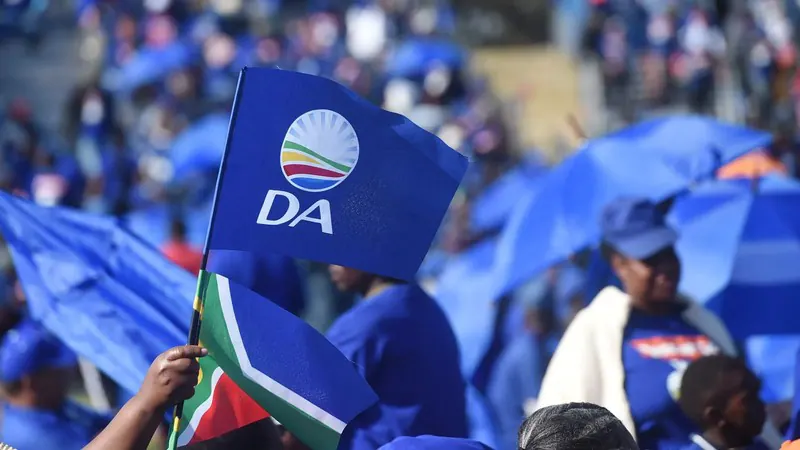
The Democratic Alliance (DA) has filed an urgent application with the Electoral Court in South Africa, challenging the practice of several parties submitting one-name proportional representation (PR) lists ahead of the 2026 Local Government Elections. The DA argues that this practice allows parties to avoid identifying their full complement of candidates before voters cast their ballots. The parties in question are ActionSA, the EFF, the MK Party, and GOOD.
The DA claims that these parties are deliberately using a provision that allows them to add candidates to their PR lists after an election if they win more seats than they have candidates. The party argues that this provision was intended for exceptional circumstances, not as a strategy for determining candidates after the election. The DA says that voters should know which candidates they are voting for when they choose a political party.
The DA has pointed to the scale of the practice, citing examples of parties contesting almost every ward in South Africa with thousands of ward candidates while submitting one PR candidate in every municipality. ActionSA, for instance, has nominated over 2,000 individual ward candidates while submitting one-person PR lists in virtually every municipality it contests. In Johannesburg, ActionSA has submitted only one PR candidate, despite having dozens of PR councillors.
The DA also claims that ActionSA has publicly acknowledged that its approach is deliberate, stating that it submits one name to supplement its list after discovering how many seats it has won. According to the DA, ActionSA has said it will use the seats it attains as rewards for party members who worked hard during the election campaign. The DA argues that this practice undermines the electoral process.
The DA has asked the Electoral Court to determine whether the practice of submitting one-name PR lists is legal and constitutional. The party argues that voters must be presented with the candidates they are voting for, and that elections cannot become games of sleight-of-hand. The DA's application is particularly important given the ANC's exclusion from contesting in various municipalities after failing to submit its lists on time.
The DA suggests that if the ANC had engaged in the same practice of submitting only one name on its PR list, it would have remained on the ballot. The party has asked the Electoral Court to grant appropriate relief and to ensure that the electoral process is fair and transparent. The court will have to decide whether the topping-up of PR lists after seat calculations can be deliberately used as an electoral strategy.
The outcome of the DA's application could have significant implications for the 2026 Local Government Elections in South Africa. The Electoral Court's decision will determine whether parties can continue to use the provision to add candidates to their PR lists after the election. The DA's case is that parties cannot hide their candidates from voters, and that the ballot box must determine which candidates are elected.
Key points
- The Democratic Alliance has challenged the submission of one-name proportional representation lists by several parties.
- The DA argues that this practice undermines the electoral process and hides candidates from voters.
- The Electoral Court will determine the legality and constitutionality of the practice.