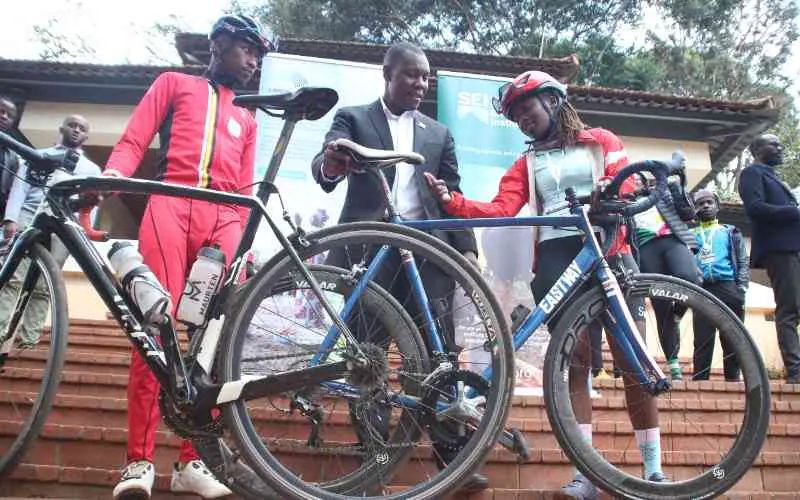
Cycling has been a mode of transport, recreation, exercise, and competitive sport globally for decades. In Nairobi, bicycles account for about 1.1 per cent of all trips, despite participation in recreational cycling, cycling clubs, and organised races. The growth of cycling in the city is now being accompanied by efforts to link it with environmental conservation, climate action, and community development.
On Sunday, September 27, cyclists will take part in the Grand Nairobi Race, which will be linked to activities at Oloolua Forest. Organisers will combine sport with tree growing and conservation. The initiative builds on three years of community and climate action through the Grand Nairobi Race, including tree growing, fruit trees, orchards, and school feeding programmes.
The Grand Nairobi Race has led to the growth of more than 8,000 trees through its initiative, which is now being scaled up through the Oloolua Forest activities. Race organiser Desmond Momanyi emphasised the need to ensure trees survive after being planted, saying "we are talking about tree growing, not tree planting." The initiative has also included food towers, fruit trees, orchards for community schools, and school feeding programmes.
Oloolua Forest provides an opportunity to combine recreation with conservation. The forest covers about 660 hectares and has approximately 30 kilometres of walking and cycling trails. It is managed through a participatory arrangement involving the Kenya Forest Service and the Community Forest Association, with community scouts supporting protection efforts.
However, the forest faces pressures such as degradation, illegal dumping, and logging. Restoration activities will include growing indigenous trees in selected areas and supporting rehabilitation of degraded sections. Laura Mukhwana, Global Landscapes Forum (GLFx) Nairobi coordinator, highlighted the need for conservation efforts in the forest.
The environmental focus is part of a wider discussion on the sustainability of cycling events. Philip Osano, chief operating officer of Landscape Alliance, said sporting events should consider their environmental impact beyond the competition itself, including transport, energy, waste, resource use, and biodiversity. Moses Okelloh and Chemutai Brenda also presented on sustainability in cycling and carbon-footprint measurement.
The push for more cycling also comes with challenges for riders in an urban environment where cycling infrastructure remains limited. An Urban Cyclist Exposure study found substantial variation in cyclists' short-term exposure to PM2.5, or fine particular matter, between different days and sections of routes. The study suggested that recurring high-exposure sections could be mapped and considered when planning cycling infrastructure.
Key points
- Cycling events in Kenya are focusing on climate action and urban mobility.
- The Grand Nairobi Race has led to the growth of more than 8,000 trees.
- Oloolua Forest faces pressures such as degradation, illegal dumping, and logging.